
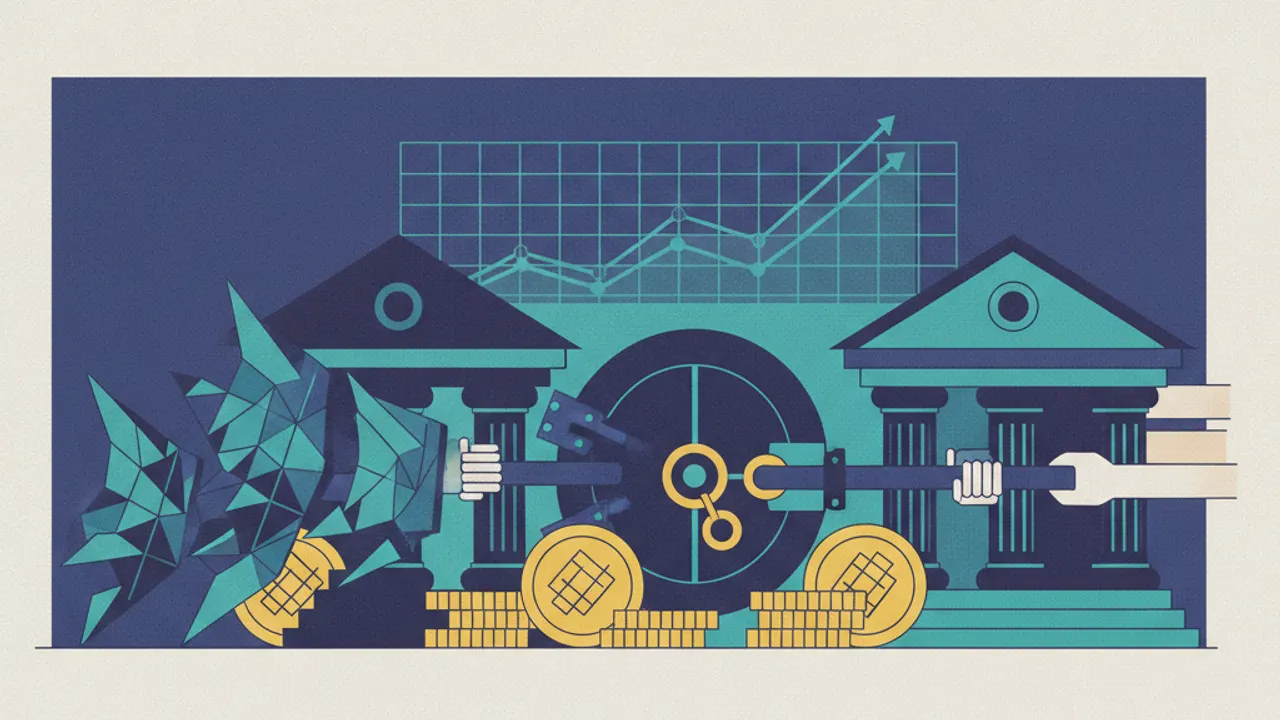
Major United States banking institutions are drawing clear boundaries against customer-directed artificial intelligence agents operating inside digital accounts. Financial giants including Citigroup, Charles Schwab, and Wells Fargo have initiated firm countermeasures to prevent autonomous software assistants from gaining unchecked access to bank accounts. This defensive wave follows the rapid rollout of consumer AI agents such as Meta's Muse and browser-based systems like Perplexity's Comet, which can execute web actions independently on behalf of account holders. Lenders fear unintended transactions, complicated liability disputes, and significant structural threats to their traditional deposit base.
At Citigroup, management has opted for a strict technological barrier against external automation software attempting to interact with client balances. The Wall Street lender explicitly prohibits third-party AI agents from directly logging in and executing financial transactions across its digital banking platforms. External applications are restricted strictly to heavily regulated read-only access mediated through official open banking frameworks. Through this defensive restriction, the banking group aims to ensure that no automated agent can independently initiate money transfers or asset purchases without direct institutional validation.
Wells Fargo is also preparing its infrastructure for the rise of autonomous financial assistants by rewriting its foundational legal terms. The institution is introducing a new clause, designated as Section 15 on Third-Party AI Agents, into its online access agreements starting November 24, 2026. Under these modified contractual terms, any transaction initiated by an external AI agent will be legally treated as fully authorized by the customer. Wells Fargo places all financial liability squarely on the account holder, while explicitly retaining the unilateral right to technically block agent access at any time.
Charles Schwab is pursuing an equivalent policy by locking unauthorized autonomous agents completely out of its brokerage and banking portals. Schwab Chief Executive Officer Rick Wurster defended this defensive approach by pointing directly to unresolved legal and regulatory liability issues when automated software makes execution errors. Despite these current restrictions, the wealth management firm does not intend to shut out automated intelligence permanently. Schwab plans to establish secure, standardized interfaces utilizing the Model Context Protocol, allowing authenticated models to communicate under tightly monitored parameters.
The aggressive defense mounted by these prominent financial institutions is rooted in substantial macroeconomic anxieties about their core balance sheets. Torsten Slok, chief economist at Apollo Global Management, warned in an analysis of an acute deposit flight scenario driven by automated personal finance assistants. Autonomous software agents could routinely sweep dormant cash balances out of low-interest checking accounts paying roughly 0.1 percent. By shifting those funds systematically into higher-yielding alternatives offering returns between 3.3 percent and 5 percent, agents could rapidly disrupt standard retail bank liquidity.
According to Slok's projections, this automated cash reallocation could drain as much as 47 billion dollars annually in low-cost commercial deposits from retail banks. Inexpensive deposits represent the primary engine of lending margins and overall retail banking profitability in the financial system. By preventing external agents from directly managing customer balances, banks are actively attempting to insulate their balance sheets from third-party yield optimizers. Whether these technical and legal barriers can permanently withstand consumer demand for autonomous financial management remains an open question across Wall Street.