
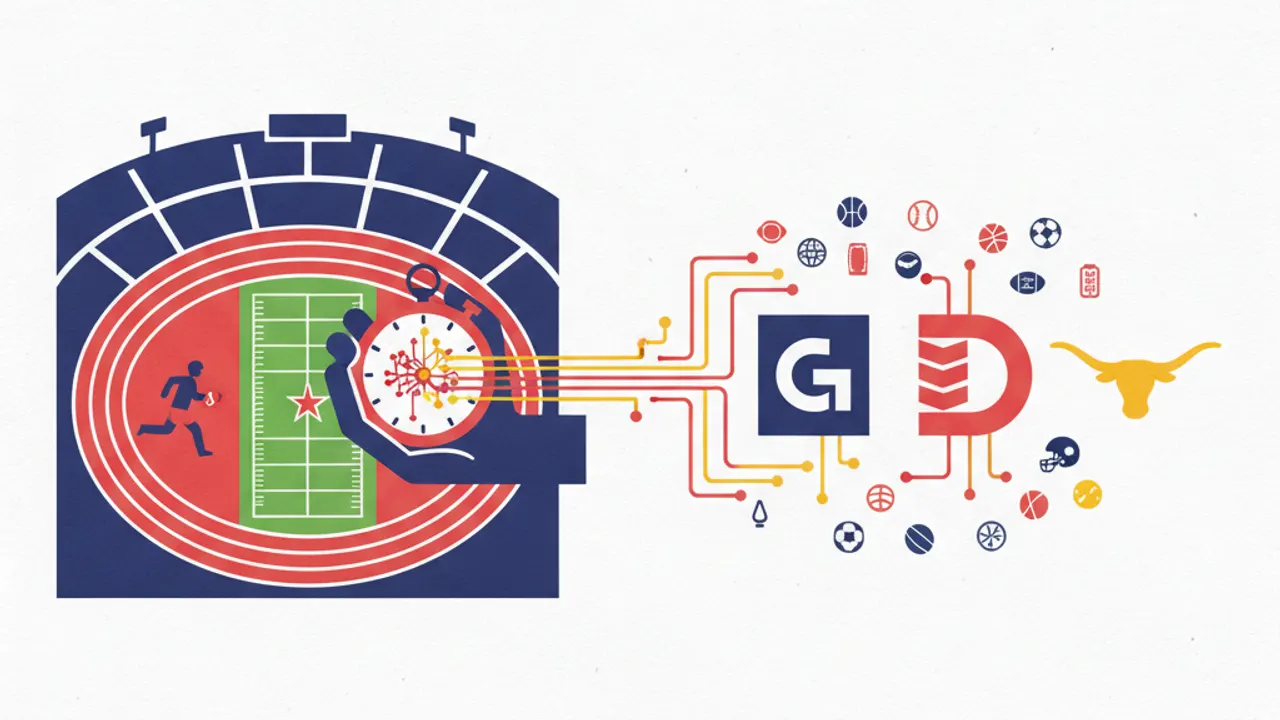
University of Texas Athletics and the Business of Sports Institute at the McCombs School of Business announced the official launch of a major sports analytics initiative on October 23, 2026. Named Bevo Lab, the facility serves as an innovation hub focused on bringing artificial intelligence directly into collegiate sports operations. The program is developed in technical collaboration with Google Cloud, Dell Technologies, and IT provider SHI International. Together, the partners aim to convert advanced data engineering into everyday tools for coaches, trainers, and athletes.
The project is directed by Kirk Goldsberry, the former head of analytics for the San Antonio Spurs and an experienced NBA analyst. Goldsberry brings professional sports analytics expertise to ensure that research-grade software translates into practical sideline workflows. The initiative covers a broad athletic program rather than focusing solely on flagship sports. In total, 21 different collegiate varsity teams and more than 500 student-athletes are slated to use the software and models developed within the lab.
Core technical components include sport-specific generative AI assistants and advanced roster evaluation models. These tools are built to help coaching staffs assess player personnel, model game situations, and design bespoke training schedules. Algorithms designed for pre-game preparation analyze opponent tendencies and historical game performance to propose adjustments. By querying these specialized models, coaching staffs can examine statistical probabilities and player combinations faster than through conventional manual video reviews.
Medical and sports performance specialists will also utilize the Bevo Lab platform for continuous load monitoring and health optimization. By tracking physical strain parameters, athletic trainers can detect asymmetric fatigue before it manifests as acute injury. Connecting biometric measurements with practice plans allows coaches to adjust workout intensities on an individual level. This structured monitoring seeks to reduce injury risks and sustain peak physical condition throughout demanding athletic calendars.
The establishment of Bevo Lab underscores a broader trend where elite collegiate athletic programs adopt technological infrastructures similar to major professional franchises. Relying on enterprise cloud architecture from Google Cloud and computing hardware from Dell, the initiative establishes a high-capacity environment for machine learning workflows. As college athletics becomes increasingly competitive, institutions are seeking systematic advantages through automated decision-support systems that combine roster strategy, medical monitoring, and game preparation.