
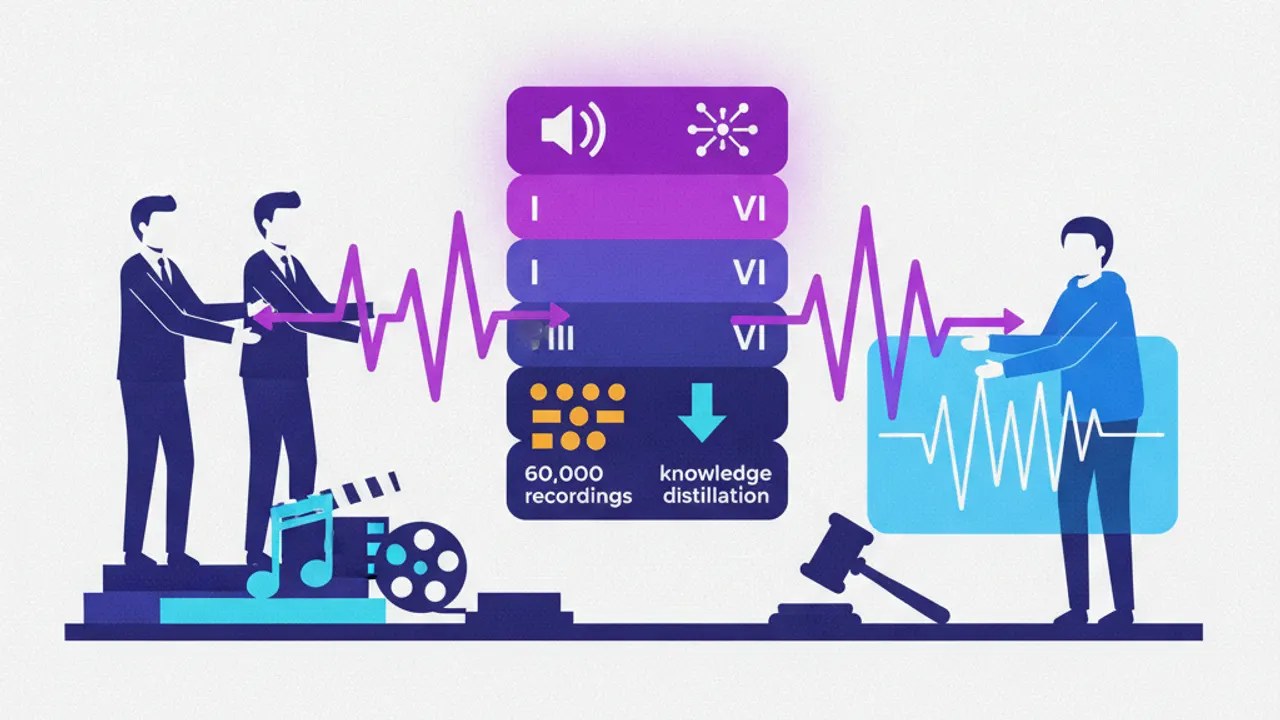
On September 18, 2026, Universal Music Group and Sony Music Entertainment filed a second copyright infringement lawsuit against AI music startup Suno in the U.S. District Court for the District of Massachusetts. The legal action came just days after Suno unveiled its new Version 6 model on September 9, 2026. While the startup accompanied the release with official licensing agreements, the two major labels argue that these deals do not resolve past and ongoing infringements.
The complaint specifically lists 60,202 copyrighted sound recordings owned by UMG and Sony. According to the plaintiffs, even the allegedly licensed Version 6 model constitutes an unlawful exploitation of their catalogs. The legal team bases its argument on the fruit of the poisonous tree doctrine, asserting that a finished AI system cannot be deemed lawful if its foundation rests on illegally ingested training data.
Technically, the lawsuit targets the machine learning workflows Suno allegedly used to build Version 6. Specifically, the labels accuse the company of deploying knowledge distillation through teacher-student training setups. Through this process, weights, capabilities and acoustic representations from older, unethically trained models were transferred directly into the new architecture, circumventing a clean training slate.
Furthermore, the plaintiffs allege that Suno utilized user interaction datasets gathered from earlier model generations to fine-tune Version 6. Because those interactions were derived from music generated by unlicenced source material, the lawsuit argues that Version 6 remains fundamentally tainted. Simply signing new licensing contracts cannot purge the intellectual property violations embedded in the system.
The lawsuit arrives at a moment of deep division within the music industry. Ahead of the Version 6 launch, Suno had secured licensing partnerships with Warner Music Group, BMG, and Believe to project commercial legitimacy. The decision by UMG and Sony to reject this framework and escalate litigation underscores a stark divide among major rights holders regarding generative AI monetization.
If the court embraces the labels' legal theory, the ruling will carry profound consequences for the wider AI industry. Such a decision would establish that AI developers cannot retroactively legitimize models via late-stage licensing if underlying checkpoints rely on disputed training data. In that scenario, AI labs facing intellectual property disputes would be forced to scrap existing weights and retrain entire architectures from scratch.