
Skip to content
AI ConnectPowered by VELENTIS
AI-generated2 min

UMG and Sony Expand Suno Legal Battle with Actions Against DistroKid and Lightspeed

Universal Music and Sony are pushing federal courts to force distributor DistroKid and VC firm Lightspeed to disclose upload data and internal risk records regarding Suno.

This article was AI-generated and published automatically. Context, labelling and all sources at the end of the article.

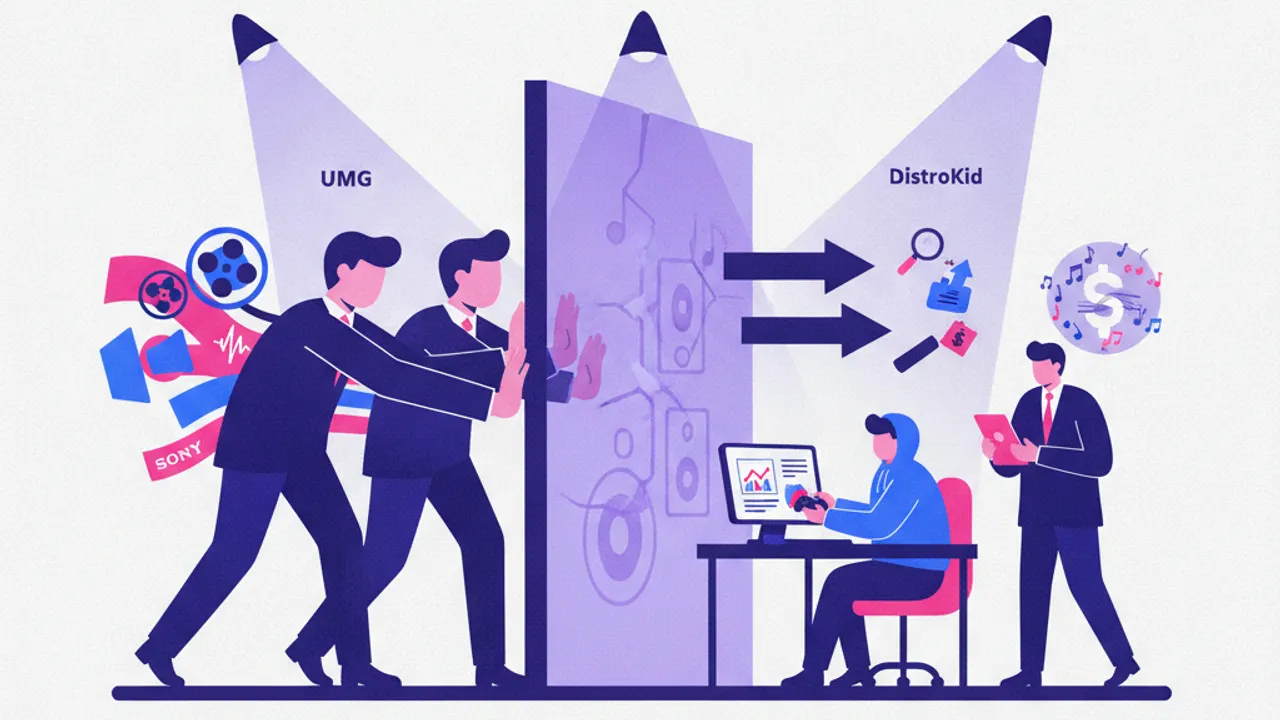
(KI-generiertes Symbolbild: Gemini / AI Connect)

The high-stakes legal fight between the recording industry and generative music developers has entered a new phase. Universal Music Group and Sony Music Entertainment filed a motion in Manhattan federal court on October 14, 2026, seeking to compel independent digital distributor DistroKid to hand over internal data. The record labels are demanding comprehensive monthly statistics regarding uploads of AI-generated tracks, with a specific focus on music created via Suno, as well as DistroKid's internal detection logs.

The major labels argue that this evidence is critical to dismantle Suno's fair use defense in court. By analyzing upload volumes and distribution flows, UMG and Sony intend to show that Suno-generated content directly competes with protected sound recordings rather than operating as transformative experimentation. Court filings disclose that DistroKid delivered nearly 12 million audio tracks to a single major streaming service between March and September 2026, leading the plaintiffs to contend that generative tools are driving an unprecedented surge of commercial music uploads.

This subpoena effort against DistroKid is part of a coordinated campaign targeting Suno's broader commercial ecosystem. On October 13, 2026, UMG and Sony took action in Boston federal court by opposing a motion from venture capital firm Lightspeed Venture Partners. The labels are demanding depositions and internal documents addressing the legal risks associated with Suno's model training data.

Lightspeed has been a central financial backer of Suno throughout its rapid rise. The venture firm led Suno's Series B funding round and participated in its Series D, which raised more than 400 million dollars at a 5.4 billion dollar valuation. The record companies argue that internal deliberations among early investors regarding copyright liability and risk exposure are discoverable and highly relevant to Suno's alleged willful infringement.

The escalating discovery motions place substantial pressure on Suno's core operations. If the plaintiffs prove that copyrighted recordings were systematically ingested and that generated music flooded digital service providers to displace human catalog, statutory damages could prove devastating. By targeting both upstream financiers and downstream distributors, the major labels are signaling that capital providers and distribution platforms can no longer remain insulated from generative AI disputes.

What this means for you

For music creators, technology founders, and investors, this litigation signals that copyright disputes over AI models are rapidly enveloping the entire supply chain. Venture funds face growing legal exposure regarding internal discussions about training risks, while digital aggregators may soon be compelled to police and report AI-generated catalog volume.

Perspectives

Coverage: 3× Other

One story, several angles: how each source frames the topic, each with a verbatim quote.

  • musicbusinessworldwide.comOther

    The source highlights UMG and Sony's court motion to compel DistroKid to disclose AI-music distribution data in order to prove market displacement in their copyright lawsuit against Suno.

    Original quote

    „The labels filed their motion to compel in Manhattan federal court on October 14 .“

    musicbusinessworldwide.com
  • musicbusinessworldwide.comOther

    The source emphasizes UMG and Sony's legal push to compel Suno's lead investor Lightspeed to testify and provide documents regarding the legal risks of AI training data.

    Original quote

    „Lightspeed refused to provide any documents or testimony, and filed its motion to quash“

    musicbusinessworldwide.com
  • superpowerdaily.comOther

    The source focuses on the labels' attempt to force DistroKid to disclose AI distribution records, while underscoring DistroKid's defense that upload volumes do not prove copyright infringement.

    Original quote

    „The labels want evidence of market competition for their Suno copyright case.“

    superpowerdaily.com

Source classification is maintained editorially (political spectrum only where consensus is broad; vendor communication is PR, not journalism). Unlabelled sources are unclassified: we do not guess.

Evidence

Well sourced
73/100

The evidence score is computed, not hand-set: from confidence, the number of sources and the share of verified statements.

Source & transparency

As of: October 19, 2026

AI-generatedAI-generated: produced automatically from vetted sources with technical quality checks (source, quote and figure verification); no human sign-off of each item before publication

Sources
4
Verified statements
2 / 4
Evidence score
73Well sourced

Want to put this into practice?

We connect you with suitable AI providers from the DACH region, free of charge and without obligation.

What's next?