
The shift from experimental pilot programs to scalable business value creation is unfolding at an uneven pace across global industries. Recent research published by Accenture, Wharton, Microsoft, and Deloitte portrays an enterprise landscape where budgets and operational usage are climbing rapidly, even as organizational maturity lags behind. According to an international survey conducted by Accenture, 74 percent of surveyed companies report that their investments in generative artificial intelligence and process automation have met or exceeded initial expectations. Consequently, 63 percent of organizations intend to expand their budgets and internal capabilities in these domains.
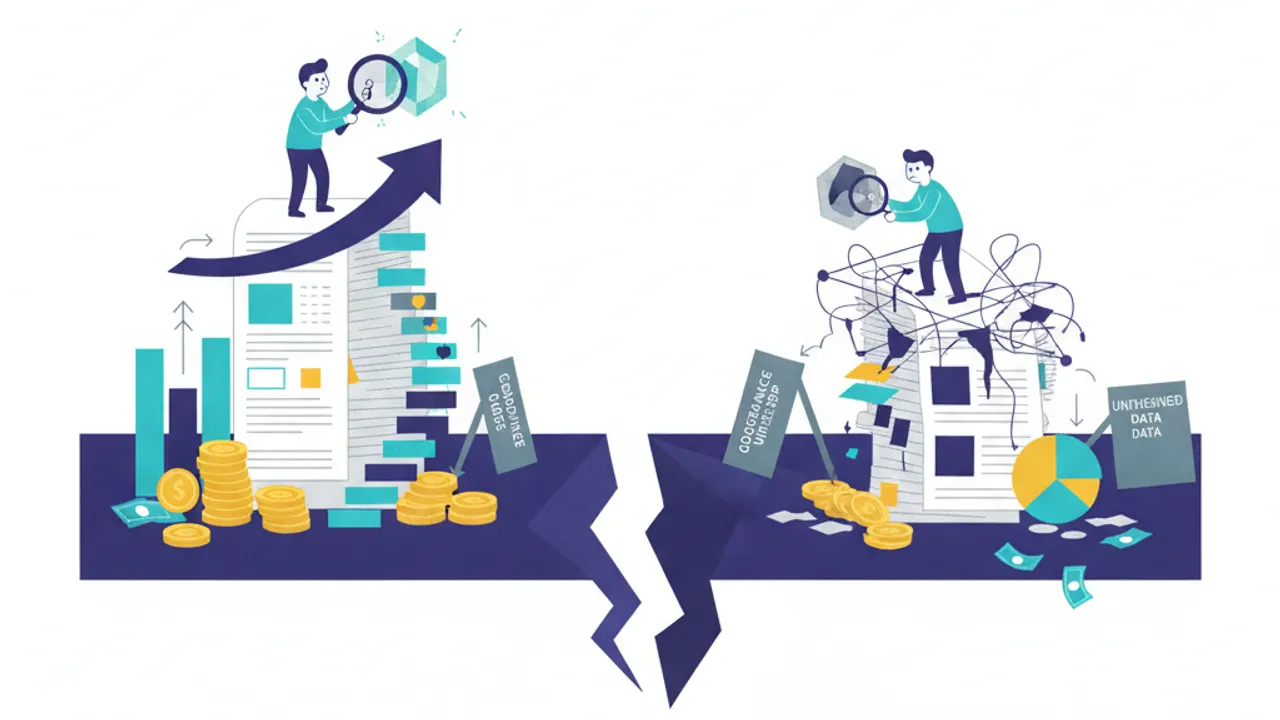
At the same time, a noticeable performance gap is dividing market participants. Accenture found that the share of reinventing-ready enterprises, defined as firms with modern, AI-led operational processes, expanded from 9 percent to 16 percent within a single year. These frontrunners achieve 2.5 times higher revenue growth and 2.4 times higher productivity compared to peers. They also scale generative AI use cases 3.3 times more successfully. In contrast, 64 percent of all evaluated firms continue to struggle with organizational realignment, and 61 percent point to data assets that are not ready for enterprise-grade deployment.
Leadership teams are increasingly relying on the technology during day-to-day work, as demonstrated by an extensive report from AI at Wharton and consulting firm GBK Collective covering more than 800 US executives from firms generating over 50 million dollars in revenue. The share of executives utilizing generative AI at least once a week surged from 37 percent to 72 percent. Corresponding budgets jumped by an average of 130 percent over the survey period, with 72 percent planning additional increases in the coming year. Adoption showed marked acceleration in specific business units: weekly use in procurement leapt from 50 percent to 94 percent, followed by product development and engineering at 78 percent, finance at 76 percent, and IT at 75 percent.
Operational workflows reflect an emphasis on administrative and analytical tasks. Approximately 64 percent of corporate users deploy generative tools to draft proposals and correspondence, 62 percent use them for structured data analysis, and 59 percent generate summaries of meetings and long documents. This pattern mirrors sentiment across European markets. Research conducted by think tank W.I.R.E. alongside the ETH Zurich AI Center and Microsoft Switzerland reveals that 95 percent of surveyed executives anticipate notable productivity gains within five years, with 47 percent expecting efficiency gains to register directly in core metrics within the next two years.
Despite substantial optimism, the Deloitte Global Boardroom Survey uncovers a systemic leadership deficit. Among roughly 500 board and senior executive members surveyed across 57 countries, 45 percent state that AI is not a recurring agenda item for board oversight. Only 14 percent of boards review enterprise AI strategy during every meeting. This lack of strategic governance directly affects downstream execution: approximately 70 percent of corporate initiatives remain trapped in the proof-of-concept phase, leaving fewer than a third of projects transitioning into standard operations. Deficient scaling frameworks, unclear data access rights, and underdeveloped risk policies represent the primary barriers preventing sustained deployment.