
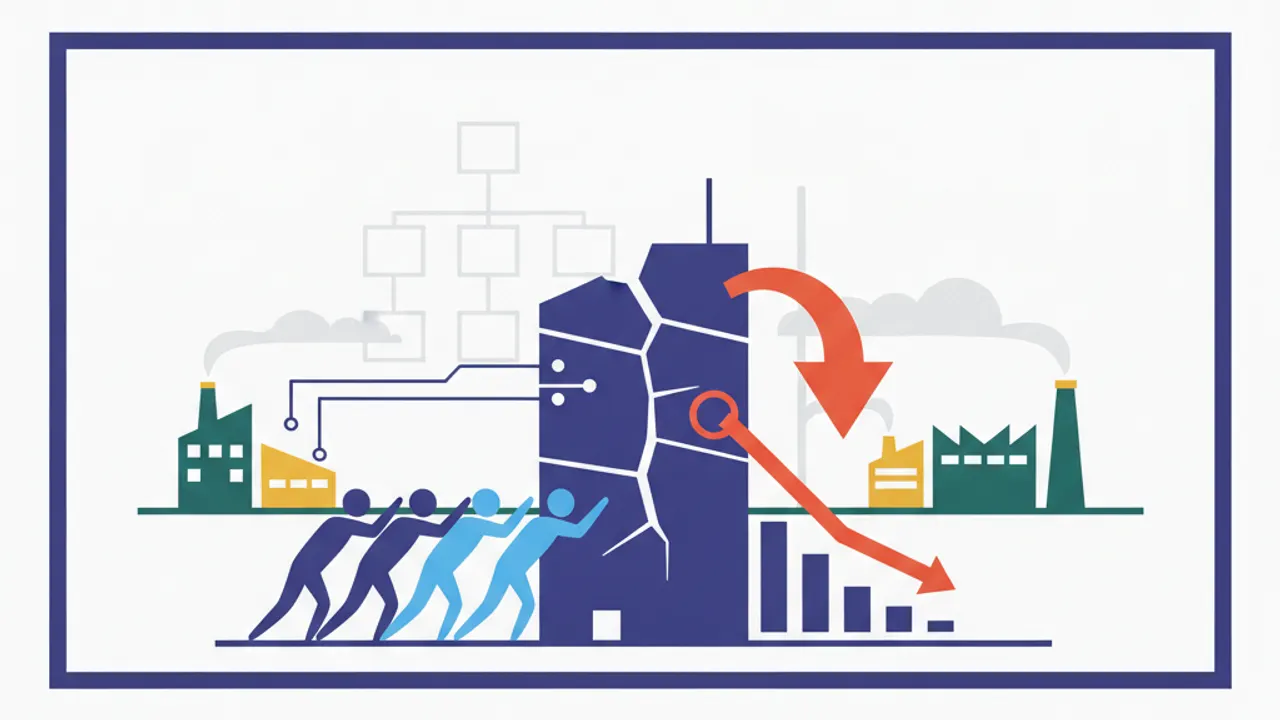
The German economy is facing a profound productivity slump that poses a direct threat to the country's future prosperity. A study conducted by the German Economic Institute (IW Cologne) for the Foundation for Family Businesses reveals that real productivity growth in Germany has dropped to an average of just 0.3 percent annually over the past six years. By contrast, growth rates during the 1980s and 1990s consistently hovered around 2.0 percent per year.
The drivers behind this gradual decline are manifold, yet demographic changes are severely compounding the issue. According to researchers' projections, the German labour market will lose approximately 4.3 million working-age people by 2036 due to retirement. With fewer active workers available across industries, output per employee must expand significantly to sustain existing living standards and social security systems.
To offset this demographic shortfall entirely, IW Cologne estimates that an annual productivity growth rate of at least 1.6 percent is required. German economic efficiency would effectively need to accelerate by more than fivefold compared to its recent six-year trend. Without decisive structural countermeasures, Europe's largest economy risks enduring long-term losses in competitiveness and industrial value creation.
The study pinpoints the accelerated adoption of artificial intelligence in core business processes as an essential lever to reverse this trend. Alongside cutting red tape, automating administrative routines and enhancing skilled staff through generative AI models represent the most effective strategy for bridging enterprise capacity constraints. Consequently, corporate decision-makers are urged to accelerate their operational AI deployments.
However, implementation across companies remains hesitant. While specific departments such as human resources increasingly deploy generative systems for standardized documents, legal uncertainties and operational hurdles slow broader enterprise-wide adoption. The authors emphasize that policymakers and industry leaders must quickly establish clear guidelines to turn investments into tangible productivity gains.