
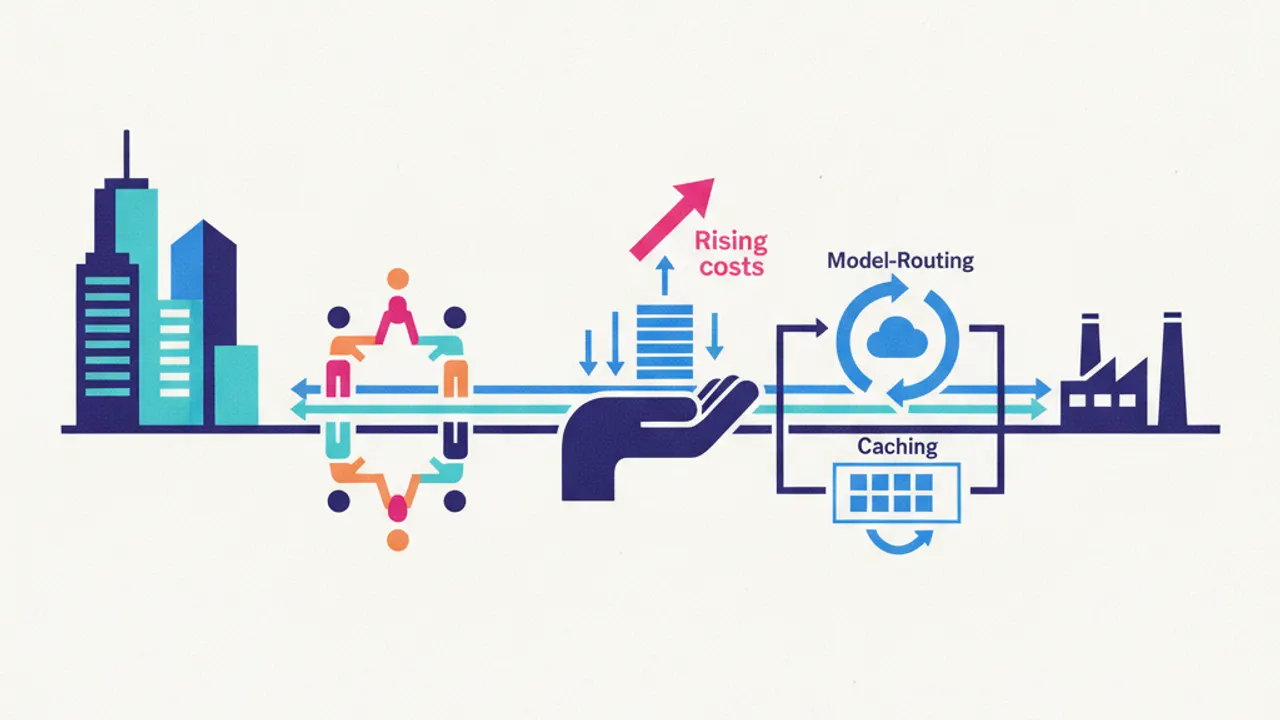
The deployment of generative language models into production environments is confronting German enterprises with unexpected budgetary hurdles. While list prices per API token continue to drop across the industry, companies are witnessing an explosion in operational costs under regular business workloads. Industry reports from outlets such as FAZ and Golem highlight that enterprise spending on generative artificial intelligence in Germany is climbing toward an estimated 11.5 billion euros, driven by high query frequencies and expansive context transfers.
To protect operational margins and safeguard the return on investment, major DAX-listed corporations are overhauling their software architectures. Rather than routing all incoming queries indiscriminately to the largest and most expensive frontier models, companies including Siemens are deploying targeted mitigation strategies. The centerpiece of this structural shift is dynamic model routing, which automatically categorizes and filters incoming user and system queries.
Under these routing architectures, standard tasks are directed by default to smaller, highly specialized models that require only a fraction of the computational footprint. Only when a prompt demands complex multi-step reasoning or highly intricate domain expertise does the system escalate the query to top-tier flagship models. This tiered approach reduces overall token volume on frontier platforms and prevents unnecessarily expensive API calls for baseline operational workflows.
Alongside intelligent routing, enterprises are introducing strict prompt caching mechanisms. Repeated system instructions, static context data, and standardized corporate policies are retained directly in memory rather than being fully processed and billed with every isolated API interaction. This measure dampens ongoing API expenditures and noticeably reduces response latency across both internal enterprise tools and external customer-facing services.
These technical adjustments reflect an evolving maturity phase in corporate AI adoption. While initial experimentation focused purely on the raw benchmark capabilities of the largest models, broad organizational rollout demands strict economic discipline. Enterprise architects must now balance output quality against operating costs, ensuring that generative AI workflows remain sustainable at scale.