
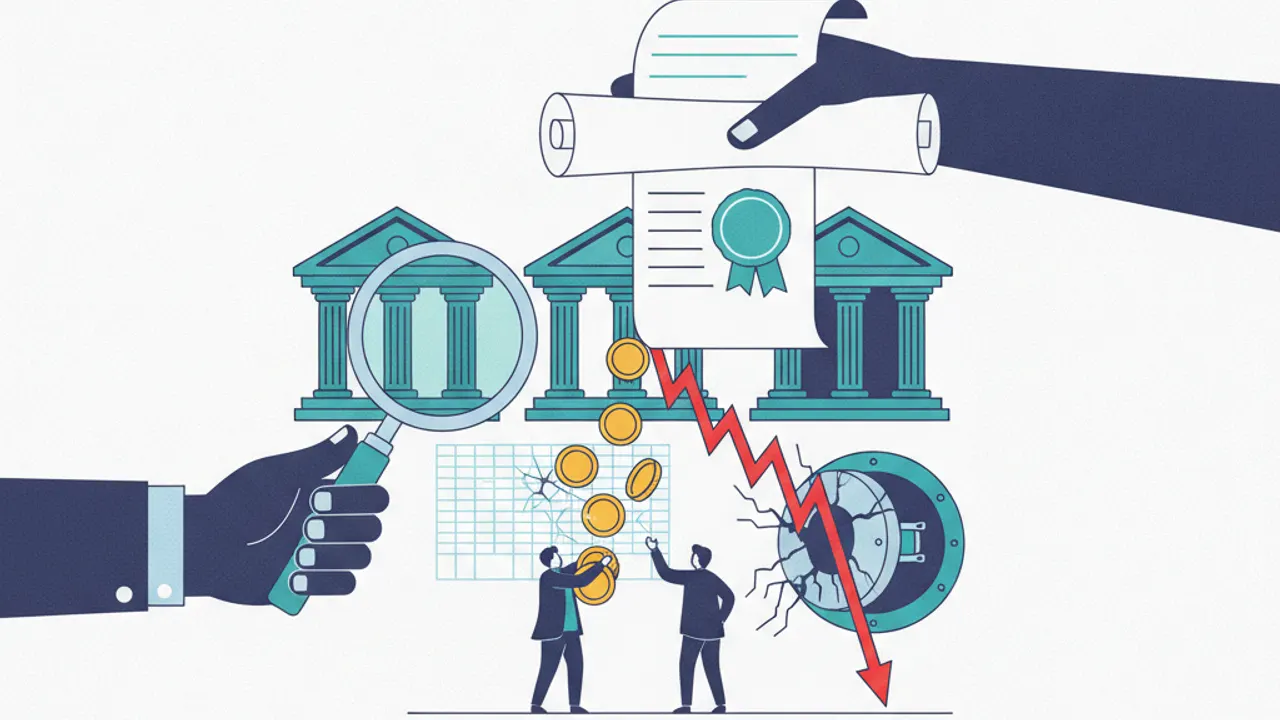
The US Securities and Exchange Commission has launched an extensive investigation into risk management and leverage practices across Wall Street. Formal subpoenas were issued to four major financial institutions: JPMorgan Chase, Goldman Sachs, Citigroup, and Bank of America. The investigation focuses on high-leverage credit extended to the artificial intelligence-focused hedge fund Situational Awareness, which suffered severe losses during recent tech market swings.
Founded by former OpenAI researcher Leopold Aschenbrenner, Situational Awareness held an investment portfolio exceeding 30 billion dollars at its peak. The fund operated quantitative macro and derivative strategies driven by AI models, heavily focused on semiconductor and advanced computing assets. However, during sharp market shifts in hardware equities, the fund's algorithmic hedging mechanisms failed to mitigate downside exposures.
The flawed automated hedging triggered a steep drawdown of 67 percent across the portfolio. As capital reserves evaporated, the fund failed to meet collateral requirements, setting off an aggressive wave of margin calls across lending counterparties. To mitigate broader systemic disruptions, Citadel stepped in to acquire the bulk of the distressed assets at an estimated 10 percent discount, liquidating the positions through nearly 100 block trades totaling over 4 billion dollars.
Regulatory examiners are now scrutinizing how lenders assessed counterparty exposures and algorithmic model risks before granting substantial leverage. The SEC is investigating whether internal credit committees adequately understood the structural limits of AI-driven trading systems under stress. Regulators are also reviewing concentration risks resulting from multiple Tier 1 banks financing overlapping automated strategies.
This enforcement action highlights escalating supervisory concerns over autonomous trading agents and high leverage in modern capital markets. When opaque algorithmic systems control massive positions backed by borrowed capital, unexpected model failures can rapidly destabilize broader market infrastructure. The subpoenas make clear that regulators will hold prime brokers accountable for lapses in oversight when financing AI-driven strategies.