
Skip to content
AI ConnectPowered by VELENTIS
AI-generated2 min

Round Hill Music Files Copyright Lawsuits Against Suno and Anthropic

Music publishing giant Round Hill Music has filed federal copyright lawsuits against Suno, Anthropic, and Bright Data, seeking potential damages exceeding one billion dollars.

This article was AI-generated and published automatically. Context, labelling and all sources at the end of the article.

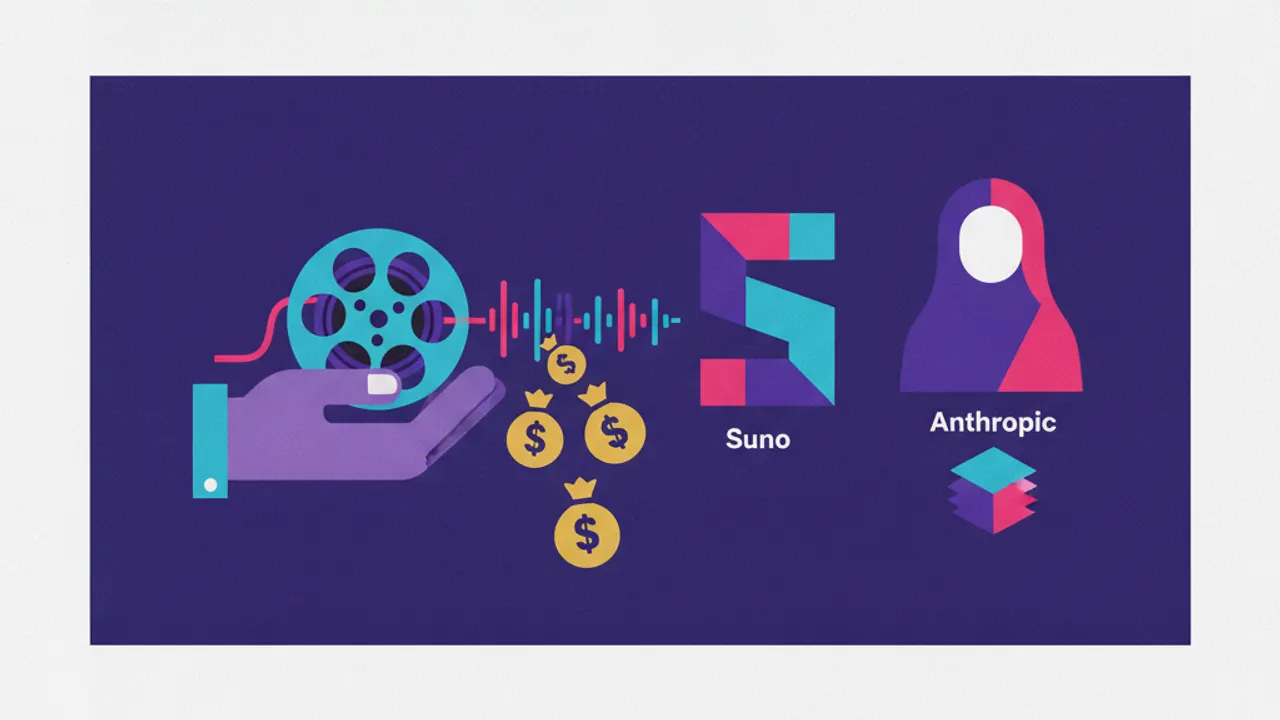
(KI-generiertes Symbolbild: Gemini / AI Connect)

United States music rights and publishing firm Round Hill Music has launched major legal action against prominent generative artificial intelligence developers. The company, which manages a portfolio valued at more than 1.1 billion dollars, filed two detailed copyright infringement lawsuits in the US District Court for the Northern District of California. The legal actions target AI music startup Suno and Claude developer Anthropic. Both defendants are accused of utilizing copyrighted sound recordings and compositions to train their models without obtaining necessary licenses.

The lawsuit centers around hundreds of protected compositions and recordings from the Round Hill Music catalog. Affected tracks include well-known works by iconic artists such as James Brown, Bonnie Tyler, and The Goo Goo Dolls. Round Hill asserts that its intellectual property was copied and ingested into training pipelines without authorization or compensation. Beyond standard infringement, the complaints allege substantial violations of the Digital Millennium Copyright Act, pointing to the intentional removal of copyright management information.

A notable element of the case against Suno is the inclusion of web-scraping provider Bright Data as a co-defendant. The lawsuit alleges that Bright Data deliberately circumvented technological protection measures on licensed streaming platforms to harvest training material. By bypassing digital barriers and scraping protected content at scale, Bright Data allegedly enabled Suno to amass the audio libraries required to train its generative models. This brings increased scrutiny to the data supply chains underlying commercial AI systems.

The financial stakes in the litigation are significant. Round Hill Music is demanding the disgorgement of profits derived from the alleged infringement or statutory damages under federal law. Maximum statutory penalties can reach up to 150,000 dollars per infringed work. Given the volume of compositions cited in the filings, the total cumulative liability across the lawsuits could exceed 1 billion dollars, presenting a serious operational challenge for the named tech firms.

The case represents a major escalation in the ongoing legal battle between the entertainment industry and generative AI vendors. While technology companies frequently invoke fair use to justify ingesting public web data, media rights holders are pushing for strict commercial licensing frameworks. Targeting scraping intermediaries alongside model builders highlights a broader strategy by content owners to enforce IP boundaries across the entire AI development ecosystem.

What this means for you

For creators and businesses deploying generative AI, this litigation highlights escalating legal liabilities surrounding model training data. A ruling against the tech companies could force generative media platforms into costly licensing agreements, likely increasing subscription costs for commercial users. Organizations should review the origin and IP indemnity terms of AI tools used in production workflows.

Perspectives

Coverage: 3× Other

One story, several angles: how each source frames the topic, each with a verbatim quote.

  • metnews.comOther

    The report emphasizes the detailed legal arguments of the complaint, specifically the rejection of fair-use defenses and claims for damages potentially reaching billions of dollars.

    Original quote

    Round Hill, an independent music publishing company that holds the rights to a huge trove of musical compositions

    metnews.com
  • musicweek.comOther

    This report highlights statements from Round Hill's leadership and counsel, emphasizing that creators and artists must be compensated when their work is used to build multibillion-dollar AI businesses.

    Original quote

    Round Hill Music has filed copyright infringement lawsuits against Suno and Anthropic

    musicweek.com
  • cdr-news.comOther

    The source focuses on the unprecedented scale of the alleged copyright infringement and the potential damages exceeding one billion US dollars.

    Original quote

    The two actions, each seeking damages that could exceed USD 1 billion, accuse Anthropic and Suno

    cdr-news.com

Source classification is maintained editorially (political spectrum only where consensus is broad; vendor communication is PR, not journalism). Unlabelled sources are unclassified: we do not guess.

Evidence

Solidly sourced
62/100
  • Round Hill Music filed copyright infringement lawsuits against Suno and Anthropic in the US District Court for the Northern District of California.

    single source
  • Round Hill Music holds a catalog valued at over 1.1 billion dollars, containing works by James Brown, Bonnie Tyler, and The Goo Goo Dolls.

    single source
  • The lawsuit against Suno names data scraping vendor Bright Data as a co-defendant for allegedly bypassing technical safeguards.

    single source
  • Round Hill is seeking statutory damages of up to 150,000 dollars per infringed work, potentially totaling over 1 billion dollars.

    single source

The evidence score is computed, not hand-set: from confidence, the number of sources and the share of verified statements.

Source & transparency

As of: August 21, 2026

AI-generatedAI-generated: produced automatically from vetted sources with technical quality checks (source, quote and figure verification); no human sign-off of each item before publication

Sources
3
Verified statements
0 / 4
Evidence score
62Solidly sourced

Want to put this into practice?

We connect you with suitable AI providers from the DACH region, free of charge and without obligation.

What's next?