
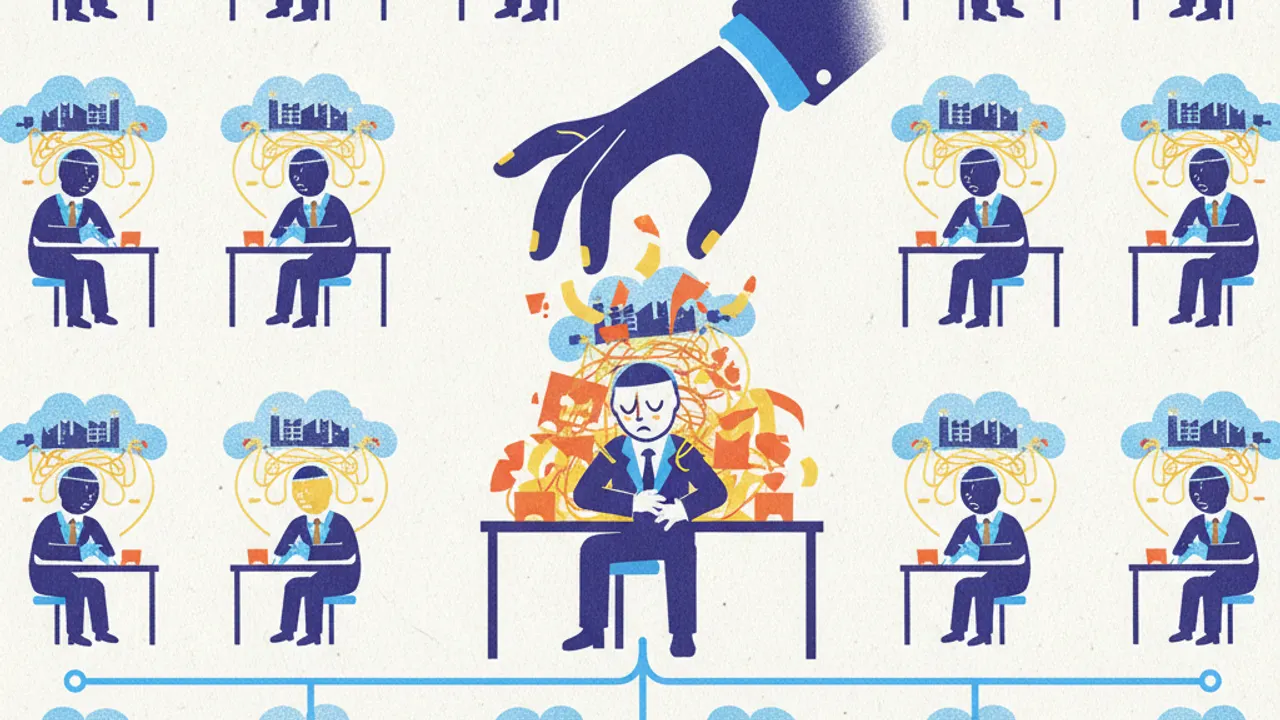
The widespread integration of digital assistant tools into everyday office work is by no means leading automatically to measurable efficiency gains. As the Jabra Research Institute observes in its global survey titled WorkLife 2026, many employees are experiencing the exact opposite of relief. Among more than 6,000 knowledge workers surveyed across multiple countries, including Germany, 85 percent stated that they spend more time on certain tasks despite using AI. Only 35 percent reported actual relief in their daily workflow.
The main cause for this increased workload lies in new oversight duties. The time nominally saved through generative tools is quickly absorbed in practice by manual verification, coordination, and alignment tasks. Drafts, quantitative analyses, and code snippets must be scrutinized for factual correctness and plausibility before entering production pipelines. This verification layer often demands just as much effort as traditional creation while shifting the nature of cognitive fatigue.
Market research firm Gartner confirms that the workplace is undergoing a structural shift driven by these dynamics. According to Gartner projections, artificial intelligence will generate a net increase of 1.7 million jobs worldwide by 2030. While an estimated 8.9 million positions are expected to disappear, they are countered by 10.6 million newly emerging roles. Gartner emphasizes, however, that task profiles will change drastically for more than 20 percent of existing workforces.
This shift toward validation and plausibility checks is equally evident in specialized corporate departments. A joint survey conducted by KPMG Germany and Ludwig-Maximilians-Universitaet Munich among 183 finance leaders and chief financial officers across Germany, Austria, and Switzerland reveals a decisive realignment of priorities. According to the study Accounting Digitalization 2026/2027, 68 percent of respondents identify the targeted development of AI skills as their most important investment lever for 2027.
According to the authors from KPMG and LMU, corporate strategy can no longer focus solely on rolling out software tools. The decisive factor is training professionals to methodically scrutinize automated calculations and verify adherence to internal governance frameworks. If staff accept automated outputs without critical review, or conversely spend excessive hours locating subtle errors, the anticipated productivity gains invert into overhead.
These collective findings demonstrate that the economic return on modern generative models remains tied to organizational adaptation. Without standardized quality assurance workflows and structured training initiatives, deploying AI systems risks stalling operational progress. Companies now face the practical necessity of transforming their teams from superficial tool users into qualified evaluators of synthetic outputs.