
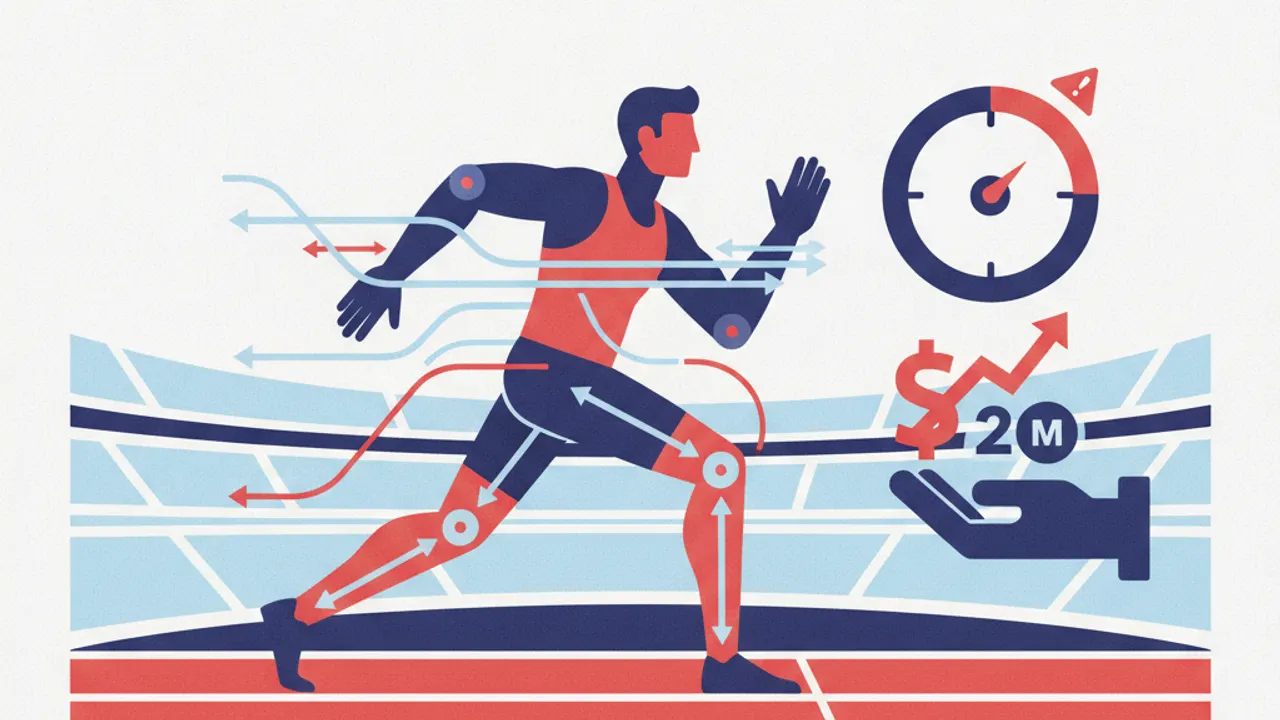
Miami-based sports technology startup OnSport AI has closed a two million dollar pre-seed financing round. The investment round included participation from international professional basketball team owners. Founded by Brett Burman and Ahmad Ishaq, the company has developed a platform that automates the collection and evaluation of biomechanical data in elite athletics. The new funding is earmarked to scale the startup's technological infrastructure and refine its underlying machine learning algorithms.
At the technological core of OnSport AI is a pairing of computer vision and machine learning designed to analyze athlete movement patterns during live games and standard practice sessions. Unlike legacy athletic monitoring systems, which frequently require wearable sensors, the platform relies exclusively on optical data. This allows coaching and medical personnel to gather detailed information without burdening athletes or altering their natural movement. Video feeds are processed in real time and directed straight into specialized analytical pipelines.
The software leverages cognitive and biomechanical models to flag subclinical strain long before physical symptoms become visibly apparent. Minor irregularities in running gait, deceleration mechanics, or landing form are virtually imperceptible to the human eye in the middle of fast-paced competition, yet they frequently precede acute muscle tears or ligament damage. The platform continuously benchmarks live movement against an athlete's personal historical baseline. If the models identify abnormal loading patterns, the software immediately alerts medical staff to the elevated risk.
On the commercial side, the startup has already established traction across major sporting ecosystems. According to company disclosures, OnSport AI has secured active contracts with organizations across the NBA as well as the collegiate NCAA. In addition, franchises across international basketball leagues and professional soccer clubs are currently utilizing the system in their daily operations. This rapid rollout highlights that the underlying computer vision models can adapt to the mechanical demands of diverse team sports.
The direct involvement of team owners in the funding round highlights an increasing commercial urgency surrounding preventative health analytics. Athlete injuries cost sports franchises millions of dollars each season through lost salary capital and diminished competitive performance. Combining automated visual telemetry with clinical risk models is therefore viewed by front offices as a vital financial protection mechanism. OnSport AI aims to carve out a dominant footprint by transforming passive video footage into actionable workload decisions.
The increasing adoption of real-time computer vision points to a broader transition within sports medicine from reactive post-injury rehabilitation to predictive prevention. Video analysis has historically been restricted to tactical and scouting operations, but modern vision models are embedding themselves firmly into sports science. The trajectory of OnSport AI illustrates how live computer vision is becoming an indispensable tool for preserving the health of professional athletes.