
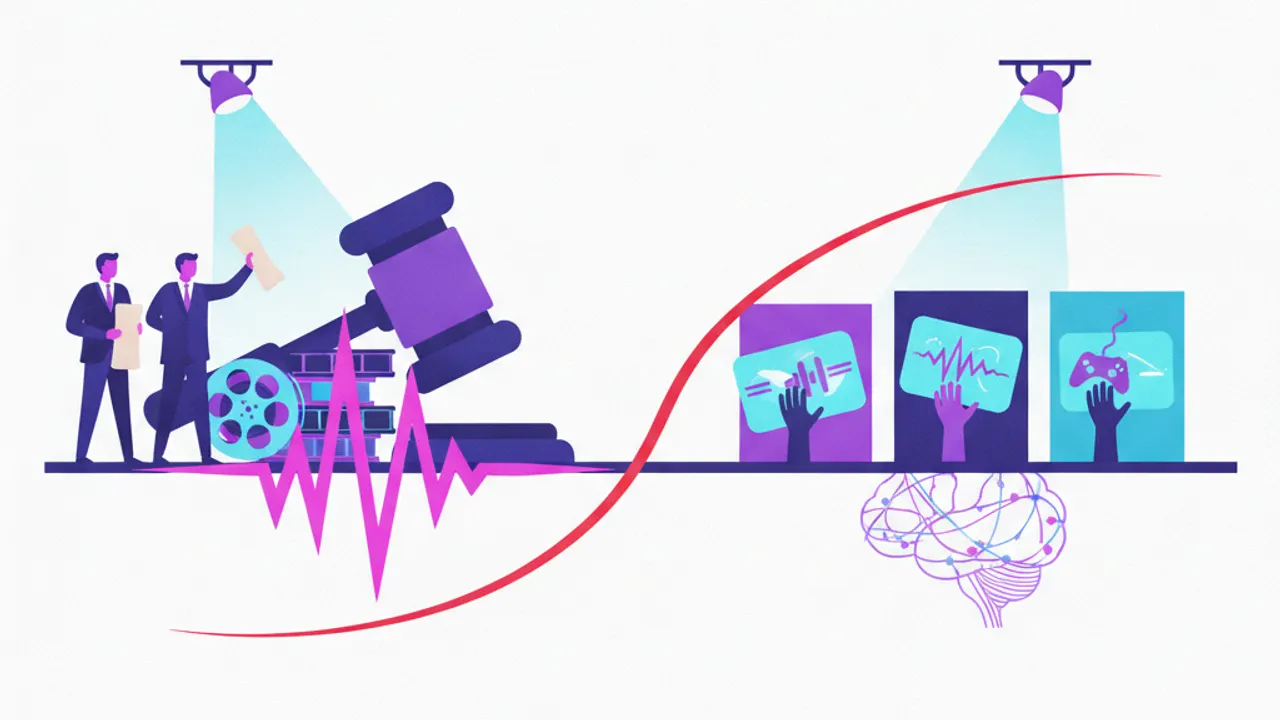
The legal confrontation over training generative music systems has entered a decisive new phase. In the US District Court for the Southern District of New York, the American Federation of Musicians (AFM) has detailed its lawsuit against major music corporations Warner Records, Universal Music Group, and Atlantic Recording. The union accuses the industry giants of systematically breaching collective bargaining agreements by monetizing historical music catalogues for generative AI platforms.
According to the legal filing, record labels licensed extensive audio recordings to third-party generative AI developers without involving or compensating the session and studio musicians who performed on those tracks. The lawsuit is grounded in the Sound Recording Labor Agreement (SRLA). This framework includes a longstanding New Use clause, which mandates that performers must receive additional compensation whenever their original recordings are repurposed in a new medium or commercial application.
Beyond withholding royalties, the AFM sharply criticizes the labels for a complete lack of transparency. The union was neither informed nor consulted prior to the execution of these lucrative AI deals. Legal representatives for the musicians argue that the labels are attempting to retain all financial windfalls from AI licensing, leaving the performing artists empty handed while synthetic systems trained on their work threaten their livelihoods.
This legal dispute coincides with rapid shifts across music copyright and licensing practices. In a related development, European music platform Jamendo, owned by Winamp, voluntarily dismissed its copyright infringement lawsuit against AI music generator Suno without prejudice on August 13, 2026. Jamendo had originally accused Suno of misusing a research dataset containing over 55,000 tracks for commercial model training, and industry observers view the withdrawal as a sign of an out-of-court commercial data licensing settlement.
The AFM lawsuit could establish a vital legal precedent for the wider creative industry. If the court upholds the union's reading of the New Use provisions, record companies will be forced to distribute a portion of their AI licensing revenues to hundreds of thousands of instrumentalists and studio performers. This significantly raises the regulatory and operational pressure on tech firms and catalogue holders to build sustainable compensation pipelines for human creators.