
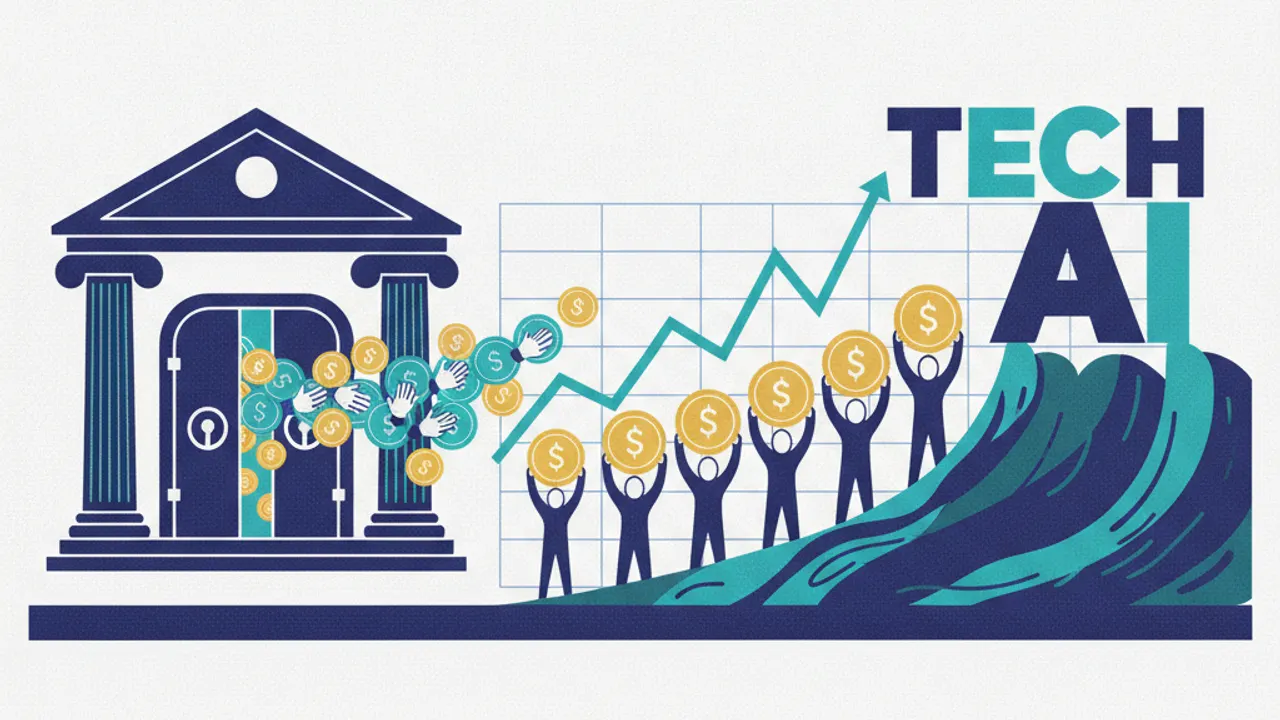
A recent analysis by investment bank Goldman Sachs, led by Amanda Lynam, Head of Credit Strategy Research, highlights a fundamental structural shift in how artificial intelligence infrastructure is funded. The report shows that leading global technology corporations can no longer fund their massive capital expenditures for AI hardware solely from operational cash flows. Consequently, major firms are increasingly turning to corporate bond markets and private credit to secure the necessary funds. This transition marks the end of an era where big tech expansion was overwhelmingly self-financed through internal balance sheets.
The sheer scale of these expenditures underscores the unprecedented capital demand of the ongoing AI revolution. For 2026, Goldman Sachs forecasts that global investments in artificial intelligence will exceed one trillion US dollars. The primary drivers behind this massive capital deployment are the five major hyperscalers, namely Amazon, Alphabet, Meta, Microsoft, and Oracle. Their combined capital expenditures are escalating at a rapid pace, setting unprecedented benchmarks across the global financial system.
While capital expenditures for these five hyperscalers stood at approximately 405 billion US dollars in 2025, they are projected to reach 750 billion US dollars in 2026. Looking further ahead, Goldman Sachs estimates that these annual spending figures could swell to 1.2 trillion US dollars by 2027. Because even the most profitable tech giants cannot absorb such astronomical sums using ongoing revenues alone, corporate financial structures are permanently altering.
This changing paradigm is directly visible in the growing share of debt-based capital expenditure funding. The portion of infrastructure investments funded through corporate bonds is projected to rise from 26 percent in 2025 to roughly 33 percent in 2026. By 2027, analysts expect that 35 percent of all AI capacity investments will be financed via debt instruments. This shift forces institutional credit markets to re-evaluate the risk profiles of these technology market leaders.
On Wall Street, the Q2 earnings season in early August 2026 highlighted a growing divergence among market participants in the AI ecosystem. While average cloud revenue growth among the top three cloud providers grew by 48 percent year over year, direct AI monetizers experienced significant equity surges. Companies such as CoreWeave saw their shares jump by 18.6 percent and Super Micro posted a 14.2 percent gain immediately following their quarterly earnings releases.
Ultimately, the Goldman Sachs study demonstrates that the physical expansion of global AI hardware is transitioning into a debt-driven era. Increased reliance on private credit and public bonds introduces fresh obligations and balance sheet vulnerabilities for technology companies. For investors and financial institutions alike, tracking corporate leverage within the tech sector will become an essential component of long-term risk management.