
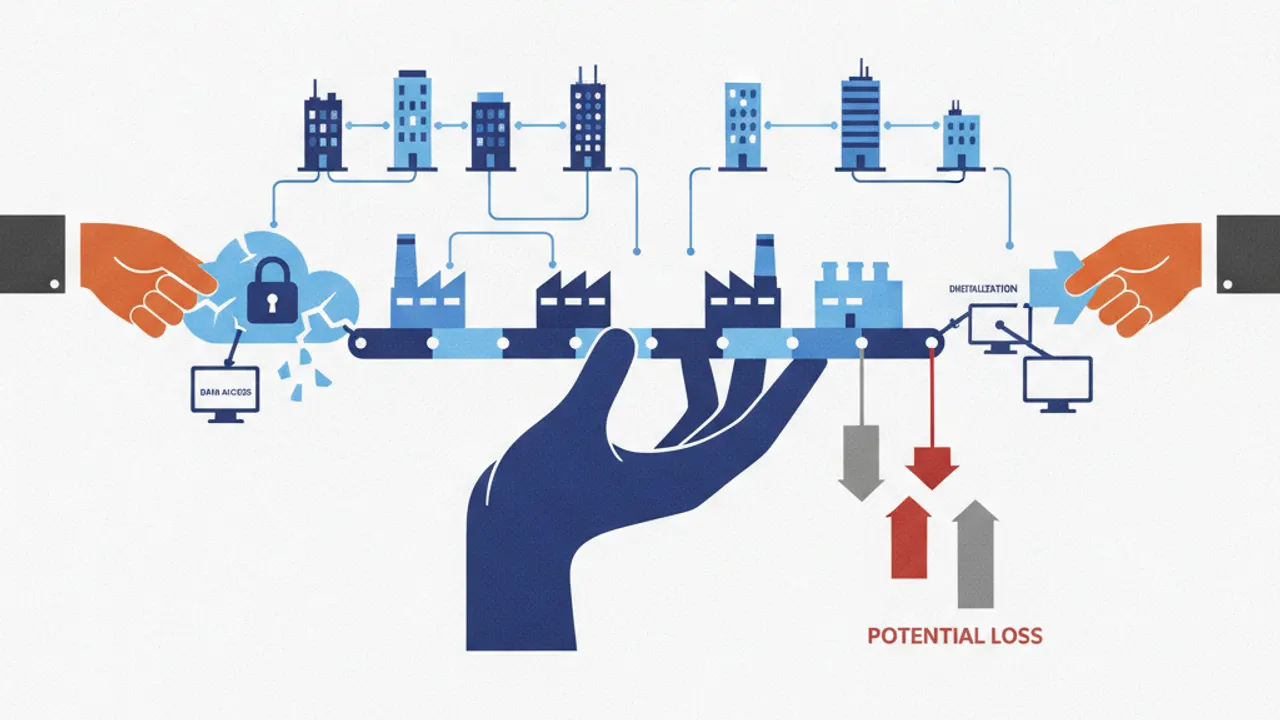
A study conducted by the ifo Institute on behalf of the Chamber of Commerce and Industry for Munich and Upper Bavaria paints a sobering picture of Germany's competitive standing in the era of artificial intelligence. The research team, led by Professor Oliver Falck, issues an urgent warning that severe structural and regulatory bottlenecks are hobbling the practical deployment of modern algorithms. In particular, restricted data access and sluggish public sector digitalization threaten to significantly diminish anticipated economic gains.
The economists quantify the potential annual loss at up to 155 billion euros in gross domestic product expansion driven by generative AI. Projections estimate that generative models could generate up to 440 billion euros annually by 2034. Yet without substantive reforms to core infrastructure and regulation, Germany risks forfeiting more than a third of this economic upside.
The analysis identifies deep vulnerabilities in the domestic technology base as a key factor. Germany's information and communications technology sector contributes just 4.6 percent to domestic gross value added, placing the country in the lower mid-tier among European Union members. Compounding the challenge is an acute foreign dependency: in 2025, Germany imported 11 billion dollars more in ICT services than it exported, marking the largest trade deficit in IT services across the entire European Union.
These institutional weaknesses are echoed by operational realities on the corporate front line. According to a representative survey by industry association Bitkom among 603 firms, 57 percent of German enterprises with 20 or more staff now use AI in their day-to-day operations. However, 59 percent of corporate users admit they have not yet managed to tap into its genuine potential, and only three percent report strong exploitation. While 96 percent express a preference for domestic or European models, market offerings struggle to match US alternatives on price and capability.
Organizational integration remains a persistent barrier across the wider corporate landscape. Industry findings from Mastercard indicate that 69 percent of enterprises across Germany and Europe struggle to integrate AI profitably into legacy systems. Even within the financial industry, where 88 percent of institutions have boosted their AI spending over the past 12 months, 83 percent confirm that internal compliance routines and complex AI governance structures represent the primary bottleneck. Bridging this gap will require systematic updates to legacy IT architectures and deliberate policy support for streamlined data sharing.