
Skip to content
AI ConnectPowered by VELENTIS
AI-generated2 min

Europe Lags in AI Infrastructure: Top Economists Urge 1.3 Trillion Euro Push

A high-profile expert alliance warns that the European Union holds just five percent of global compute capacity, urging massive investments by 2030 to prevent total dependency.

This article was AI-generated and published automatically. Context, labelling and all sources at the end of the article.

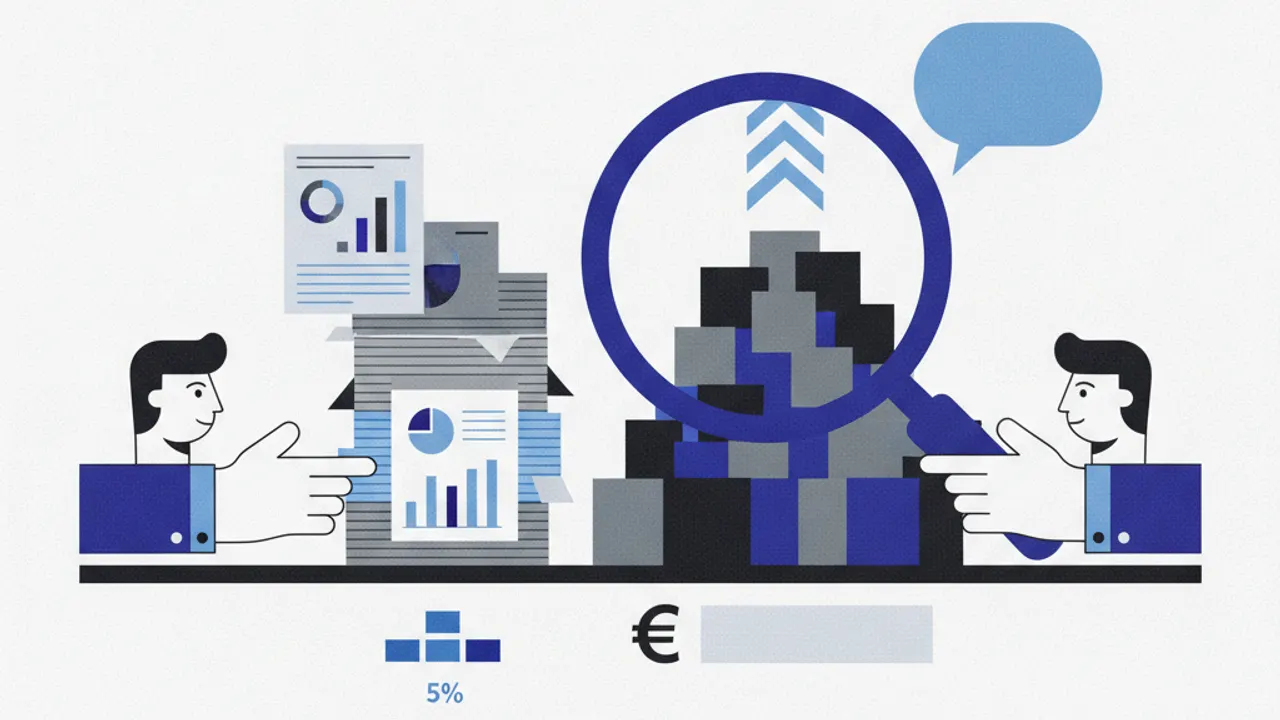
(KI-generiertes Symbolbild: Gemini / AI Connect)

In a comprehensive strategic assessment published on September 14, 2026, leading European economists and researchers issued an urgent warning regarding the continent's deepening artificial intelligence deficit. The alliance, comprising German Council of Economic Experts chair Monika Schnitzer, Ifo Institute president Clemens Fuest, former EU Competition Commissioner Margrethe Vestager, diplomat Wolfgang Ischinger, and prominent computer scientist Yoshua Bengio, outlined severe structural weaknesses. The authors warned that without decisive action, Europe risks systemic technological subordination to dominant foreign tech corporations.

The report presents stark figures regarding global physical infrastructure. As of 2026, the European Union accounts for merely five percent of global data center compute capacity. In contrast, the United States commands 78 percent of global capacity, while China controls approximately 11 percent. To establish baseline technological resilience, the expert group argues that Europe must triple its global share to at least 15 percent by 2030.

Securing this expansion will require immense capital expenditure, which the report estimates at 1.3 trillion euros by 2030. These funds are needed not only for specialized compute clusters, but critically for modernizing the underlying energy grid. The analysis calculates a requirement for an additional 45 gigawatts of data center electrical capacity, highlighting that clean power generation and grid transmission represent critical bottlenecks for any credible European deployment.

The disparity extends beyond physical hardware into commercial model development. Clemens Fuest highlighted that all European developers of foundation and domain-specific models combined currently generate less than two percent of the revenue achieved by just two leading US competitors. This economic imbalance severely constrains local developers, depriving them of the reinvestment capital needed to train and deploy next-generation architectures.

Emphasizing national security and industrial policy, Vestager and Ischinger warned that total reliance on foreign computing platforms compromises strategic autonomy and regulatory enforcement. The experts urged member states and EU authorities to coordinate joint capital vehicles and accelerate approvals for infrastructure projects to prevent European industry from being permanently sidelined.

What this means for you

For European enterprise leaders, the findings confirm that access to cutting-edge AI infrastructure will remain dependent on foreign hyperscalers for years to come. Organizations should design architectures with multi-cloud flexibility to mitigate geopolitical risks and protect core proprietary data.

Perspectives

Coverage: 1× EU · 3× Other

One story, several angles: how each source frames the topic, each with a verbatim quote.

Leaning: 1× Conservative

  • faz.netConservativeOther

    FAZ emphasizes that Europe does not necessarily need to build its own AI models, but should instead leverage its existing semiconductor supply chain assets geopolitically to secure access to top models.

    Original quote

    Die Autoren schlagen vor, Europas Trümpfe in der KI-Lieferkette stärker geopolitisch auszuspielen.

    faz.net
  • onvista.deEU

    Onvista focuses on warnings of Europe's marginalization in the AI race and the required 1.3 trillion euros in investments for additional energy and data centers.

    Original quote

    Die Wertschöpfung finde außerhalb der europäischen Grenzen statt.

    onvista.de
  • borncity.comOther

    Borncity highlights the massive deficit in global computing capacity and outlines the proposed two-pronged financing strategy combining public funds and private capital for infrastructure expansion.

    Original quote

    Ein Strategiepapier fordert mehr Energie, Kapital und sichere Lieferketten, damit Europas Anteil an der globalen KI-Infrastruktur bis 2030 wächst.

    borncity.com
  • upday.comOther

    Upday highlights both the demanded trillion-euro investments to prevent total dependence and the conflict within the German economy between growing AI adoption and acute existential fear.

    Original quote

    Dafür seien «Investitionen in der Größenordnung von 1,3 Billionen Euro erforderlich.»

    upday.com

Source classification is maintained editorially (political spectrum only where consensus is broad; vendor communication is PR, not journalism). Unlabelled sources are unclassified: we do not guess.

Evidence

Solidly sourced
69/100
  • The European Union accounts for only around 5 percent of global data center compute capacity in 2026, compared to 78 percent in the US and 11 percent in China.

    single source
  • Europe faces an investment requirement of 1.3 trillion euros by 2030 for data centers and power grids, including an additional 45 gigawatts of capacity.

    verified
  • European developers of AI foundation and specialized models generate less than 2 percent of the combined revenue of two leading US competitors.

    single source

The evidence score is computed, not hand-set: from confidence, the number of sources and the share of verified statements.

Source & transparency

As of: September 14, 2026

AI-generatedAI-generated: produced automatically from vetted sources with technical quality checks (source, quote and figure verification); no human sign-off of each item before publication

Sources
4
Verified statements
1 / 3
Evidence score
69Solidly sourced

Want to put this into practice?

We connect you with suitable AI providers from the DACH region, free of charge and without obligation.

What's next?