
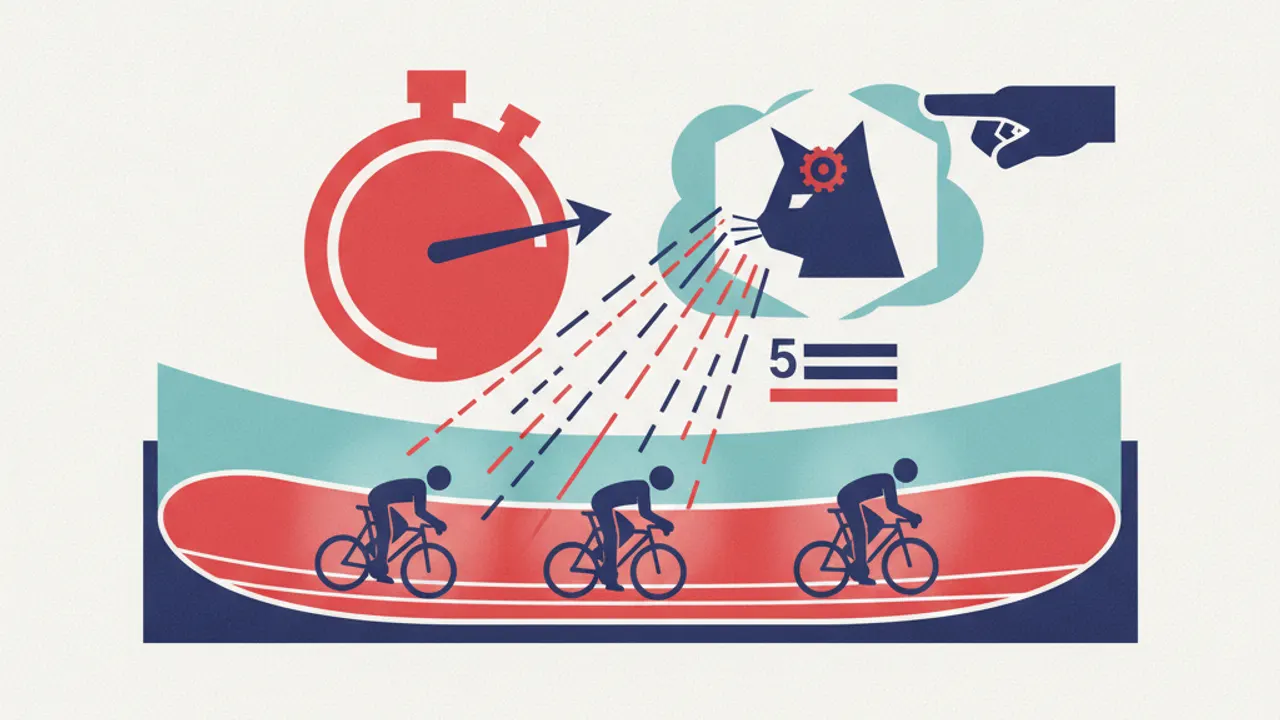
UCI Women’s WorldTour cycling squad CANYON//SRAM announced on November 10, 2026, that it has appointed software firm FasCat Coaching as its official artificial intelligence research and development partner. At the heart of this technical collaboration is FasCat's proprietary CoachCat platform, which will now serve as the central infrastructure for holistic performance analysis and athletic guidance across the roster. The agreement represents a formal integration of machine learning into top-tier women's road cycling, aiming to replace fragmented performance reviews with continuous algorithmic oversight. By uniting elite coaching expertise with automated modeling, both organizations seek to establish new technological benchmarks within the professional peloton.
The operational foundation of this partnership rests on the structured methodology of 'Analyze, Predict, Prescribe.' Rather than relying on traditional analytics that evaluate single workouts or isolated training microcycles in a vacuum, the CoachCat model processes extensive multi-year datasets spanning more than five full racing seasons per athlete. By evaluating historical performance curves across this five-year timeline, the software maps long-term athletic trajectories rather than temporary spikes. This comprehensive baseline enables coaches to identify subtle physiological patterns, offering sports directors a far clearer understanding of how cumulative training loads affect race-day capacity.
On a technical level, the platform bridges the gap between mechanical output figures and nuanced biological feedback. CoachCat continuously correlates power meter readings and precise wattage data with biometric parameters, specifically heart rate variability (HRV) and nocturnal sleep stages. In addition to internal biomarkers, external environmental stressors are fed directly into the algorithm, capturing the distinct physical toll of deliberate heat training blocks and altitude camps. Through this multidimensional data synthesis, the AI system can recognize performance plateaus and detect early warning signs of overtraining well before physical exhaustion manifests in competition.
Before formalizing the R&D partnership, CANYON//SRAM subjected the algorithms to extensive field testing under the most demanding competitive circumstances. During the Tour de France Femmes, the team deployed the system to generate precise watt and pacing projections for decisive mountain stages, including the iconic climb up Mont Ventoux. The predictive accuracy demonstrated on these steep mountain passes gave directors actionable pacing targets, proving that the model could handle dynamic race situations. The success of those tests at the French Grand Tour convinced the team to turn the software into a permanent pillar of its performance department.
With the successful French campaign completed, the platform is now being deployed directly into the squad's structured race and season preparation for 2027. The long-term goal of the partnership is to replace rigid, one-size-fits-all training plans with adaptive, algorithmically generated prescriptions tailored to each rider's specific state of fatigue and recovery. The collaboration between CANYON//SRAM and FasCat Coaching demonstrates a broader evolution in endurance athletics, where predictive analytics and historical datasets increasingly guide decisions that were once left purely to human intuition.