A fundamental shift is taking place in how modern software engineering teams review source code. Anthropic engineers Addy Osmani, Morgan Westlee Lunt, and Qing Wang recently detailed the internal workflows behind their development practices in an engineering post titled 'How the Claude Code team does code review'. The document explains how engineering teams manage codebases where more than 90 percent of the code is generated by artificial intelligence. Rather than relying on uncritical trust in machine-generated output, the team established a structured methodology to mitigate human review fatigue.
When the vast majority of code originates from AI models, conventional peer review setups quickly become overwhelmed. Human engineers cannot realistically inspect thousands of lines of synthetically generated code for subtle logic bugs line by line without causing severe bottlenecks. In response, Osmani and his colleagues shifted the paradigm from exhaustive manual verification to architectural risk management. Instead of manually inspecting every repetitive routine, the team assigns regular validation tasks to specialized automated workflows.
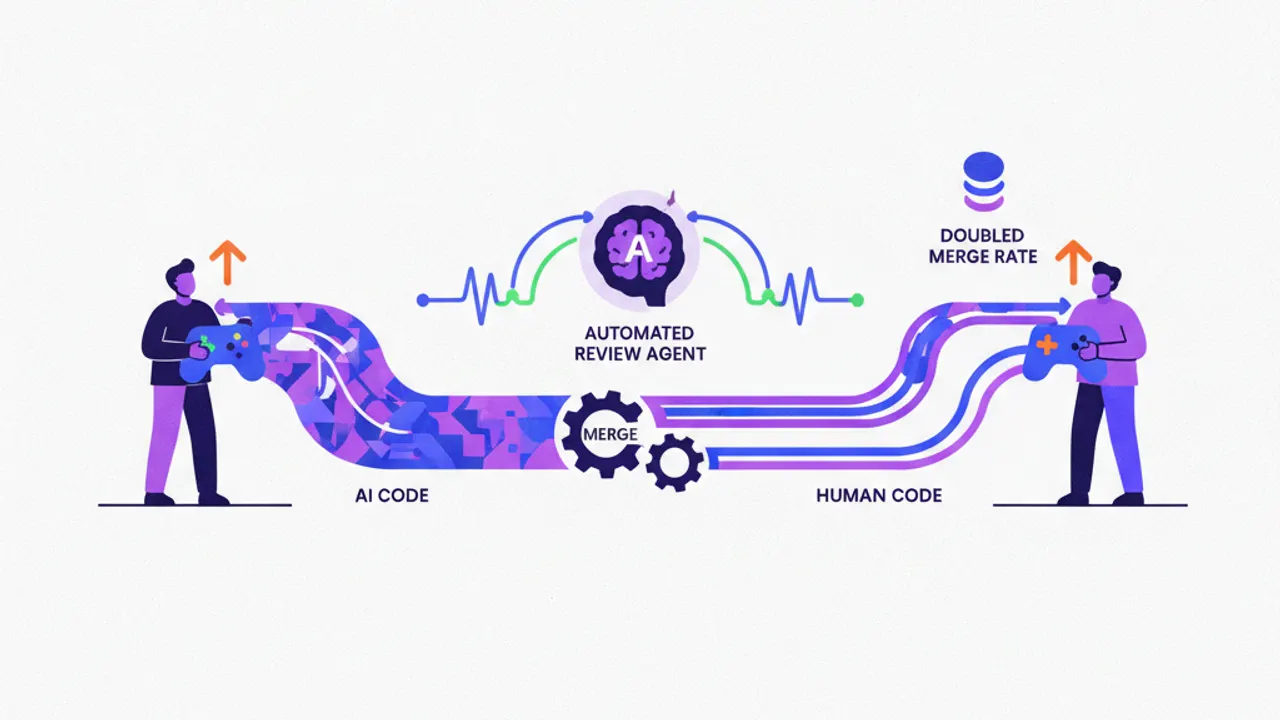
At the heart of this approach lies a multi-tiered inspection architecture that relies on automated review agents and granular risk classification tiers. Code changes are not treated uniformly; instead, pull requests are sorted into risk categories based on their potential blast radius. Critical core components, security-sensitive pathways, and structural interfaces continue to demand focused human scrutiny, whereas low-risk adjustments undergo preliminary screening by automated agents. These agents analyze modifications for consistency, stylistic compliance, and known architectural anti-patterns.
The quantitative results of this operational setup show a marked acceleration in engineering delivery. Between June and September 2026, the Claude Code team doubled the volume of successfully merged pull requests across their repositories. This dramatic throughput increase did not come at the expense of lower development standards, but resulted from eliminating manual waiting periods for routine code modifications. Consequently, senior engineers were able to concentrate their attention on high-level system architecture and strategic decisions.
The metrics also challenge the widespread assumption that high concentrations of AI-generated code inevitably inflate production defects. Despite doubling pull request throughput, the frequency of code reverts plummeted by more than 40 percent during the exact same four-month observation window. Tiered risk assessments and specialized review agents successfully caught model hallucination and flawed logic before commits hit main branches. This framework demonstrates that generative programming, when paired with disciplined engineering governance, can significantly bolster overall code stability.