
Skip to content
AI ConnectPowered by VELENTIS
AI-generated2 min

Desire Versus Reality: German Industry Struggles to Build Domestic AI Competence

At the 2026 Digital Summit, leaders urged for domestic AI development, but German businesses face foreign model reliance, Chinese open-weight adoption, and deep integration bottlenecks.

This article was AI-generated and published automatically. Context, labelling and all sources at the end of the article.

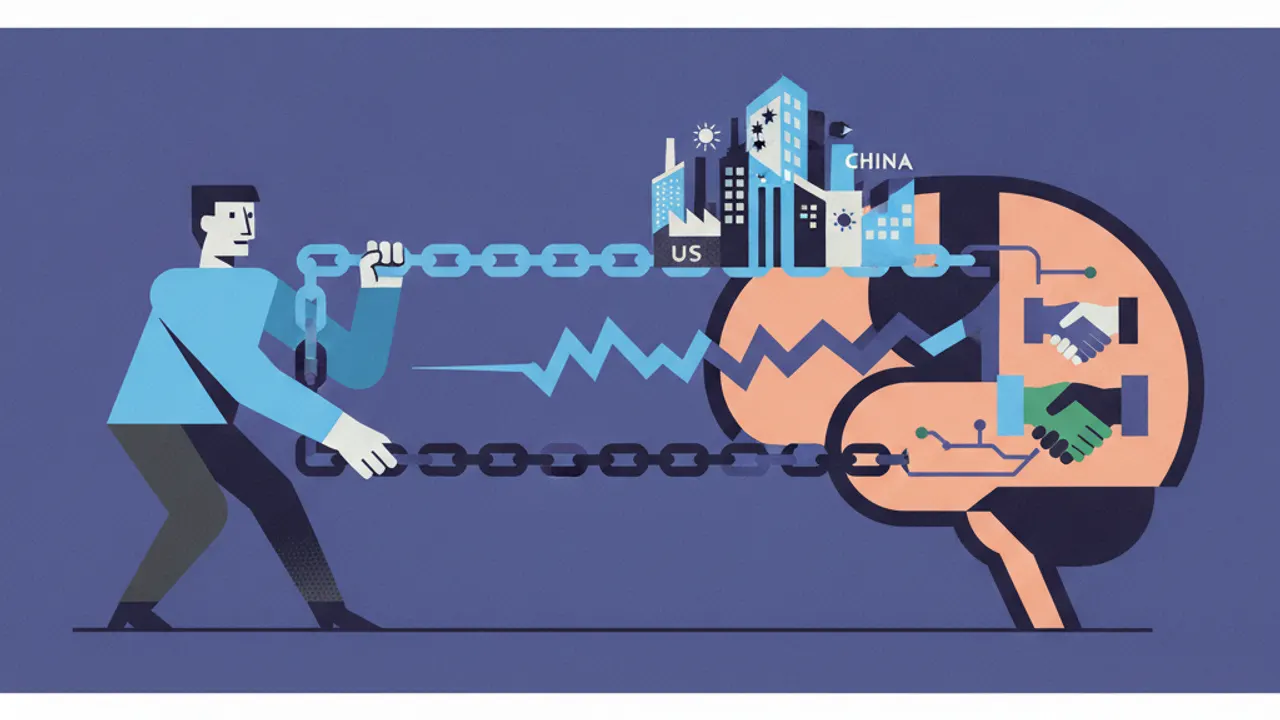
(KI-generiertes Symbolbild: Gemini / AI Connect)

On November 2, 2026, the German federal government opened its annual Digital Summit in Berlin under the motto 'Germany as an AI Nation 2030'. At the start of the conference, industry association Bitkom presented a survey of 603 companies with 20 or more employees, revealing a pronounced gap between strategic intentions and procurement decisions. While 96 percent of surveyed businesses state that they prefer AI solutions from domestic providers, 64 percent are unwilling to accept functional shortcomings or higher price tags compared to foreign alternatives.

Market preferences are shifting rapidly across the continent. Preference for US vendors dropped from 51 percent to 41 percent year on year, while interest in French AI developers rose to 46 percent. Digital Affairs Minister Karsten Wildberger and Bitkom President Ralf Wintergerst told summit participants that digital sovereignty cannot be secured by simple imports. Both emphasized that competitive European data centers and independent model architectures are indispensable to prevent Europe from falling permanently behind global competitors.

Real-world developer adoption paints a very different picture, as demonstrated by a study from the Friedrich Naumann Foundation entitled 'China's AI Conquers Europe'. Analyzing live API billing records from global routing platform OpenRouter, the report shows that 61 percent of all tokens routed by German developers in late summer and autumn 2026 were processed by Chinese open-weights models such as DeepSeek and Alibaba Qwen. Meanwhile, US models dropped to a 37 percent share on the same interface.

Consuming 60.5 trillion tokens, Germany emerged as the world's second-largest user of Chinese AI compute on the OpenRouter platform, trailing only the United States. Analysts point to aggressive pricing and flexible backend licensing models as the primary drivers of this transition. While corporate executives and politicians debate European sovereignty at official summits, practical software teams increasingly rely on the most cost-effective and capable models available from East Asia.

Domestically, widespread deployment remains severely hampered by structural bottlenecks within organizations. The KPMG study 'Generative AI in the German Economy 2026', which surveyed 480 executives, highlights this execution gap. Although 97 percent of companies view generative AI as highly relevant to their business and 79 percent anticipate substantial industry disruption, less than one percent have successfully deployed generative AI across all functional areas into their core operational processes.

The primary bottleneck has shifted from procuring technology to change management, data governance, and process integration. In addition, an analysis by the Institute for Employment Research found that two-thirds of German businesses still do not use AI, with nearly 90 percent of non-users stating they see no relevant use cases for their operations. Simultaneously, young professionals aged 20 to 29 face growing pressure as routine entry-level tasks are automated, even as experienced staff maintain career stability.

What this means for you

For enterprises, these findings highlight a critical disconnect: strategic calls for sovereignty remain hollow as long as local solutions lack cost parity and performance. Leaders must look past superficial vendor preferences, tackle internal change management, and solve the governance gridlock that keeps 99 percent of businesses trapped in pilot phases.

Perspectives

Coverage: 2× EU · 3× Other

One story, several angles: how each source frames the topic, each with a verbatim quote.

Leaning: 2× Conservative

  • faz.netConservativeOther

    FAZ highlights that while German businesses demand domestic AI solutions, the country risks falling behind due to inadequate infrastructure and superior overseas competitors.

    Original quote

    „Die bislang besten Systeme kommen allesamt aus Übersee.“

    faz.net
  • verbaende.comOther

    verbaende.com focuses on Bitkom survey findings indicating that almost all companies prefer German AI, yet the majority refuses to accept compromises on price or functionality.

    Original quote

    „Allerdings sind mit 64 Prozent fast zwei Drittel nicht bereit, dafür Abstriche in Kauf zu nehmen“

    verbaende.com

Source classification is maintained editorially (political spectrum only where consensus is broad; vendor communication is PR, not journalism). Unlabelled sources are unclassified: we do not guess.

Evidence

Solidly sourced
67/100
  • According to a Bitkom survey of 603 companies, 96 percent prefer domestic AI, yet 64 percent refuse to accept higher prices or reduced functionality.

    single source
  • At the Berlin Digital Summit on November 2, 2026, Digital Minister Karsten Wildberger and Bitkom President Ralf Wintergerst called for competitive European compute and model ecosystems.

    single source
  • A study by the Naumann Foundation showed that 61 percent of tokens routed in Germany via OpenRouter ran on Chinese open-weights models like DeepSeek and Alibaba Qwen.

    verified
  • A KPMG survey of 480 executives found that less than one percent of German enterprises have fully integrated generative AI across all core business processes.

    single source

The evidence score is computed, not hand-set: from confidence, the number of sources and the share of verified statements.

Source & transparency

As of: November 02, 2026

AI-generatedAI-generated: produced automatically from vetted sources with technical quality checks (source, quote and figure verification); no human sign-off of each item before publication

Sources
5
Verified statements
1 / 4
Evidence score
67Solidly sourced

Want to put this into practice?

We connect you with suitable AI providers from the DACH region, free of charge and without obligation.

What's next?