
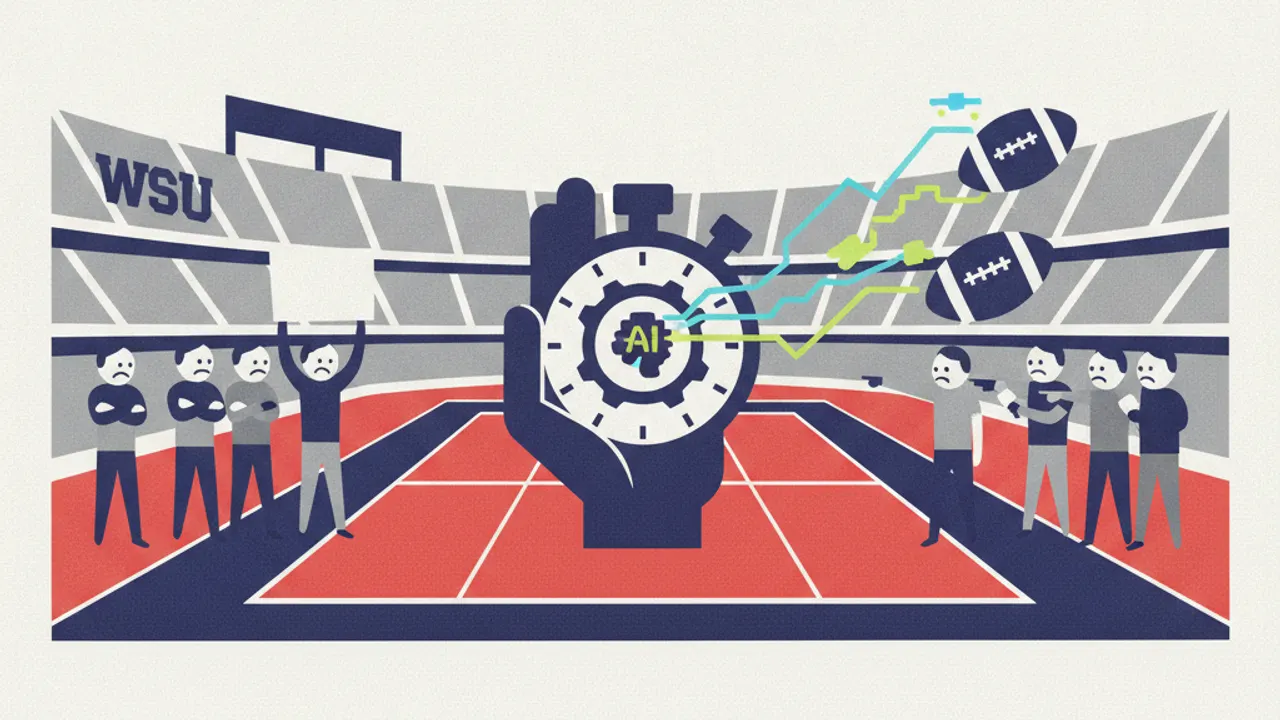
The Washington State University Athletic Department has sparked intense controversy following the announcement of a formal partnership with sports tech company FanWord. According to local reports in Pullman as well as coverage from Front Office Sports and the Irish Star on October 5, 2026, the athletic department plans to use generative text AI for automated content production. Under the agreement, algorithmically generated copy will handle routine post-game recaps as well as feature stories and athlete profiles for the WSU Cougars. The move triggered an immediate backlash from sports enthusiasts and journalism organizations.
At the core of the deal is the deployment of FanWord's generative writing tools to draft recaps and athlete-focused storytelling. Rather than relying exclusively on traditional student reporters, the athletic department seeks to automate regular coverage across its public communication channels. By applying generative text models to produce game accounts and player narratives, the department aimed to streamline publication workflows. However, delegating narrative duties to automated software marks a significant departure from conventional university media practices.
In an effort to preempt concerns regarding algorithmic inaccuracies or generic messaging, WSU officials announced safeguards prior to rollout. The athletic department stated that every article and athlete profile generated by FanWord would undergo mandatory human editorial review before being published. This final sign-off was intended to serve as a quality filter to preserve factual accuracy and maintain the appropriate institutional tone. University representatives presented this human-in-the-loop approach as a balanced framework that merges automated speed with responsible editorial supervision.
Despite the promise of human editorial oversight, the decision provoked strong pushback across the WSU Cougars fan base. Supporters voiced frustration that automated game stories lead directly to the depersonalization of college sports, an ecosystem built on authentic campus spirit and emotional storytelling. Local news outlets in Pullman recorded widespread dismay among community members and alumni who felt that synthetic text degrades the traditional bond between teams and supporters. For many followers, outsourcing team coverage to generative algorithms strips university athletics of its genuine identity.
Professional sports journalism associations voiced even stronger objections, warning that the initiative sets a damaging precedent for aspiring media professionals. Critics pointed out that automated reporting directly displaces student journalists and interns who rely on these entry-level assignments to gain crucial newsroom experience. Covering post-game press conferences and writing student-athlete features have long served as the fundamental training ground for reporters on campus. By turning routine coverage over to an external generative AI vendor, the university threatens to eliminate essential learning opportunities for its own student body.
The dispute in Pullman exposes a critical dilemma at the intersection of collegiate sports administration and generative artificial intelligence. While athletic departments face incentives to scale digital publishing and reduce operational friction, automated systems risk colliding directly with higher education's fundamental instructional mission. The resistance from both fans and professional press groups demonstrates that college sports media is widely regarded as an indispensable educational incubator. The partnership between WSU and FanWord shows that technological efficiency in campus communications can carry heavy reputational costs when it replaces the next generation of journalists.