
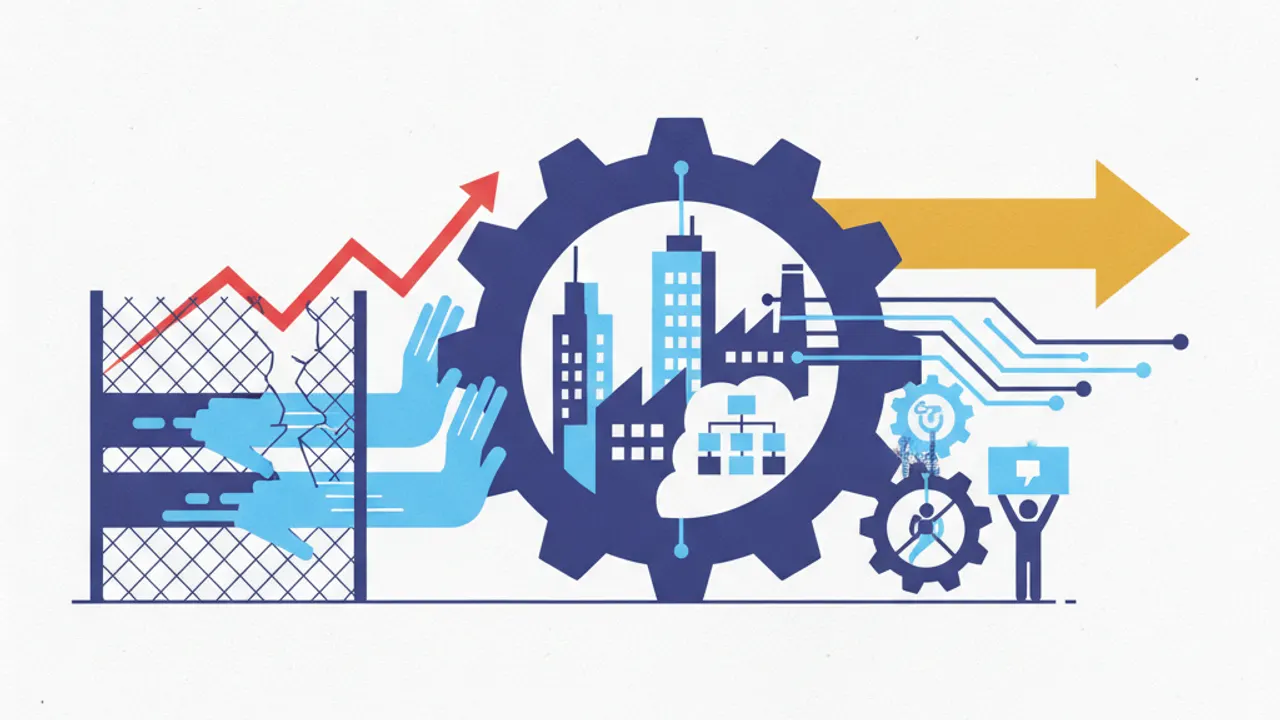
During the federal cabinet retreat at Schloss Neuhardenberg, business and industry representatives issued stark warnings regarding Germany's widening competitive gap. Compared to the United States and China, the domestic economy risks falling behind in productivity and capital investment. In addition to expanding physical infrastructure and modern data centers, trade bodies are urging an accelerated industrial rollout of autonomous AI agents. Furthermore, they demand regulatory streamlining to mitigate looming wealth and productivity losses caused by demographic labor shortages.
The political debate coincides with an intensifying regulatory schedule under European law. Since August 2026, small and medium-sized enterprises face significant compliance pressure following the activation of the next phase of the EU AI Act. Article 50 mandates strict transparency and labeling rules for AI-generated or manipulated content, as well as clear disclosures during automated chatbot interactions. Simultaneously, Article 4 requires organizations to establish adequate AI literacy across their workforce. Business associations, including Bitkom and Austria's WKO, are providing compliance guides to help operators avert severe statutory fines.
Current market research highlights a structural challenge within German industry. According to sector analyses by KPMG and industry reports, more than 40 percent of industrial companies now utilize generative AI, yet many deployments remain trapped as isolated pilot programs. These siloed solutions rarely deliver comprehensive organizational value. However, worsening skilled-labor shortages are forcing businesses to embed AI systems directly into enterprise workflows, targeting manual redundancies across human resources, IT operations and manufacturing lines.
This shift from superficial experimentation to robust enterprise integration is fundamentally reshaping technical hiring requirements. A recent study by Andrew Ng and DeepLearning.AI, based on the evaluation of over 10,000 job postings, indicates that standalone prompt engineering is rapidly losing its market premium. Employers increasingly require core AI engineering competencies, such as building agent harnesses, evaluation-driven development, grounding and context engineering, backed by traditional software engineering discipline.