
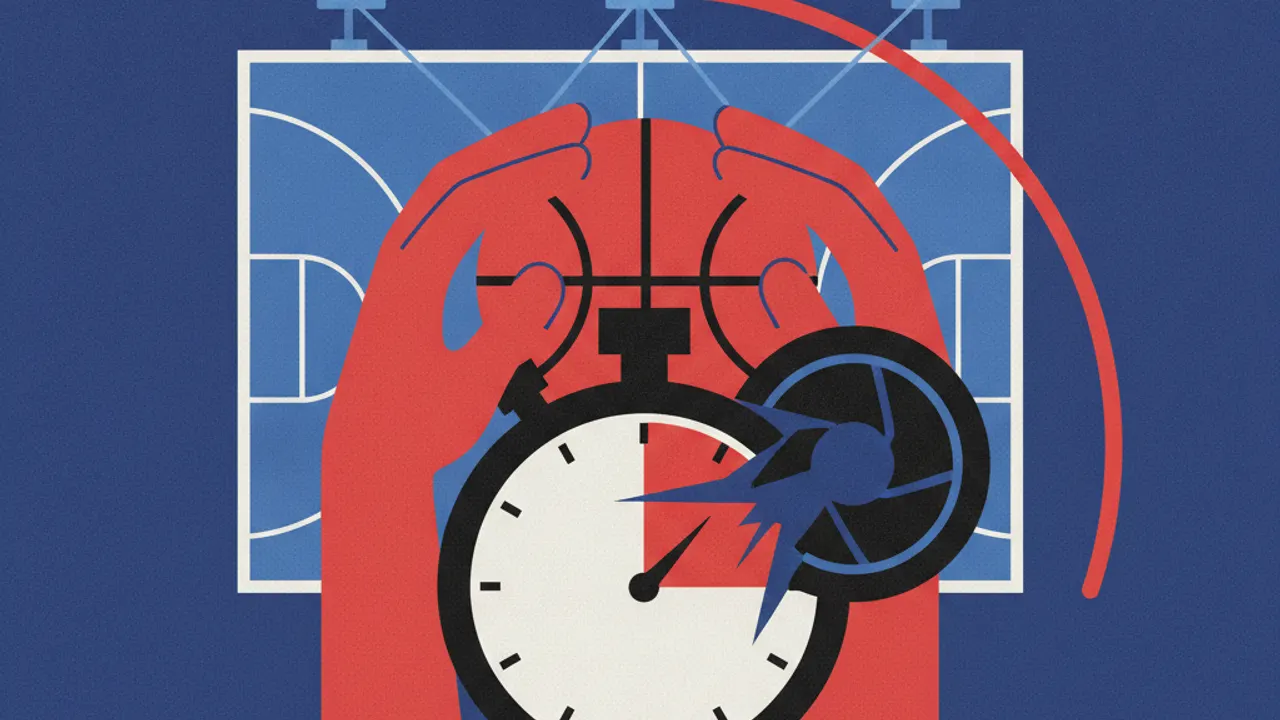
The debate surrounding automated officiating systems in professional sports has reached a pivotal juncture. In the North American National Basketball Association, the referees union publicly voiced serious concerns regarding advancing automation on November 18, 2026. The move follows aggressive efforts by the league office to resolve contested out-of-bounds calls through computer-assisted optical tracking. Fearing profound consequences for court dynamics, the officiating representatives are now demanding binding limits on algorithmic interventions.
At the heart of the modernization drive pushed by NBA commissioner Adam Silver lies optical tracking infrastructure. Using Sony Hawk-Eye cameras alongside computer vision algorithms, the league aims to automate out-of-bounds determinations fully. League officials contend that this automated approach will yield sub-second, error-free rulings that eliminate costly game interruptions. Extended video reviews have frequently slowed the pace of games, drawing frustration from broadcasting partners, coaching staffs, and fans alike.
Referees, however, view this technological push with deep skepticism. Union representatives, including Scott Zarba, have publicly warned against the collateral damage that rapid automation could inflict on professional basketball. Zarba cautioned that relying on automated systems risks dehumanizing the action on the floor. In the union's view, marginalizing human officials undermines a fundamental element of the sport that relies on personal judgment and on-court authority.
The dispute highlights a fundamental clash of philosophies between executive leadership and on-court officials. While Silver and league leadership prioritize operational speed and technical precision, the referees argue that human context cannot be reduced to algorithmic calculation. Professional basketball involves rapid, physical interactions where subtle elements often define a turnover or a loose ball. The union maintains that optical cameras can track coordinates, but they cannot grasp the nuanced realities that govern fast-paced physical play.
A central concern for the referees union is the potential creep of algorithmic systems beyond boundary lines. Officials are calling for explicit red lines that prohibit automated intervention in discretionary decisions, especially contact assessments and foul evaluations. Judging physical contact requires experience and discretion that automated systems fundamentally lack. Consequently, the union insists on mandatory collective bargaining rights to govern how tracking tools are integrated into league operations.
The standoff in the NBA serves as an essential test case for the future of sports governance and technology. Officials are demanding that automated tools remain auxiliary assistants rather than replacements for human authority. By confronting the league publicly, the union is shaping the conversation around algorithmic boundaries across modern athletics. The final compromise reached between Adam Silver and the referees will likely establish crucial precedents for sports leagues worldwide.