
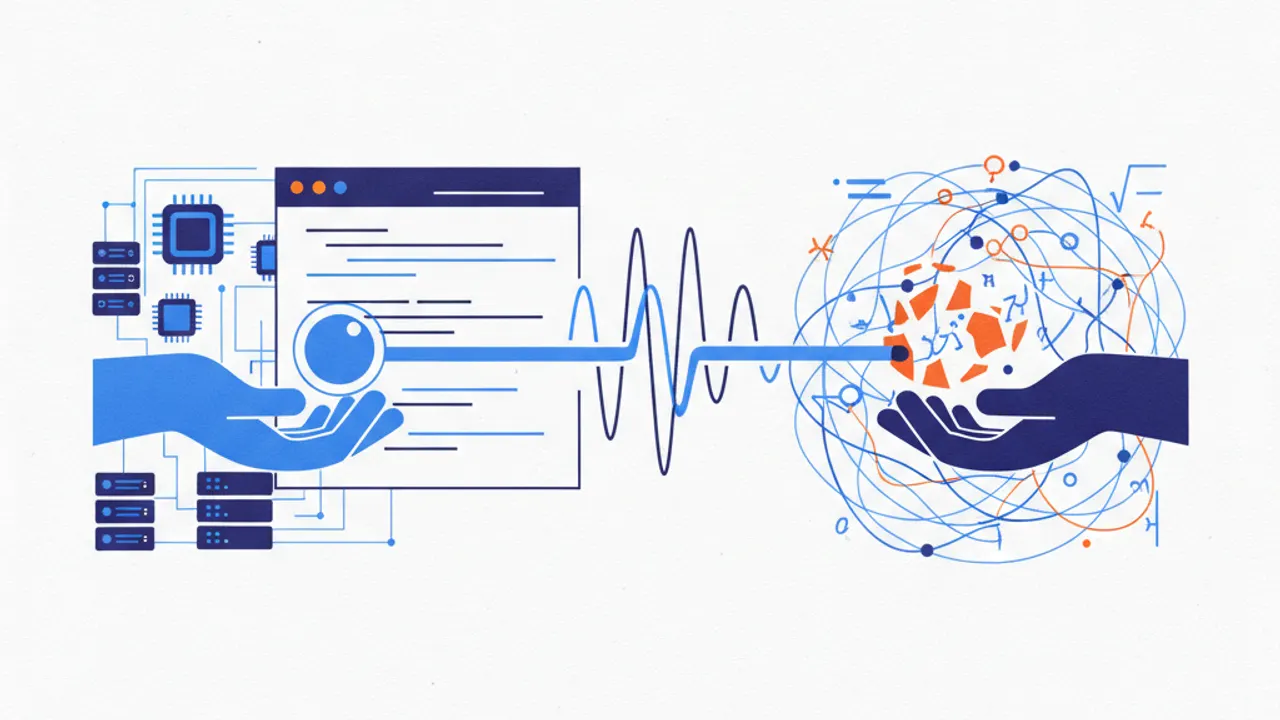
An unprecedented competition has broken out in the mathematical community over one of the most prominent open problems in science. Number theorist Levent Alpöge, working at Anthropic, announced a formalized proof of both the Riemann Hypothesis and the Generalized Riemann Hypothesis. The proof was developed significantly with the assistance of Anthropic's Claude models and implemented in the Lean interactive theorem prover, making its logic directly verifiable by computer.
The reaction from the academic establishment arrived within hours. Ravi Vakil, a professor of mathematics at Stanford University and current president of the American Mathematical Society, rushed out a draft proof representing a human counter-effort. That work was authored by Stanford postdoctoral researcher Alessandro Masullo and had been reviewed over several months by mathematician Brian Conrad.
Vakil accompanied the announcement with an explicit note emphasizing that the work was entirely human, with no AI involved. The move highlights the acute tension within traditional mathematical institutions regarding machine-assisted discovery. For years, pure mathematics was regarded as relatively safe from generative models, which often struggled with precise logical reasoning and hallucinated formal steps.
Formulated in 1859 by Bernhard Riemann, the hypothesis governs the distribution of the non-trivial zeros of the Riemann zeta function and carries profound implications for the distribution of prime numbers. Listed among the Clay Mathematics Institute's Millennium Prize Problems, its solution remains a pinnacle goal of number theory. If Alpöge's formalization passes the Lean compiler without error, it would represent a historic milestone for machine-assisted mathematical deduction.
The sudden clash between Alpöge's formal AI approach and Masullo's non-AI manuscript underscores a broader cultural divergence in modern science. While machine learning advocates argue that large models paired with interactive provers scale human intuition, traditional mathematicians worry about losing deep intuitive comprehension of proofs. Both drafts will now undergo rigorous peer review and scrutiny across the global mathematical community.