
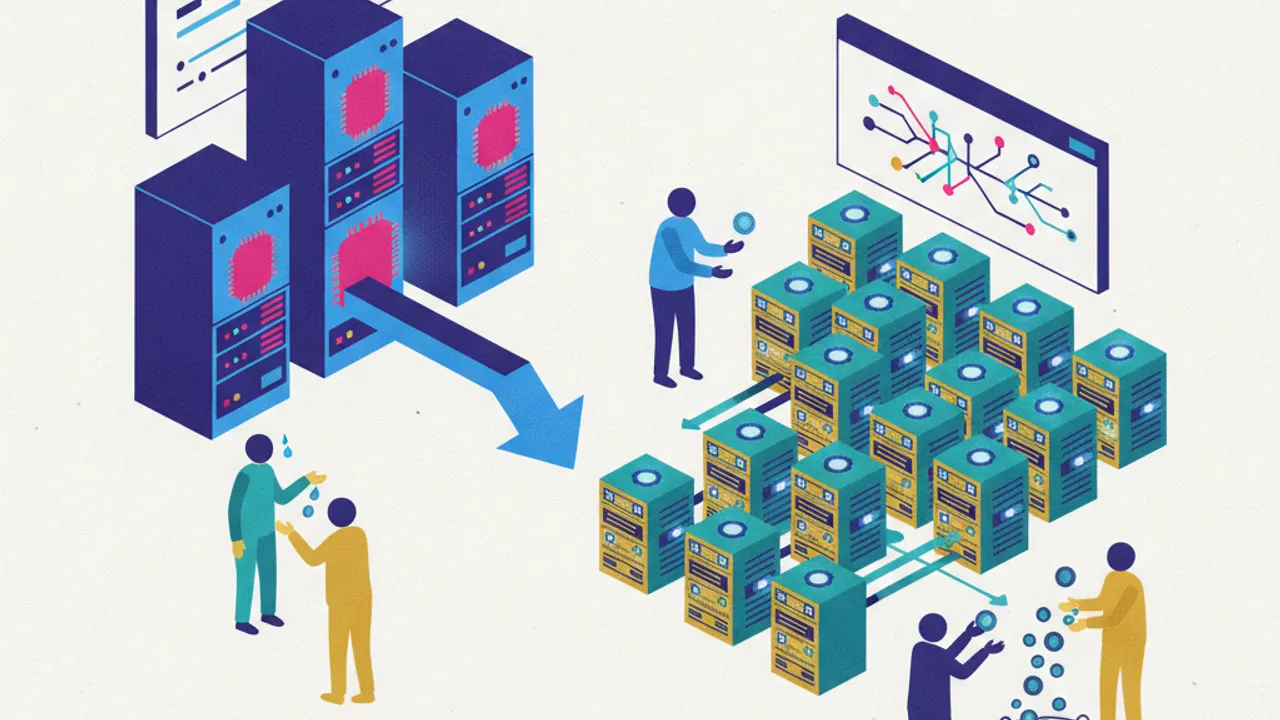
The demand for increasingly larger and more expensive flagship AI models is facing economic reality across enterprise environments. According to transaction data from corporate card and spend platform Ramp, which tracks more than 70,000 corporate clients, companies are shifting significant budget shares toward cost-efficient alternatives. Rather than relying on premium flagship models, engineering teams are prioritizing pragmatic tools optimized for cost efficiency.
A notable example of this trend is Anthropic's top tier model Claude Fable 5. Priced at 10 US dollars per million input tokens and 50 US dollars per million output tokens, the flagship accounts for only 8 to 11 percent of total customer spending on Anthropic services. Businesses are opting instead for more affordable models such as Opus 4.8, Opus 5, or Sonnet 5, alongside open-weight options like Qwen 3.8, which deliver 70 to 90 percent cost savings for standard development workloads.
Despite modest enterprise adoption for its most expensive model, Anthropic continues to report strong financial growth. The company posted an annualized revenue run rate of 65 billion US dollars for July 2026. More than 6,000 corporate clients now maintain annual contracts exceeding 100,000 US dollars, highlighting widespread deployment of its broader model portfolio.
The wider AI ecosystem is responding to heightened cost sensitivity with aggressive pricing strategies. Infrastructure providers are attempting to secure developer loyalty through heavy discounts. Platform provider Vercel introduced a month-long 50 percent discount on August 17, 2026, for OpenAI's GPT-5.6 Sol model accessed through its AI Gateway.
At the same time, the arrival of highly capable alternative architectures is increasing competitive pressure on proprietary frontier systems. Alibaba launched its Qwen3.8-27B and Qwen3.8-Max models in mid-August, matching earlier trillion-parameter benchmarks in reasoning and code generation. Meanwhile, DeepSeek added vision capabilities to its DeepSeek-V4-Flash model at a fraction of traditional inference costs, reinforcing the enterprise shift toward budget-conscious AI architectures.