
Skip to content
AI ConnectPowered by VELENTIS
AI-generated2 min

Wells Fargo Shifts Liability for Autonomous AI Agents Directly to Customers

Wells Fargo has updated its digital banking terms, making customers fully liable for third-party AI agent transactions and requiring continuous oversight of automated financial tools.

This article was AI-generated and published automatically. Context, labelling and all sources at the end of the article.

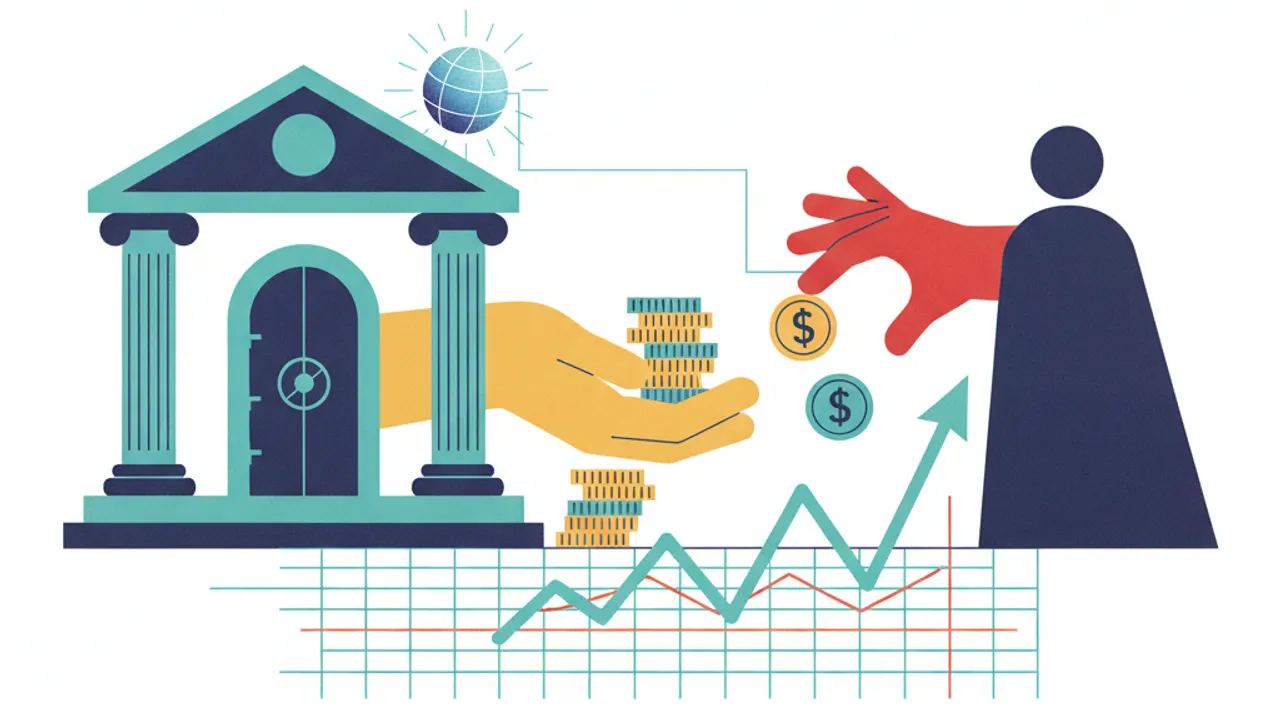
(KI-generiertes Symbolbild: Gemini / AI Connect)

Major US lender Wells Fargo updated its Online Access Agreement with effect from November 24, 2026, directly addressing the rise of autonomous financial software. At the core of the update is a newly inserted clause titled Section 15, which explicitly governs the use of third-party artificial intelligence agents. The bank specifies that any customer deploying such automated tools does so entirely at their own risk. By handing financial permissions or account credentials to external agents, consumers assume full financial liability for whatever actions those tools carry out.

The updated contractual framework alters standard banking security procedures in significant ways. Under the new terms, once a customer grants an external AI agent account credentials or operational authority, Wells Fargo treats every subsequent transaction as directly authorized by the account holder. The bank explicitly waives the requirement for secondary confirmations, bypassing traditional two-factor authentication or identity verification steps for agent-initiated transfers. The automated instruction is considered equivalent to direct customer consent, leaving no room for claims regarding erroneous automated execution.

Beyond shifting financial exposure, the institution imposes demanding supervisory obligations on account holders. Customers are contractually required to maintain continuous oversight over all activities and transactions executed by their designated AI agents. In the event of erratic behavior, hallucinations, or unauthorized transfers, the account owner must immediately revoke the software tool access permissions. Furthermore, Wells Fargo mandates that customers maintain verifiable records documenting the precise revocation process for future evidentiary needs.

At the same time, the banking giant reserves unilateral technical countermeasures against external automation platforms. The updated agreement grants Wells Fargo the right to block third-party AI agents from connecting to its digital infrastructure at its sole discretion. This capability allows the institution to shield its servers from erratic query volumes or suspicious programmatic activity. The bank thereby preserves operational command over its ecosystem while declining to shoulder the legal fallout of third-party software failures.

Wells Fargo policy adjustment reflects an accelerating trend across the traditional banking industry to defend balance sheets against autonomous agent risks. Similar protective measures have recently been adopted by peer institutions such as Citi as autonomous tools proliferate. Autonomous action agents introduce systemic vulnerabilities, ranging from prompt injection attacks to complex logic failures that can trigger unintended capital movements. By transferring this risk directly to the end user, financial institutions are building legal firewalls against unpredictable disruptions caused by third-party algorithmic assistants.

What this means for you

Users integrating autonomous AI tools with bank accounts now bear the full financial and operational risk of erroneous transactions. Customers must implement rigorous tracking and document any revocation of access, as banks will no longer reimburse losses caused by rogue third-party agents.

Perspectives

Coverage: 4× Other

One story, several angles: how each source frames the topic, each with a verbatim quote.

  • cryptobriefing.comOther

    Crypto Briefing highlights that Wells Fargo places liability for AI agent actions entirely on customers while permitting authorized access, distinguishing its approach from competitors that ban credential-sharing tools altogether.

    Original quote

    „Under the new terms, any transaction an authorized agent initiates counts as if the customer made it personally.“

    cryptobriefing.com
  • era.appOther

    Era explains the operational duties imposed on account holders by the new terms and positions its own read-only service as a solution to avoid triggering the bank's liability clauses.

    Original quote

    „When an agent acts with your access, Wells Fargo treats the instructions as yours“

    era.app
  • superpowerdaily.comOther

    Superpower Daily emphasizes the stringent requirement for customers to formally notify the bank and retain evidence when revoking agent access, citing expert doubts over whether screenshots can actually prove an agent has stopped.

    Original quote

    „Responsibility continues until Wells Fargo receives that notice, subject to legal limits.“

    superpowerdaily.com

Source classification is maintained editorially (political spectrum only where consensus is broad; vendor communication is PR, not journalism). Unlabelled sources are unclassified: we do not guess.

Evidence

Solidly sourced
67/100
  • Wells Fargo updated its Online Access Agreement effective November 24, 2026, stipulating that the use of third-party AI agents occurs entirely at the customer's own risk.

    verified
  • Any transaction initiated by an authorized AI agent is treated as bindingly approved by the account holder without additional two-factor authentication or identity verification.

    single source
  • Customers are contractually required to monitor agent activities continuously, revoke access immediately upon errors, and retain proof of the revocation.

    single source
  • Wells Fargo reserves the right to technically block AI agents, following similar risk mitigation strategies at major banks such as Citi.

    single source

The evidence score is computed, not hand-set: from confidence, the number of sources and the share of verified statements.

Source & transparency

As of: November 27, 2026

AI-generatedAI-generated: produced automatically from vetted sources with technical quality checks (source, quote and figure verification); no human sign-off of each item before publication

Sources
4
Verified statements
1 / 4
Evidence score
67Solidly sourced

Want to put this into practice?

We connect you with suitable AI providers from the DACH region, free of charge and without obligation.

What's next?