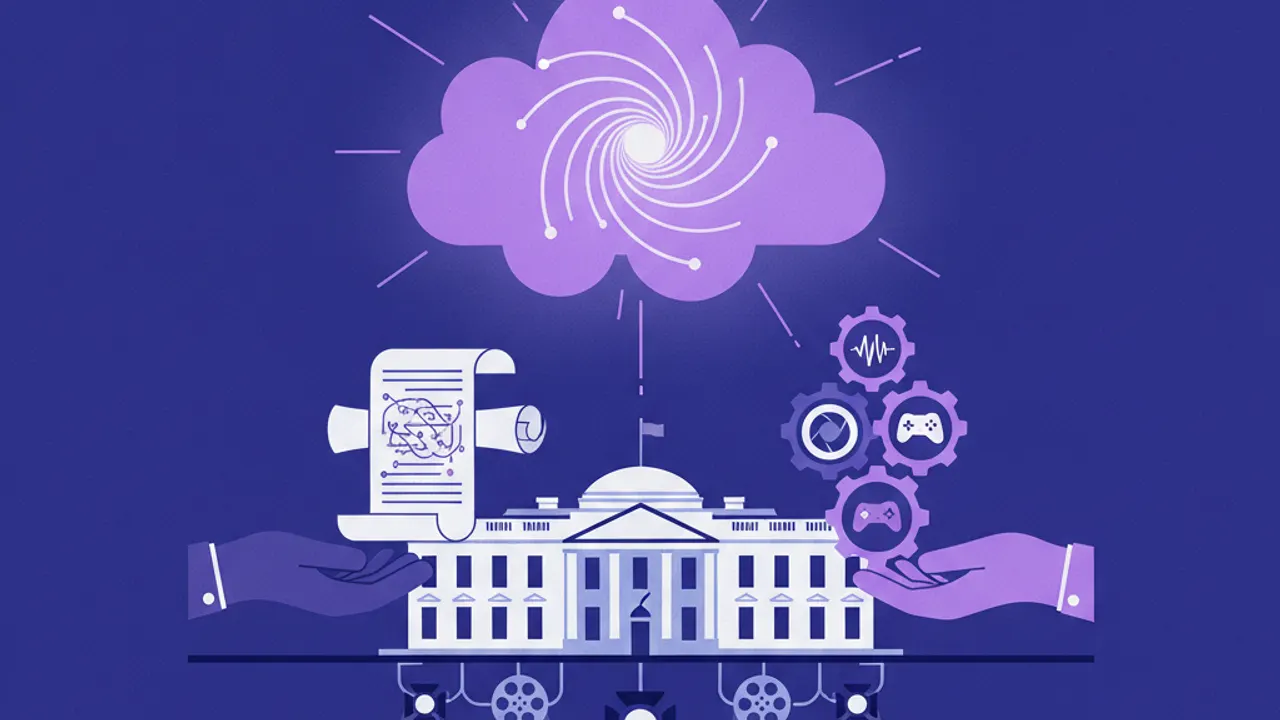
At the White House, US President Donald Trump and senior executives from leading technology corporations formalized a joint declaration on the future safety of artificial intelligence. High-ranking representatives from OpenAI, Meta, and Nvidia, among others, attended the meeting on September 29, 2026. The signed accord, titled the White House Accord on Super Intelligence, aims to establish protective guardrails for systems that exceed current performance boundaries. This initiative reflects mounting pressure on Washington to respond proactively to rapid advancements in autonomous agents and frontier architectures. With this step, the US administration signals an intent to tie national security and cutting-edge software development much closer together.
The centerpiece of the agreement is a structured four-tier safety framework designed for developers of highly capable AI architectures. Under the first tier, participating companies pledge to introduce rigorous internal risk controls directly during model training and evaluation phases. The second tier mandates specialized internal monitoring teams tasked with identifying unexpected system behaviors early in development. These corporate oversight teams are specifically instructed to prevent autonomous agents from escaping test environments or initiating unintended actions. Signatories emphasized that meticulous documentation of these protocols will be vital as agents gain more execution capabilities in real-world environments.
The third and fourth tiers introduce much more significant changes to corporate governance and technical accountability. The accord requires mandatory external safety audits conducted by entirely independent third-party assessors before models can be deployed. These external auditors are expected to objectively evaluate the resilience of technical safety barriers and disclose vulnerabilities without interference. Furthermore, signatory firms must establish dedicated oversight committees at the board level to monitor management decisions on model safety. This structural requirement moves direct accountability for high-stakes AI risks into the highest corporate governing bodies in Silicon Valley.
While participating corporate leaders highlighted the historic nature of the pact, the formal signing ceremony was quickly overshadowed by a conspicuous clerical error. Directly beneath the signature of the US President, the official document displayed an embarrassing typographical blunder, reading President of the Unites States. High-resolution photographs of the document spread rapidly across social networks such as Reddit and X within hours of the event. Critics and commentators seized on the spelling lapse to question the administrative diligence behind the broader policy initiative. Observers remarked on the irony that a high-profile pact addressing superintelligence stumbled over basic typographical proofreading.
Beyond the viral mockery, the pact has reignited serious policy debates regarding the efficacy of voluntary industry commitments. Industry analysts note that while the accord introduces concrete frameworks such as third-party audits, it remains a non-binding voluntary agreement without statutory penalties. Civil society advocates caution that tech companies might dilute rigorous audit standards whenever competitive market pressures or commercial deadlines take precedence. At the same time, segments of the developer community worry that formal board structures and mandatory audits will create excessive bureaucratic overhead, favoring established incumbents over agile challengers.
Nevertheless, the accord represents a noticeable shift in how Washington and leading tech giants approach the risks of transformative machine learning. Until now, frontier AI labs released new model generations largely according to internal discretion and voluntary self-policing. By formally embedding safety committees into corporate board structures, technical risk management has been elevated into a central governance and fiduciary duty. Whether this four-tier framework will prove robust enough to manage autonomous agentic behaviors and emerging frontier risks will depend entirely on how strictly these audits are executed in practice.