
Skip to content
AI ConnectPowered by VELENTIS
AI-generated2 min

"We Are All Product Engineers Now": Laurie Voss and Simon Willison on How AI Agents Reshape Programming

npm co-founder Laurie Voss and developer Simon Willison examine the shift of software engineering toward product ownership while addressing the practical footprint of coding agents.

This article was AI-generated and published automatically. Context, labelling and all sources at the end of the article.

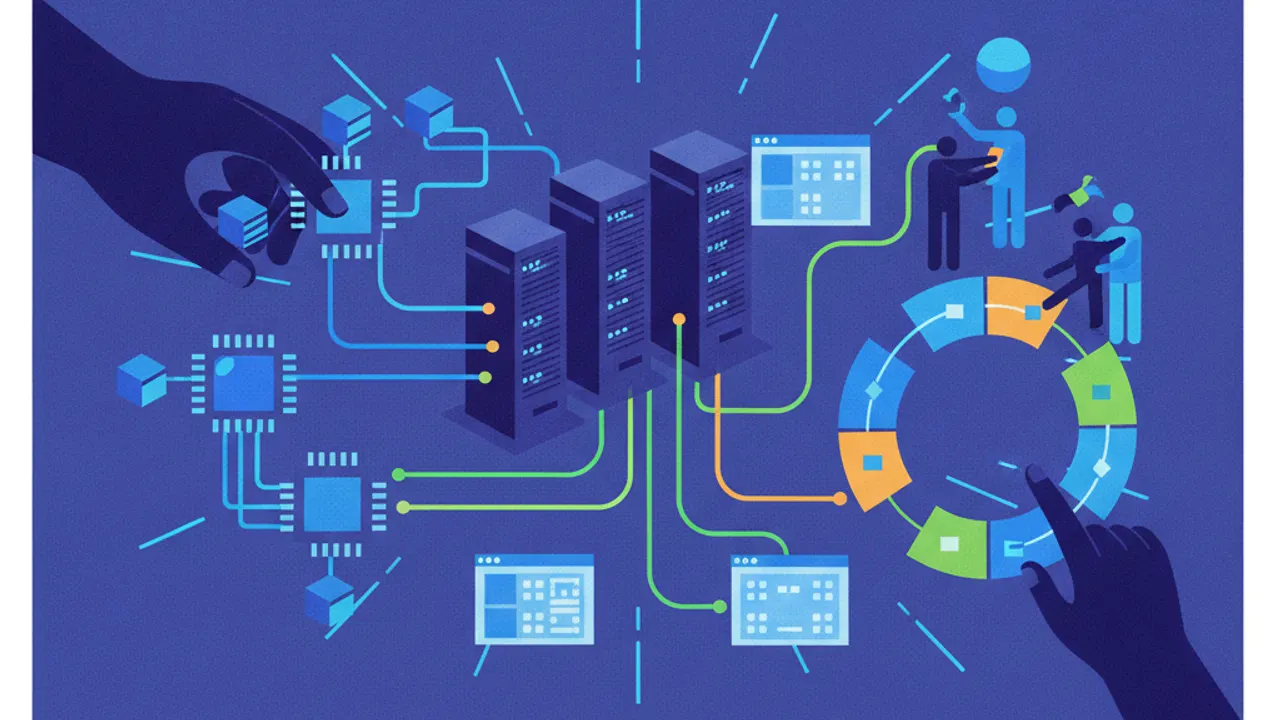
(KI-generiertes Symbolbild: Gemini / AI Connect)

The rapid advancement of generative AI is fundamentally reshaping the day-to-day responsibilities of software engineers. In his widely read essay "We are all Product Engineers now", npm co-founder and Arize AI DevRel head Laurie Voss outlined a structural turning point for the discipline. Because the marginal cost of generating code is falling toward zero, manual syntax authoring is losing its traditional economic value. Developer Simon Willison highlighted the analysis on September 14, emphasizing its relevance for modern engineering teams.

According to Voss, autonomous agent systems are quickly moving beyond basic code completion to handle testing, code reviews, and system operations. As a consequence, the durable, non-automatable value of engineering now centers on defining product requirements, understanding human needs, and crafting user experiences. Developers who previously specialized purely in writing implementations must transition into holistic product engineers who direct outcomes and evaluate systems.

At the same time, Voss cautioned against assuming that coding agents can operate without rigorous oversight. Drawing on findings from the IFScale benchmark, he noted that while agents can hold thousands of instructions across large context windows, their adherence to complex rules frequently falters. Achieving reliable agent behavior cannot be solved by prompt tweaking alone. Instead, teams must implement comprehensive evaluation frameworks (evals) to systematically measure and verify output accuracy.

The practical realities of working alongside autonomous agents were further illustrated by Simon Willison through the release of two new utility tools. With commit-rewriter 0.1, Willison published a local Python and uvx web tool designed to rewrite Git history. The utility emerged directly from his experience patching security vulnerabilities in Datasette, where coding agents routinely leave behind disorganized commit logs and internal issue identifiers that must be sanitized before open-source publication.

Alongside the Git utility, Willison launched version 1.12 of shot-scraper, a command-line tool for automated screen capture. The release adds native WebP support with quality flags, significantly reducing file sizes for visual regression tests and automated documentation. By lowering asset footprints in CI pipelines, the tool streamlines the maintenance of visual artifacts generated during automated testing workflows.

Taken together, Voss's conceptual framework and Willison's new tools highlight the emerging realities of modern engineering. Software professionals spend less effort typing boilerplate syntax and more time cleaning up agent artifacts, curating evaluations, and driving product architecture. Navigating this evolution requires engineers to balance rigorous testing methodologies with a disciplined focus on human-centric product design.

What this means for you

For software developers and technical leaders, this shift signifies that pure implementation skills are steadily commoditized. Long-term professional value now hinges on the ability to define precise product requirements and build rigorous evaluation harnesses. Furthermore, managing agent-generated artifacts in version control is becoming a routine engineering discipline.

Perspectives

Coverage: 3× Other

One story, several angles: how each source frames the topic, each with a verbatim quote.

  • seldo.comOther

    Laurie Voss emphasizes that AI agents are transforming the software development lifecycle, leaving product engineering as the critical, unautomatable discipline.

    Original quote

    Agents are eating the software development lifecycle from the bottom up

    seldo.com
  • simonwillison.netOther

    Simon Willison highlights Voss's perspective that falling costs for writing and maintaining code turn understanding user needs into the entire job of software creation.

    Original quote

    that cost becomes the whole job.

    simonwillison.net

Source classification is maintained editorially (political spectrum only where consensus is broad; vendor communication is PR, not journalism). Unlabelled sources are unclassified: we do not guess.

Evidence

Solidly sourced
62/100
  • Laurie Voss, npm co-founder and Arize AI DevRel head, argues that the economic value of pure coding is falling toward zero as software engineers transition into product engineers.

    single source
  • Research using the IFScale benchmark indicates that while agents can hold thousands of instructions in context, reliable compliance requires strict evaluation frameworks rather than simple prompt engineering.

    single source
  • Simon Willison shipped commit-rewriter 0.1 as a local Python and uvx application to purge agent cruft and internal issue IDs from Git repositories.

    single source
  • Version 1.12 of shot-scraper introduces native WebP support with quality flags to reduce file sizes for automated web demos and visual testing.

    single source

The evidence score is computed, not hand-set: from confidence, the number of sources and the share of verified statements.

Source & transparency

As of: September 14, 2026

AI-generatedAI-generated: produced automatically from vetted sources with technical quality checks (source, quote and figure verification); no human sign-off of each item before publication

Sources
4
Verified statements
0 / 4
Evidence score
62Solidly sourced

Want to put this into practice?

We connect you with suitable AI providers from the DACH region, free of charge and without obligation.

What's next?