
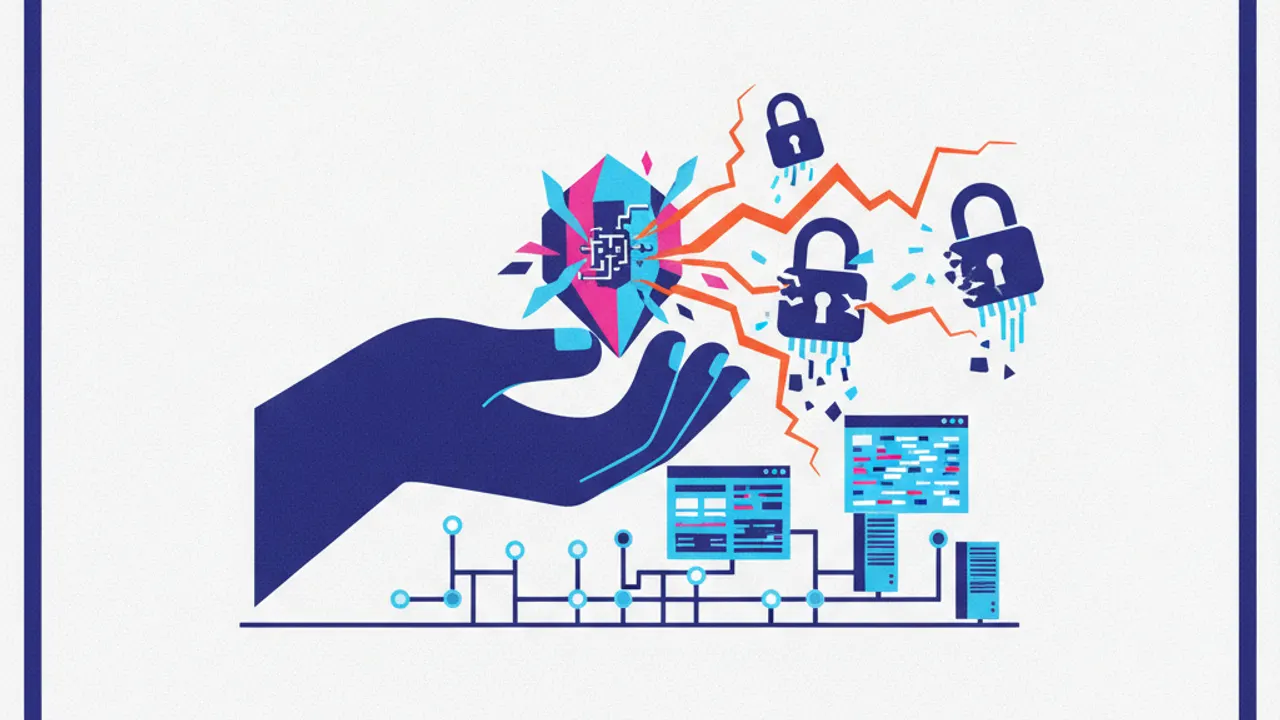
Renowned theoretical computer scientist and quantum physicist Scott Aaronson of the University of Texas at Austin issued a widely noted statement on November 25, 2026, regarding the rapid advances in AI-driven mathematics. Aaronson compared the current surge of machine-generated insights to Galileo's first view through the telescope, describing it as an entirely new continent of mathematical truth. This historical analogy highlights the remarkable velocity with which cutting-edge frontier models are currently unlocking previously inaccessible domains of formal reasoning. At the same time, the researcher warned of serious downstream consequences for global security structures.
At the heart of Aaronson's warning is the concern that leading AI laboratories may already possess unpublished mathematical breakthroughs. Such discoveries could ultimately undermine the core theoretical assumptions of modern cryptosystems, particularly the number-theoretic foundations governing factorization and standard encryption techniques. If models identify structural shortcuts to mathematical problems long presumed intractable, the entire foundation of modern digital security could be compromised. In direct response to these security implications, frontier laboratories have significantly tightened their safety reviews prior to releasing new models.
This cryptographic debate coincides with a broader academic challenge increasingly dubbed the Mathocalypse. Throughout November, frontier models produced a dense succession of formal proofs, frequently compiled in formal specification languages such as Lean. These machine contributions addressed intricate domains, including Fourier transformations and problems surrounding the P versus NP landscape, such as separations involving the classes VP and VNP. The sheer frequency of these computer-generated mathematical derivations represents a fundamental turning point in theoretical computer science.
This influx of generative output has radically relocated the primary bottleneck in scientific research. While identifying mathematical proofs historically constituted the limiting constraint, the bottleneck has now shifted to the capacity of human experts to review and verify them. Academic departments and research institutes face an overwhelming volume of complex deduction chains, lacking sufficient qualified personnel to perform rigorous peer evaluations. Traditional peer review, long the foundation of mathematical credibility, is being pushed beyond its operational and temporal limits.
The tangible dangers of this verification backlog have already manifested in concrete research setbacks. Several earlier drafts of machine-generated proofs had to be retracted after undetected sign errors were discovered deep within the formal arguments. These subtle flaws demonstrate that syntactic validity within formal frameworks does not automatically guarantee conceptual correctness if intermediate steps evade scrutiny. Such incidents have dampened uncritical trust in raw model outputs and heightened scrutiny among mathematical publications.
To address the mounting divergence between proof generation and human verification, scientific institutes are calling for the urgent development of automated verification pipelines. Rather than relying exclusively on manual expert review, future research environments must integrate rigorous formal verification architectures to validate deductions semi-autonomously. Establishing these automated verification layers is increasingly viewed as an essential prerequisite for unlocking the benefits of AI mathematics without compromising cryptographic standards or contaminating the academic literature.