
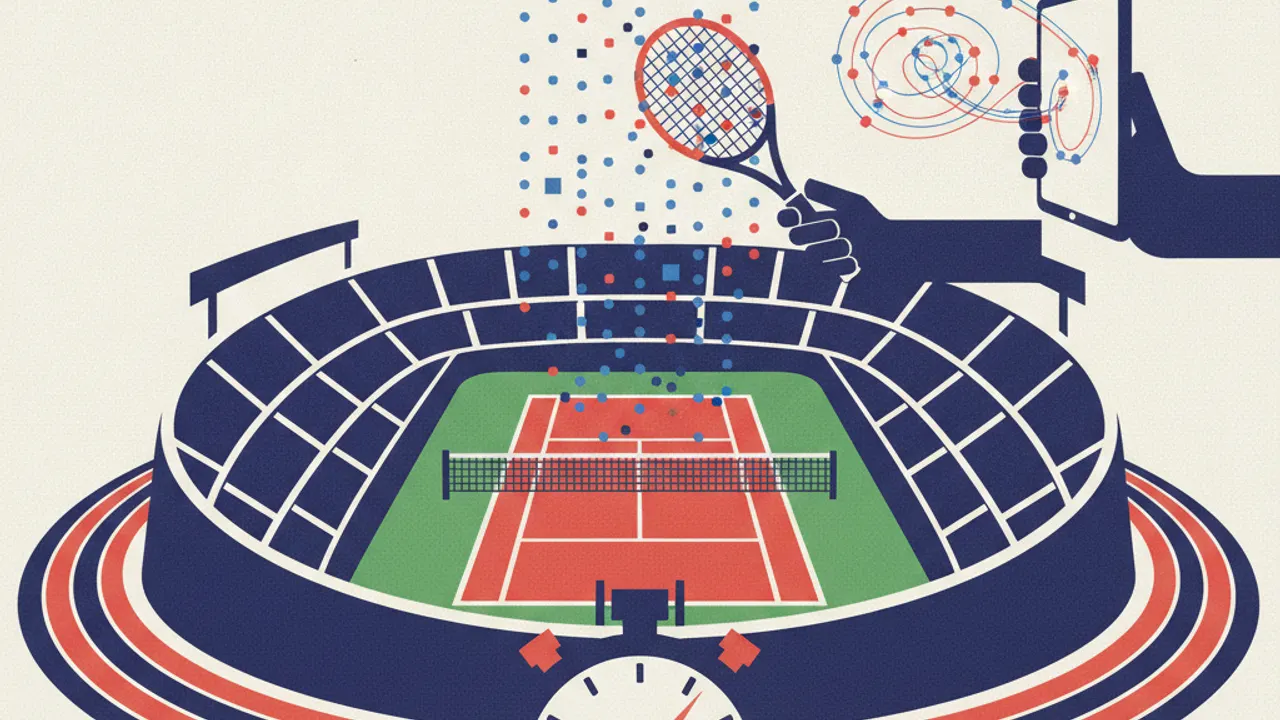
As the US Open 2026 entered its decisive final weekend, the United States Tennis Association (USTA) and its technology partner IBM shared operational results from their latest artificial intelligence deployment. The Grand Slam tournament in Flushing Meadows served as a high-profile showcase for integrated tracking architectures and generative models. The deployment delivered granular insights for tennis fans worldwide while offering concrete utility to coaching teams and the USTA editorial staff.
The headline technical innovation was the newly introduced Serve Quality metric. Using advanced optical tracking and specialized computer vision algorithms, the system monitored 21 distinct skeletal points across each player's body. Coupled with continuous three-dimensional coordinates for both ball and racket, the setup recorded measurements 50 times per second across eight biomechanically defined phases of a tennis serve. This tracking yielded approximately 4.6 million data points per match, generating more than 1.2 billion data points across the tournament.
From this continuous flow of positional data, the platform computed a biomechanical efficiency score in near real time. Spectators and coaching staffs could immediately observe physical metrics such as body kinetic chain alignment, racket head velocity, and the exact contact height. Subtle shifts in shoulder rotation or foot placement were flagged before human observers could detect fatigue or mechanical drift. These automated ratings fed directly into official broadcast graphics and digital consumer apps.
Beyond biomechanics, the deployment leveraged the IBM watsonx enterprise platform to enhance contextual storytelling for digital audiences. Algorithms evaluated matches rally by rally, recalculating win probabilities in real time and surfacing defining turning points through features like Key Moments and Match Chat. The system provided automated natural language explanations that outlined why specific unforced errors or tactical variations triggered pivotal shifts in match momentum.
The tournament also demonstrated significant productivity shifts inside back-office sports journalism. The USTA deployed agentic AI workflows to rapidly synthesize raw match statistics into draft recaps for its digital channels. While human editors retained strict oversight and manual quality control, the automated drafting process allowed the organization to increase its output of published editorial match recaps by 300 percent during the tournament.
The combination of high-density optical tracking and contextual language models illustrates a broader evolution in professional athletics. Sporting events are moving away from siloed post-match reviews toward continuous, integrated edge-computing pipelines that process data in the flow of play. For federations and technology vendors, Grand Slam tournaments serve as validation environments for systems that are poised to influence both elite training regimens and global fan engagement.