
The era of isolated artificial intelligence experiments is rapidly yielding to live operational deployments across enterprise environments. According to Creatio's State of Enterprise AI Adoption Report, published on October 20, 2026, 70 percent of organizations have moved beyond pure exploratory phases. These businesses have either embedded AI into specific business units, scaled implementations across departments, or anchored them enterprise-wide. A parallel survey by GoodFirms corroborates this momentum, noting that 83 percent of 343 surveyed executives now operate AI solutions across multiple core business functions.
This push toward broad operational adoption is backed by substantial capital expenditure. GoodFirms found that 92.2 percent of companies increased their AI budgets over the past year, with 59.3 percent reporting a significant spending jump. These investments are yielding tangible business returns: 62.7 percent of surveyed leadership teams report measurable cost reductions directly linked to their AI deployments, validating continued budget growth.
Autonomous and collaborative agents have emerged as the focal point of enterprise roadmaps. Creatio's survey of more than 600 global IT and business decision-makers indicates that over 75 percent plan to deploy cross-departmental AI agents within the next twelve months. Concerns regarding massive workforce reductions remain minimal in the data. Only 9 percent of respondents anticipate significant headcount cuts, whereas 89 percent expect agentic workflows to relieve existing teams, expand organizational capacity, and generate new internal roles.
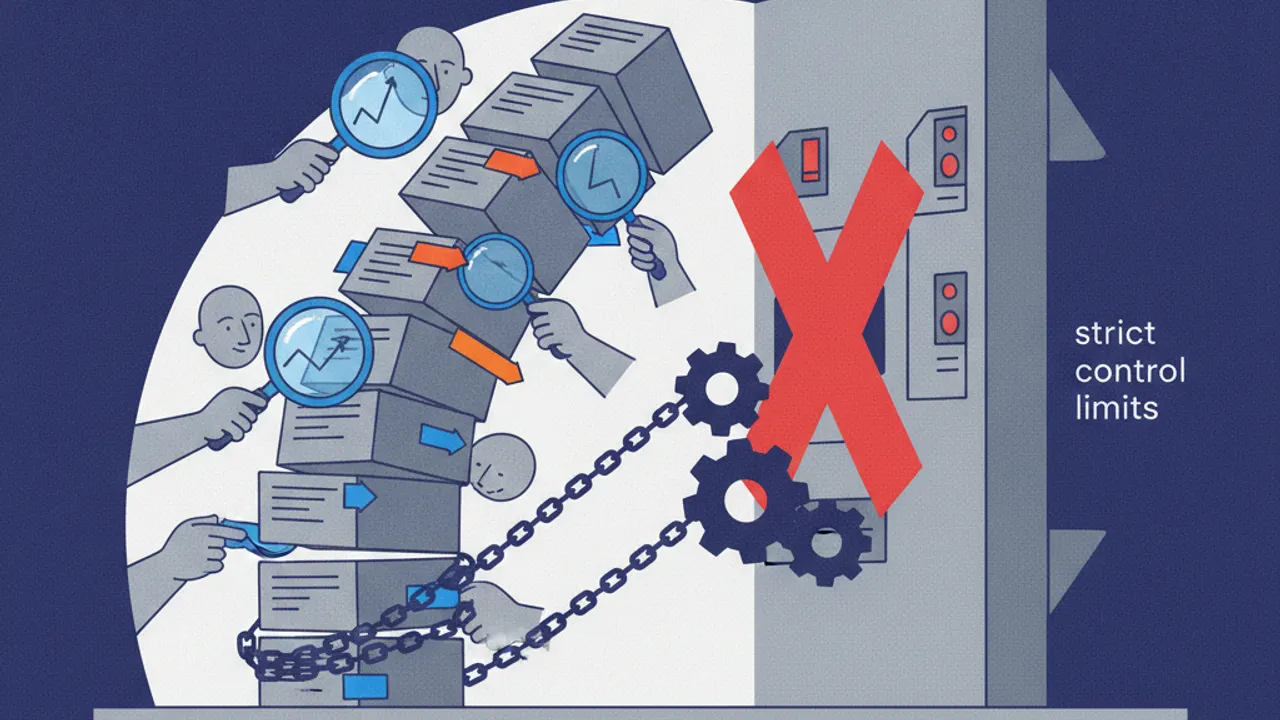
Despite ambitious rollout plans, a clear trust gap persists regarding autonomous operational intervention. The 2026 State of Observability Report by Grafana Labs and Enterprise Technology Research demonstrates that technical leaders remain cautious about granting full operational independence. While 85 percent of surveyed DevOps and platform engineers comfortably deploy AI for incident investigation and diagnostics, only 52 percent trust autonomous systems to remediate issues and execute changes directly in live production environments.
This operational hesitation is reinforced by strict governance mandates. According to the GoodFirms findings, 79 percent of business leaders enforce human-in-the-loop approvals before algorithmic systems can finalize mission-critical business decisions. Furthermore, enterprise data quality remains the primary roadblock to successful implementation, cited by 26.8 percent of respondents. Concerns over data privacy and cybersecurity ranked secondary, noted by 17.6 percent of business leaders.
Collectively, these industry findings reflect a disciplined, pragmatic maturation of enterprise technology strategy. Organizations are allocating serious capital and advancing agentic architectures, yet they actively constrain software autonomy through formal guardrails. The consensus value of modern enterprise systems currently centers on analytical preparation and routine workload reduction, leaving ultimate sign-off and critical interventions firmly in human hands.