
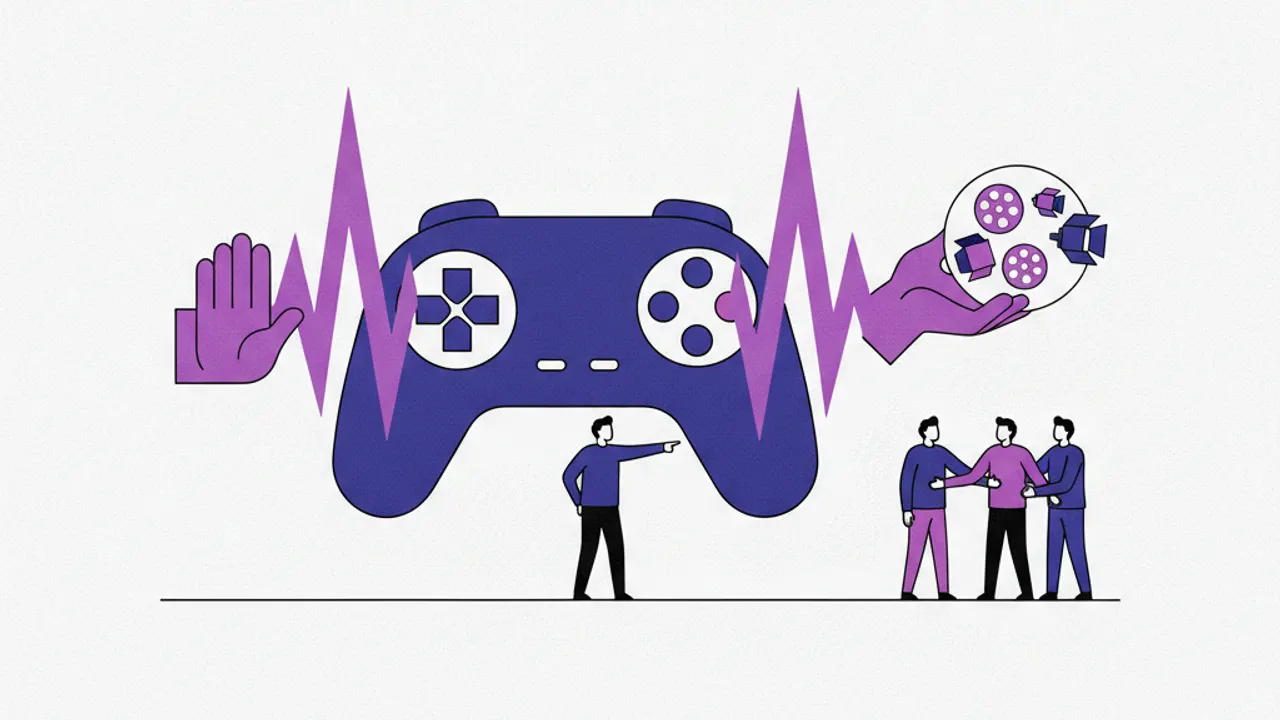
According to reports published on November 25, 2026, by Vertical Slice and gaming industry media, French publisher Ubisoft has introduced a controversial internal policy regarding generative artificial intelligence. Development teams pitching new game concepts and production projects must now explicitly detail where generative tools will be deployed. Any team that intentionally decides against using generative AI is required to formally justify its decision to corporate management.
Internal accounts indicate mounting friction between executive leadership and studio staff. Developers report an escalating environment where production leads feel pressured to incorporate automated software primarily to compress schedules and lower production budgets. Many creators voice concern that such mandates undermine artistic integrity and devalue specialized human craftsmanship across studio departments.
The institutional resistance extends well beyond individual studios. On November 16, 2026, six European video game worker unions issued a joint manifesto titled 'On Generative AI Usage in the Games Industry'. Spearheaded by the United Kingdom's IWGB Game Workers and joined by labor groups from France, Germany, Italy, Ireland, and Spain, the coalition rejected executive assertions that generative workflows are unavoidable. The manifesto explicitly demands that using generative AI must remain strictly voluntary for all industry employees.
Industry-wide sentiment reflects this deep division, as detailed in the Game Developers Conference State of the Industry report conducted between November 12 and 19, 2026. Surveying more than 2,600 professionals, the research found that 40 percent of developers now utilize generative AI in their work, representing a four percentage point rise compared to the previous year. Nevertheless, an outright majority of 55 percent of developers maintain an explicitly negative stance toward generative AI in video game production.
The data highlights a pronounced gap between actual daily usage and executive ambitions for automated asset production. Among developers who use the technology, 73 percent apply it to brainstorming and exploratory research, while 56 percent use it to debug code. Conversely, merely 8 percent of developers employ generative AI to create finished in-game graphics or visual assets, demonstrating that current adoption remains concentrated in auxiliary support functions.
This growing gulf between corporate directives and frontline developer sentiment is poised to reshape labor relations across European studios. By making AI adoption the default expectation, publishers risk alienating specialized talent and accelerating unionization efforts. As collective organizing intensifies across the games sector, the right to reject automated tools is quickly becoming a foundational standard in collective bargaining agreements.