
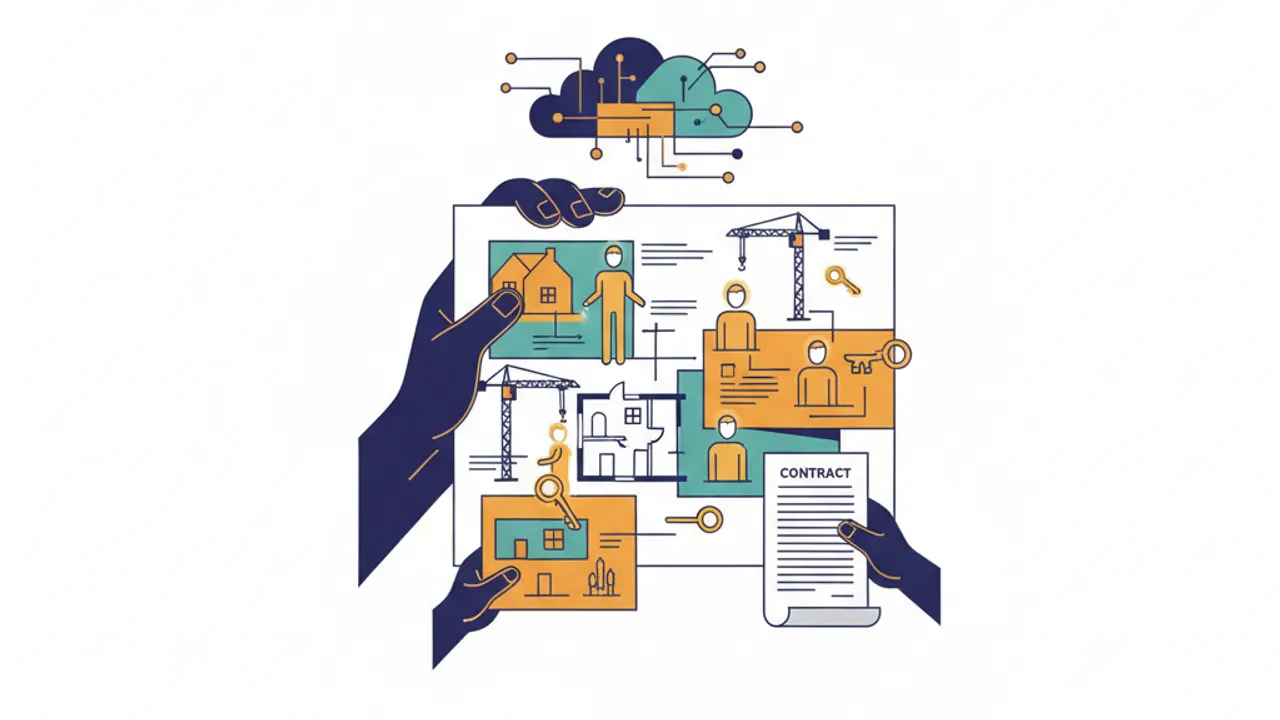
Construction risk software company Document Crunch, a subsidiary of technology firm Trimble, has expanded its CrunchAI analysis platform to ingest and interpret complete construction drawing sets. Announced on October 21, 2026, the technological update enables project teams to cross-examine visual blueprints directly alongside contract agreements and project specifications. Previously, the platform concentrated primarily on detecting legal and commercial risks in purely text-based contract documents.
In the construction sector, discrepancies between written project manuals and architectural drawings represent a primary source of budget overruns, change orders, and disputes. General contractors and specialty subcontractors typically review hundreds of drawing sheets under severe time pressure before submitting bids. Manual reviews frequently overlook subtle inconsistencies between trade scopes and general conditions, leaving teams vulnerable to unexpected liabilities once ground is broken.
The updated CrunchAI engine extracts and indexes plan notes, installation tolerances, and performance clauses across large plan sets. Estimators and project managers can query the combined repository of contracts and drawings using a conversational chat interface. The system evaluates whether specific technical requirements shown on a blueprint contradict provisions established in the prime contract or trade agreements.
A central focus of the new capability is identifying scope gaps before contracts are signed. If an engineering note on a mechanical drawing mandates equipment requirements not accounted for in the project specifications, the system flags the conflict. Every identified discrepancy comes with verifiable visual links, directing estimators directly to the relevant drawing sheet and precise coordination note.
The launch marks a deeper integration of legal risk oversight into technical preconstruction workflows. For contracting firms navigating tight profit margins, automated alignment between specifications and drawings shifts risk mitigation to the earliest planning stages. Catching uncoordinated details during preconstruction protects subcontractors from absorbing unforeseen labor and material expenses on the jobsite.