On September 3, 2026, Tesla officially launched commercial passenger operations for its fully autonomous Cybercab in Austin, Texas. The move marks an important transition from internal testing programs to a commercial mobility service operating on public city streets for paying customers. Passengers are transported without any human safety driver inside the vehicle. Initial rides took place within the Austin metropolitan area after Tesla unlocked the service for selected customer groups. The rollout was quickly picked up by industry observers and technical podcasts such as TBPN, highlighting the shift toward fully uncrewed commercial transport.
The Cybercab represents a radical departure from conventional motor vehicles and standard driver assistance technologies. The all-electric two-seater is manufactured entirely without a steering wheel, accelerator or brake pedals, and side mirrors. The cabin layout is dedicated entirely to passenger comfort, while navigation, perception, and driving decisions are handled exclusively by neural networks and vision systems. This design aims to lower production costs, but it places total reliance on the algorithmic integrity of the software. Consequently, passengers have no mechanical or electronic interface to manually intervene in vehicle operations during unforeseen traffic events.
Coinciding with the start of commercial operations in Texas, Tesla leadership shared new performance metrics for its autonomous fleet. Ashok Elluswamy, head of AI at Tesla, announced that the company had surpassed one million unsupervised robotaxi miles. This milestone was highlighted to demonstrate that the underlying autonomous driving system can operate reliably in complex traffic environments. Within developer communities and technical analysis circles, the figure triggered substantive discussions regarding the transparency and statistical sufficiency of these real-world miles. Nonetheless, the company presented the record as clear evidence of technical readiness.
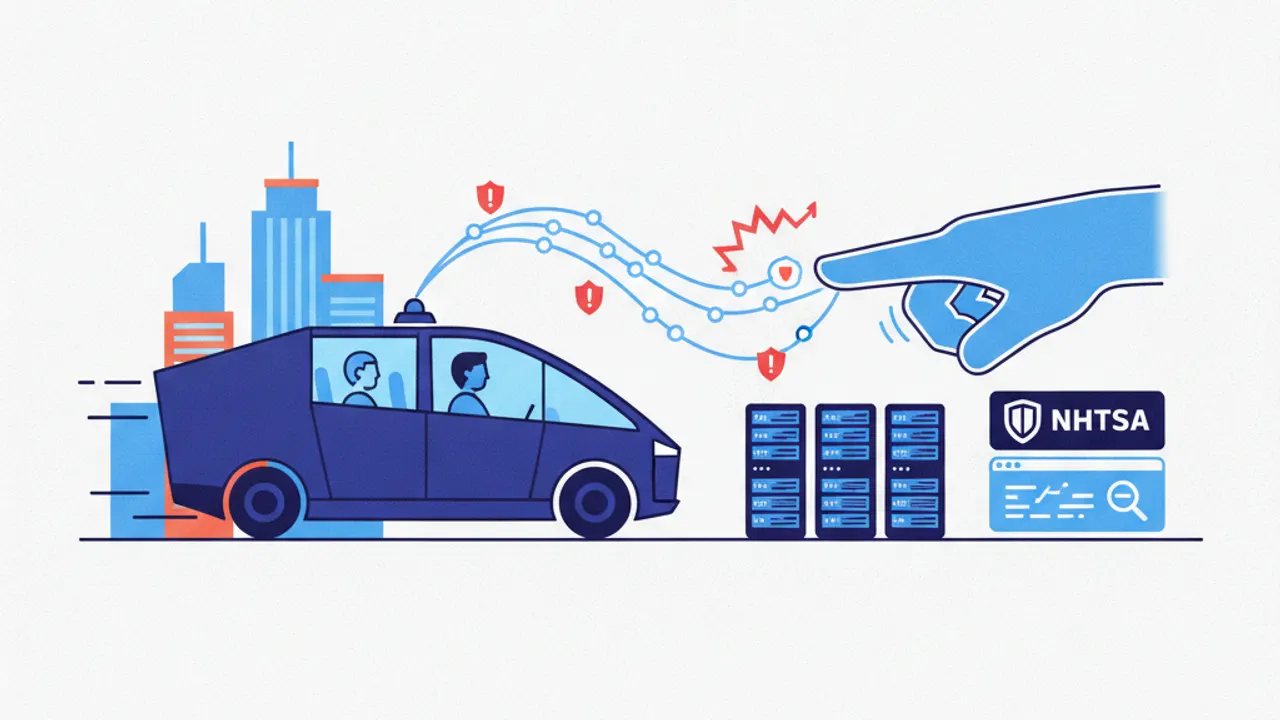
The sudden commercial launch triggered an immediate response from federal regulators in Washington. The National Highway Traffic Safety Administration (NHTSA) opened a formal inquiry in the form of an Audit Query shortly after the first commercial rides were confirmed. The agency is demanding detailed technical disclosures and documentation from Tesla regarding how the vehicle ensures safe passenger transit without conventional driver controls. As a result, the commercial deployment faces intense regulatory scrutiny within days of its public debut.
At the core of the NHTSA investigation is Tesla's compliance with the Federal Motor Vehicle Safety Standards (FMVSS). Federal investigators are examining the precise empirical data and testing methodologies Tesla used to self-certify that the Cybercab meets all required safety mandates. Because existing safety standards historically assume the presence of physical steering and braking mechanisms, regulators are evaluating whether Tesla's self-certification is legally valid without formal federal exemptions. The agency is requiring Tesla to submit the underlying documentation supporting its self-declared compliance.
This regulatory confrontation holds significant ramifications for the wider autonomous vehicle sector. It highlights the growing tension between fast-moving tech deployments and stringent safety oversight by transport authorities. Should the NHTSA uncover shortcomings in Tesla's data validation or compliance procedures, the agency could impose operational restrictions or order an interim halt to the rollout. The dispute demonstrates that the future of driverless fleets depends as much on rigorous governance and legal conformity as it does on artificial intelligence.