
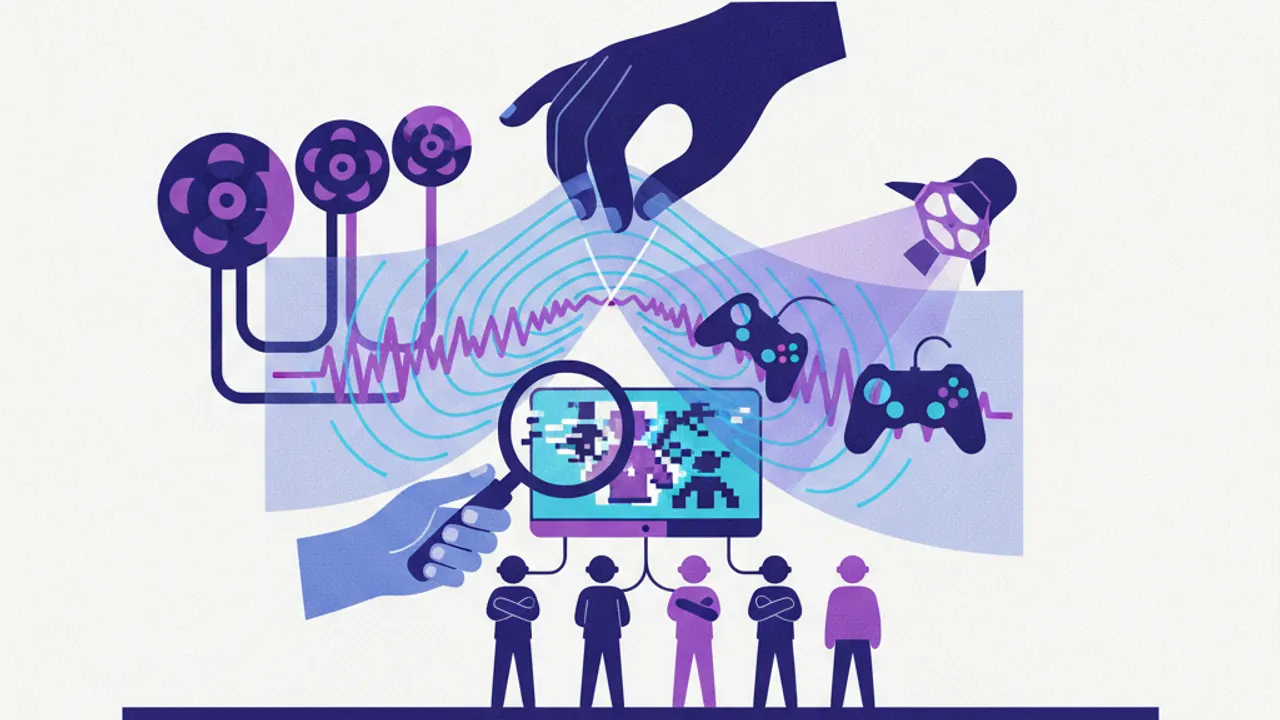
In early October 2026, short video clips circulated rapidly across X and YouTube, creating considerable excitement within the gaming community. The footage showcased seemingly impossible mashups of major video game titles, including the native movement mechanics of Super Mario inside Elden Ring as well as physics from Skate 3 embedded into Modern Warfare II. Enthusiasts quickly framed the clips as definitive proof that large language model agents could now autonomously compile complex software modifications from simple prompts. These claims fueled immediate speculation across social media that traditional programming workflows in game development were becoming obsolete.
A rigorous reality check arrived shortly thereafter across specialized tech media. On October 5 and 6, 2026, the tech format Diet TBPN, part of the Technology Brothers Podcast Network, convened industry insiders to examine the technical foundations of these demonstrations. Complementary investigations published by the newsletter Garbage Day revealed that autonomous, end-to-end code generation was not responsible for the mashups. The narrative that an artificial intelligence model had independently parsed and rewritten proprietary game binaries proved to be a substantial misunderstanding of how the software functioned.
Technical teardowns demonstrated that the projects relied on a combination of established reverse engineering assets and tightly managed agent scripts. Programmers utilized AI agents primarily as runtime bridges, synchronizing memory states across two distinct processes executing concurrently on the system. Furthermore, developers leveraged decompiled binary libraries such as the open-source LibSM64 project, using agent tools to wire them directly into modern game hooks. The models served as specialized glue code generators and translators rather than autonomous game designers, still requiring precise structural guidance from experienced human engineers.
Despite the deflation of the initial viral hype, the episode illustrates a practical milestone for game modding and software prototyping. Tasks that previously demanded months of arduous memory mapping, binary inspection, and manual hook assembly can now be coordinated in days through agentic workflows. Developers are able to delegate repetitive porting routines and interface alignment to automated assistants, radically accelerating the creation of playable cross-game experiments. The phenomenon highlights how generative agents create concrete value not by replacing domain knowledge, but by reducing the mechanical friction of technical integration.
This debate mirrors a broader recalibration underway across the interactive entertainment industry as practical deployment outpaces early speculative claims. While major studios simultaneously work toward deeply integrated generative tools within proprietary engines, grassroots modders are already probing practical boundaries. Automated runtime bridges lower the barrier to manipulating legacy software, yet they still depend on human architects to formulate the operating parameters. For developers and creators, the trend signals a transition toward orchestrating specialized agent pipelines rather than relying on pure prompt-based automation.