
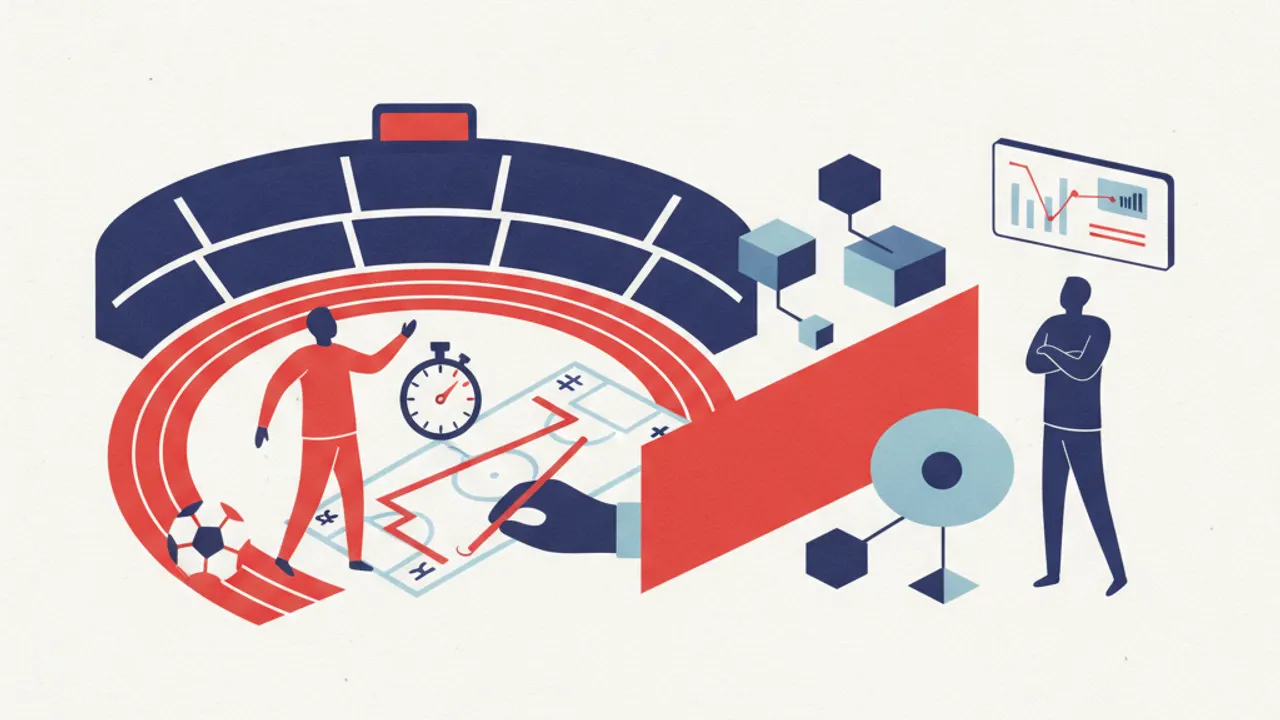
In mid-September 2026, the expanding role of algorithms in sports preparation prompted international scrutiny regarding the limits of automated tactical planning. During the announcement of his first squad as South Korea's interim national team manager on September 14, Robert Moreno addressed allegations connected to his departure from Russian club FC Sochi. Previous reports had suggested that his dismissal followed accusations of delegating preparation and tactical decisions primarily to AI models. Moreno firmly rejected these claims, emphasizing that automated tools cannot replace the leadership of a coach.
Moreno nevertheless acknowledged incorporating predictive AI and sophisticated data analytics directly into his coaching routine. These systems are used to monitor physical workloads and assess positional flexibility across the roster, including adjustments for team captain Son Heung-min. For Moreno, the operational boundary remains clear: algorithms provide analytical insights, but tactical authority resides strictly with human coaching staff. The clarification focused widespread attention on preserving managerial autonomy against automated recommendations.
A parallel assessment of algorithmic boundaries emerged in international motorsport. On September 16, Formula 1 IT Director Chris Roberts and NASCAR Head of AI Richard Bowman outlined the operating parameters governing generative and agentic AI. Both racing organizations are evaluating how automated systems reshape the connection between the pit wall and engineering centers. However, NASCAR and Formula 1 are applying distinct risk thresholds to their respective technical roadmaps.
NASCAR has scaled artificial intelligence to streamline internal operational workflows and automate the delivery of social media content. Formula 1, by contrast, voiced caution regarding reliance on autonomous models during live race conditions. Roberts underscored that in an environment demanding mechanical precision, the risk of AI hallucinations carries unacceptable operational consequences. Erroneous algorithmic outputs cannot be permitted to dictate strategic variables such as pit stop windows or chassis setup configurations.
Formula 1 teams are consequently restricting agentic AI models to background data tasks. Approved applications focus primarily on aggregating massive historical archives and flagging anomalies across live telemetry feeds. Roberts and Bowman made clear that while autonomous agents excel at structuring dense performance metrics, they lack the contextual adaptability required to make live tactical decisions on the track.
Across association football and elite motorsport, these parallel developments signal a disciplined approach toward sports technology. Competitive organizations are shifting away from unconstrained automation toward strict governance hierarchies. From national team training facilities to Formula 1 command posts, sports entities are ensuring that artificial intelligence remains an advisory tool rather than an autonomous decision maker.