
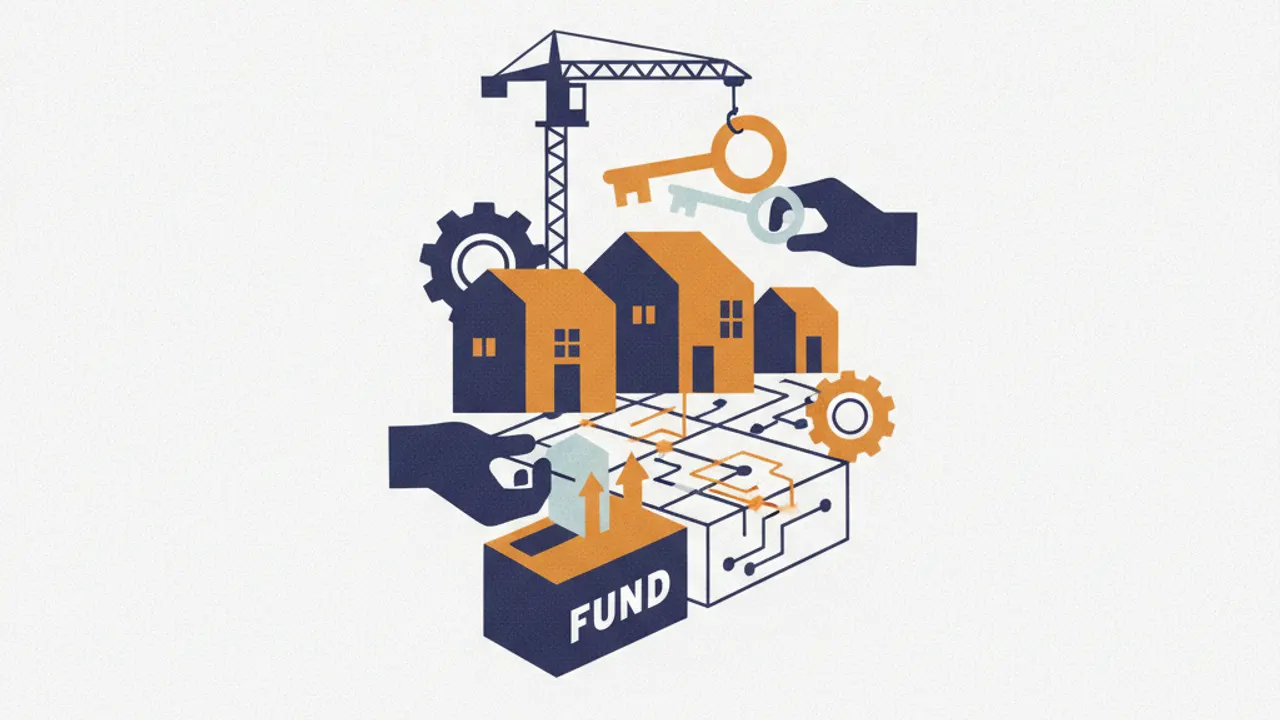
Traditional Japanese construction and real estate major Taisei Corporation is committing significant capital to next-generation construction technologies. In collaboration with Silicon Valley based firm Pegasus Tech Ventures, the corporation announced the establishment of a dedicated corporate venture capital fund. The investment vehicle is capitalized with 150 million US dollars, equivalent to approximately 24 billion yen. Pegasus Tech Ventures acts as the general partner, overseeing international deployment and portfolio management.
The fund is structured with a ten-year operational timeline spanning from 2026 to 2036. Its investment mandate targets early and growth-stage technology ventures across pivotal domains in the built environment. Priority areas include artificial intelligence applied directly to construction job sites, autonomous robotics, and advanced digital twin technologies. Additionally, the fund explicitly targets computing infrastructure for AI data centers, specifically high-performance liquid cooling systems.
The primary catalyst behind this aggressive investment push is the structural demographic challenge facing Japan. The domestic construction sector is experiencing a rapidly aging workforce paired with a severe shortage of incoming skilled labor. Taisei intends to counteract these constraints through systematic automation. Digital solutions will increasingly handle on-site process tracking and subcontractor management, reducing reliance on manual administrative supervision.
By teaming up with Pegasus Tech Ventures, Taisei gains direct entry into prominent technology ecosystems across North America, Europe, and Asia. The California-based firm possesses extensive experience orchestrating corporate venture mechanisms for large multinational corporations. For emerging ConTech startups, the fund provides more than growth capital: it unlocks access to real-world deployment and validation across Taisei's expansive commercial construction sites.
The dedicated allocation for data center infrastructure highlights another structural shift across the engineering and real estate sectors. The global surge in large-scale machine learning models necessitates substantial investments in physical infrastructure with demanding thermal requirements. For contractors like Taisei, constructing and engineering efficient cooling frameworks for advanced computing facilities represents an attractive growth vertical. The fund aims to source cutting-edge liquid cooling technologies tailored to these facilities.
Taisei's initiative reflects a broader pattern among tier-one general contractors turning to venture capital to accelerate their digital transformation. Rather than attempting to engineer complex AI systems entirely in-house, construction leaders are securing early strategic positions in specialized tech firms. The convergence of algorithmic site logistics, autonomous robotics, and thermal infrastructure addresses critical operational bottlenecks that traditional construction methods can no longer resolve.