
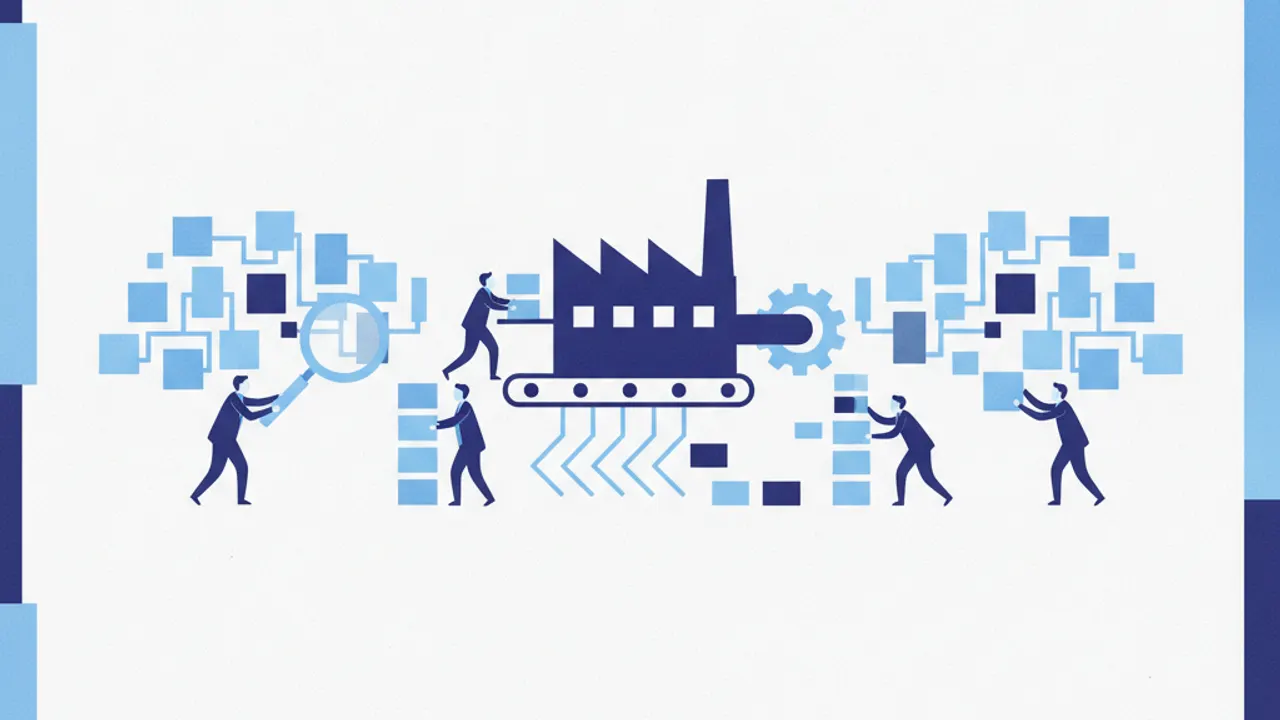
Artificial intelligence has reached the broader German Mittelstand, yet practical adoption remains limited to isolated experiments across most enterprises. This reality is documented in a study released on November 17, 2026, by PwC, which surveyed 400 German mid-sized enterprises with annual revenues exceeding 50 million euros. While 74 percent of surveyed organizations reported initial experience with third-party AI software, only 23 percent have deeply embedded these tools into their internal business processes. For the vast majority, the upfront implementation costs currently still surpass any realized operational savings.
Hesitation is particularly evident across sensitive administrative and financial operations. In finance and controlling departments, only 10 percent of mid-sized companies currently utilize AI solutions, according to the PwC findings. The report identifies missing governance frameworks, ongoing data security concerns, and unresolved ethical issues as primary roadblocks preventing wider implementation. Many companies remain reluctant to pass proprietary business figures to external algorithms without formal compliance structures in place. As a consequence, many software initiatives remain trapped in isolated testing phases without contributing to operating margins.
Differences in adoption are also heavily dictated by industry sector, as highlighted in a survey of roughly 1,300 firms published by ZEW Mannheim on November 18, 2026. Within the information economy, 74 percent of companies consider AI important or very important for maintaining competitiveness over the coming three years, with 46 percent selecting very important. In the manufacturing and industrial sectors, however, 30 percent of enterprises still view the technology as irrelevant or largely insignificant. This disparity underlines a persistent conceptual gap between digital businesses and traditional production environments.
A central conclusion of the ZEW research highlights the outsized role played by executive leadership during technological transformation. The researchers observed that firm-level AI adoption directly correlates with how regularly members of the executive board personally use AI tools in their daily work routines. When corporate leaders integrate conversational interfaces or automated tooling into their own schedules, organizational hesitation among employees decreases markedly. Conversely, when senior management remains detached from the technology, operational rollouts routinely stall within departmental management layers.
Despite industrial skepticism, practical applications are advancing across technical production environments. A parallel survey published by the Smart Electronic Factory association among 141 industrial enterprises, 78 percent of which employ fewer than 500 staff, points to pragmatic implementation priorities. Approximately 55 percent of these manufacturing firms deploy AI tools productively in marketing and sales operations, while 34 percent utilize them in engineering and product development. Direct assembly and shopfloor manufacturing lines report adoption rates of nearly 25 percent, and 97 percent of participating firms intend to increase their technological investments.
Taken together, these three studies illustrate a mid-market sector operating in an intermediate transformation phase. The initial phase of uncritical fascination has passed, giving way to the complex organizational reality of technical integration. Without tailored employee training, clear internal governance, and active involvement from executive boards, upfront capital spending risks generating negligible returns. Over the coming quarters, the core challenge for mid-sized enterprises will consist of converting informal pilot tests into verifiable operational productivity gains.