
Skip to content
AI ConnectPowered by VELENTIS
AI-generated2 min

Surveys by TCS, Zapier, and Lenovo Show AI Agents Spreading Fast While True Autonomy Remains Rare

Surveys from TCS, Zapier, and Lenovo show AI agent adoption in production is surging, but strict governance and integration gaps mean true cross-functional autonomy remains rare.

This article was AI-generated and published automatically. Context, labelling and all sources at the end of the article.

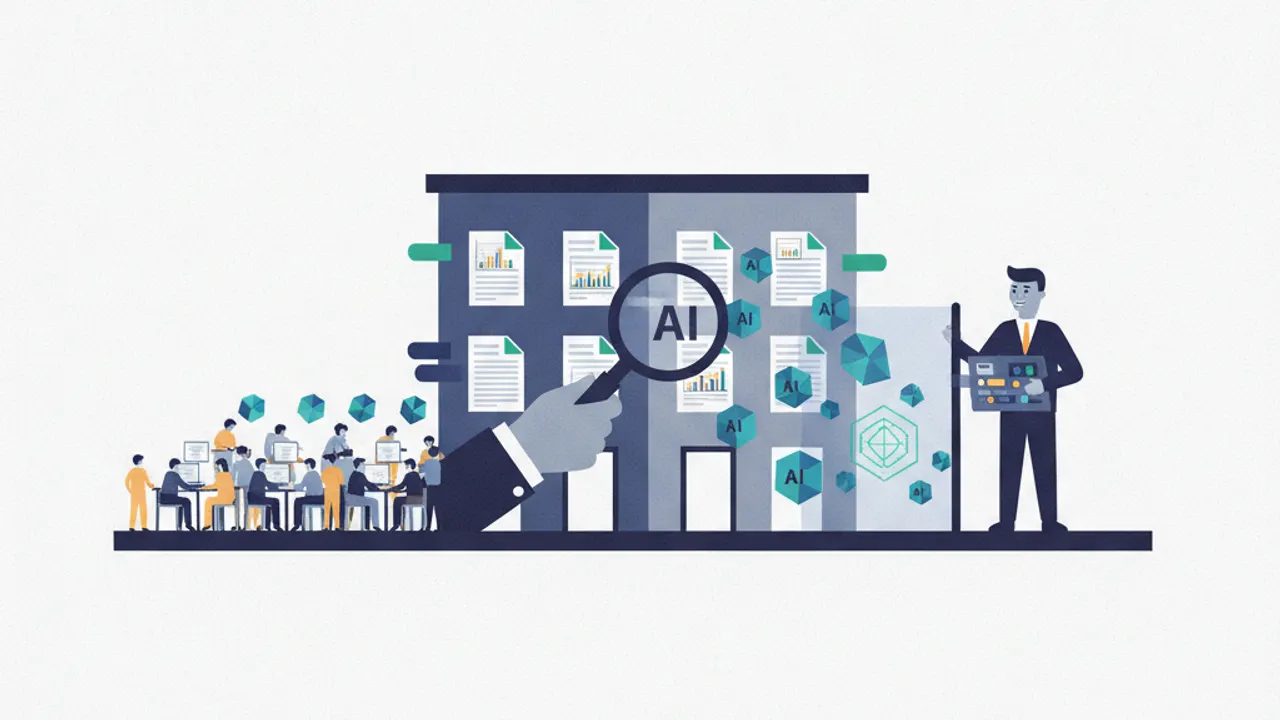
(KI-generiertes Symbolbild: Gemini / AI Connect)

The deployment of agentic artificial intelligence is accelerating rapidly across large enterprises, yet practical adoption continues to run into strict organizational and operational boundaries. New survey data published by Tata Consultancy Services, Zapier, and Lenovo reveals that while productive implementations are surging, businesses rarely grant their software agents unmonitored decision-making powers. Rather than fully autonomous digital workers, corporate deployments remain characterized by tightly supervised workflows and isolated functional silos.

Data from Zapier's 2026 Enterprise AI Agents Survey illustrates how quickly adoption has expanded over the past year. Approximately 88 percent of surveyed enterprise organizations are now utilizing or evaluating AI agents, up from 72 percent in 2025. The shift into full production is particularly pronounced, with the share of active deployments jumping from 40 percent to 71 percent. Furthermore, 90 percent of enterprises report at least one positive business outcome from their implementations, with nearly half noting that investments amortized within twelve months.

Despite these widespread rollouts, self-directed execution remains severely limited. According to Zapier, only 30 percent of adopting companies state that their agents handle the majority of tasks without human intervention. The global Enterprise AI Study by Tata Consultancy Services, which surveyed executives across 25 countries, paints an even stricter operational reality. Only 10 percent of enterprises worldwide permit their AI agents to execute cross-functional decisions without formal human sign-off, maintaining a strict human-in-the-loop requirement.

A major cause of this constraint lies in system integration hurdles documented by TCS. Just 9 percent of organizations confirm that their agents can orchestrate complex workflows across varied applications safely and without errors. Consequently, executive priorities have shifted noticeably. Security, risk mitigation, and governance frameworks have supplanted deployment speed and cost reduction as primary criteria for launching agentic tools, even though 84 percent of respondents highlight direct productivity gains as the primary value realized so far.

This organizational disconnect is reinforced by Lenovo's sixth Work Reborn Report, based on responses from 1,200 IT decision-makers in companies with more than 1,000 employees. While 80 percent of IT leaders consider an AI-ready workplace critical for success, merely 10 percent have fundamentally redesigned their workflows, employee roles, and digital infrastructure accordingly. Although 76 percent rank artificial intelligence among their top strategic priorities, only 27 percent have succeeded in scaling AI applications beyond isolated departments across the entire organization.

Taken together, the findings mark a clear pivot from initial experimentation toward sober operational reality. The vision of self-directed autonomous agents operating without supervision is yielding to a pragmatic framework centered on human oversight and rigorous error handling. Until legacy system architectures are systematically integrated to allow cross-functional automation, enterprise agents will primarily serve as specialized, closely supervised assistants rather than independent corporate actors.

What this means for you

For enterprise leaders, this indicates that the near-term value of AI agents lies in targeted workflow acceleration rather than the removal of human oversight. Achieving scalable autonomy will require sustained investment in cross-application integration and staff validation capabilities, rather than relying on out-of-the-box autonomy.

Perspectives

Coverage: 3× Other

One story, several angles: how each source frames the topic, each with a verbatim quote.

  • news.lenovo.comOther

    Lenovo highlights that while most IT leaders view the digital workplace as critical for AI success, very few have fundamentally redesigned it to support human and AI agent collaboration.

    Original quote

    „Organizations are exploring how AI agents could change responsibilities more often than formalizing human-plus-agent workforce models.“

    news.lenovo.com
  • tcs.comOther

    TCS emphasizes that while productivity is seen as AI's top enterprise benefit, only ten percent of organizations permit AI to act without human oversight.

    Original quote

    „84% say productivity is AI’s top benefit; just 10% let AI act without human oversight“

    tcs.com
  • zapier.comOther

    Zapier stresses that while a large majority of enterprises now use or test AI agents, most still require human supervision.

    Original quote

    „88% of enterprises now use or test AI agents, but most still need a human in the loop“

    zapier.com

Source classification is maintained editorially (political spectrum only where consensus is broad; vendor communication is PR, not journalism). Unlabelled sources are unclassified: we do not guess.

Evidence

Well sourced
78/100
  • According to a global study by TCS, only 10 percent of enterprises permit their AI agents to execute cross-functional decisions without formal human approval.

    verified
  • Only 9 percent of organizations surveyed by TCS have agents capable of orchestrating complex workflows across applications safely and without error.

    single source
  • Zapier found enterprise agent adoption in production climbed from 40 percent in 2025 to 71 percent in 2026, yet only 30 percent report agents complete most tasks without human intervention.

    verified
  • Lenovo reported that while 80 percent of IT leaders view workplace readiness as vital for AI, only 10 percent have fundamentally restructured workflows and only 27 percent have scaled AI across the entire enterprise.

    verified

The evidence score is computed, not hand-set: from confidence, the number of sources and the share of verified statements.

Source & transparency

As of: November 14, 2026

AI-generatedAI-generated: produced automatically from vetted sources with technical quality checks (source, quote and figure verification); no human sign-off of each item before publication

Sources
3
Verified statements
3 / 4
Evidence score
78Well sourced

Want to put this into practice?

We connect you with suitable AI providers from the DACH region, free of charge and without obligation.

What's next?