
According to the third annual report published on 17 November 2026 by the London School of Economics and consulting firm Protiviti, 74 percent of employees now utilize AI tools in their daily work. In the 2024 survey, that figure stood at just 29 percent. Based on responses from 3,001 professionals worldwide, the study demonstrates a rapid penetration of automated solutions across enterprise workflows. Alongside this rapid uptake, workplace perceptions of automated assistance have shifted dramatically.
The findings from LSE and Protiviti reveal a pronounced shift in managerial and peer expectations. Nearly half of surveyed workers, exactly 48 percent, now fear being judged negatively if they do not incorporate AI frequently enough into their routines. By contrast, only 20 percent still worry about facing criticism for utilizing generative systems on the job. The initial skepticism surrounding enterprise tools has largely transformed into an institutional pressure to conform.
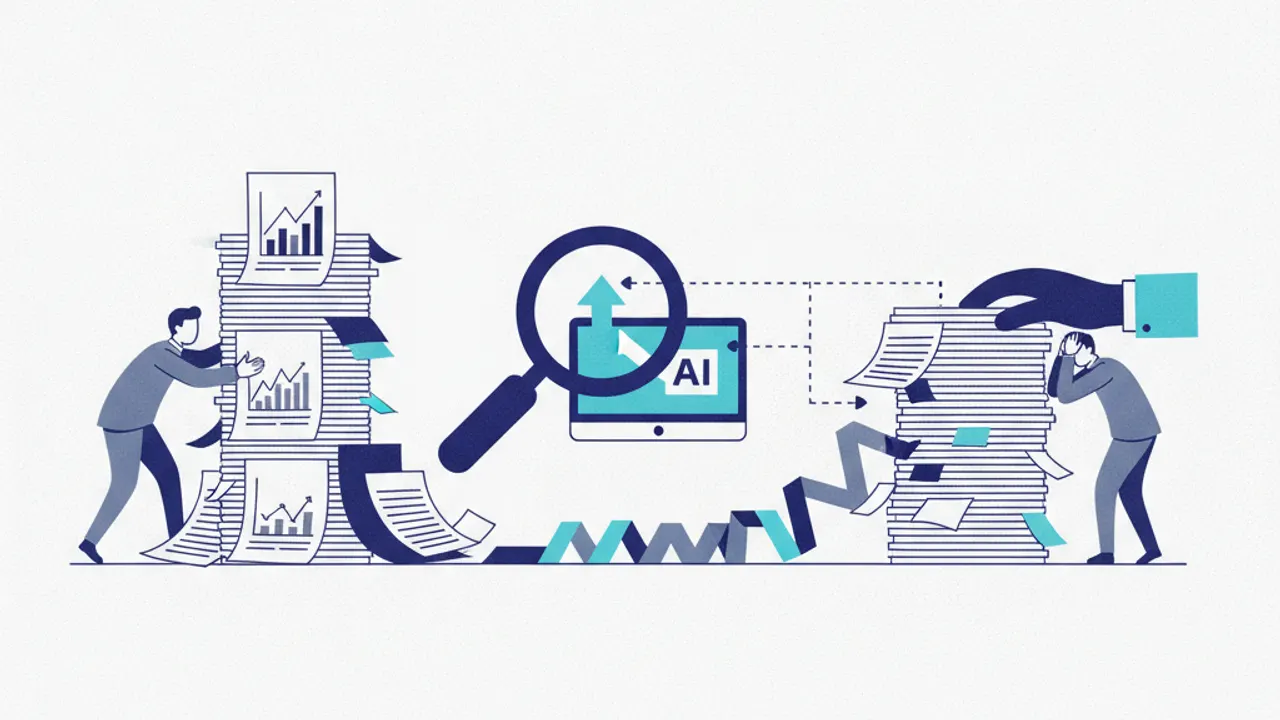
Despite clear productivity gains, deploying AI tools rarely translates into genuine workplace relief. The LSE and Protiviti study shows that AI users save an average of 19 percent of their weekly working hours through automation. However, rather than reducing overall stress or shortening hours, 72 percent of that saved time is directly reinvested into additional operational duties. This dynamic, termed workload creep by researchers, permanently raises baseline workloads and the minimum output expected by supervisors.
This expansion of task volume is compounded by substantial manual verification, a burden quantified as a trust tax by Stibo Systems in its report released on 12 November 2026. While 72 percent of enterprise leaders claim to trust AI-generated outputs, front-line reality tells a very different story. A notable 65 percent of staff must manually cross-check, review, or correct AI outputs before they can be deployed safely. This constant requirement for manual oversight ties up vital human capacity that typical productivity calculations ignore.
A primary driver behind this ongoing rework is a persistent lack of transparency regarding enterprise data assets. According to the Stibo Systems survey, fewer than 30 percent of business executives can reliably trace or audit the internal source data underlying a specific model output. This opacity forces knowledge workers to audit generated materials diligently to prevent business errors. Consequently, the promise of seamless end-to-end automation frequently collides with incomplete enterprise data governance.
Taken together, the findings from LSE, Protiviti, and Stibo Systems illustrate a challenging landscape for the AI-enabled workforce. Professionals find themselves caught between soaring managerial expectations and flawed model outputs that demand continuous manual correction. As long as organizations treat reclaimed hours merely as capacity for more operational volume, employees will experience little personal relief. For many workers, current AI adoption produces task intensification rather than professional breathing room.