
The widespread rollout of generative artificial intelligence across corporate offices is often hailed by management as a guarantee of massive productivity leaps. New studies published in the autumn of 2026, however, present a far more sobering reality regarding the daily routines of employees. According to "The Business-Ready AI Gap 2026", a report released on October 1, 2026, by software provider Templafy, 90 percent of surveyed knowledge workers in the United States and the United Kingdom now rely on generative AI at least weekly to draft documents. Yet, instead of delivering effortless acceleration, the survey highlights severe operational friction when workers attempt to deploy generated texts in professional settings.
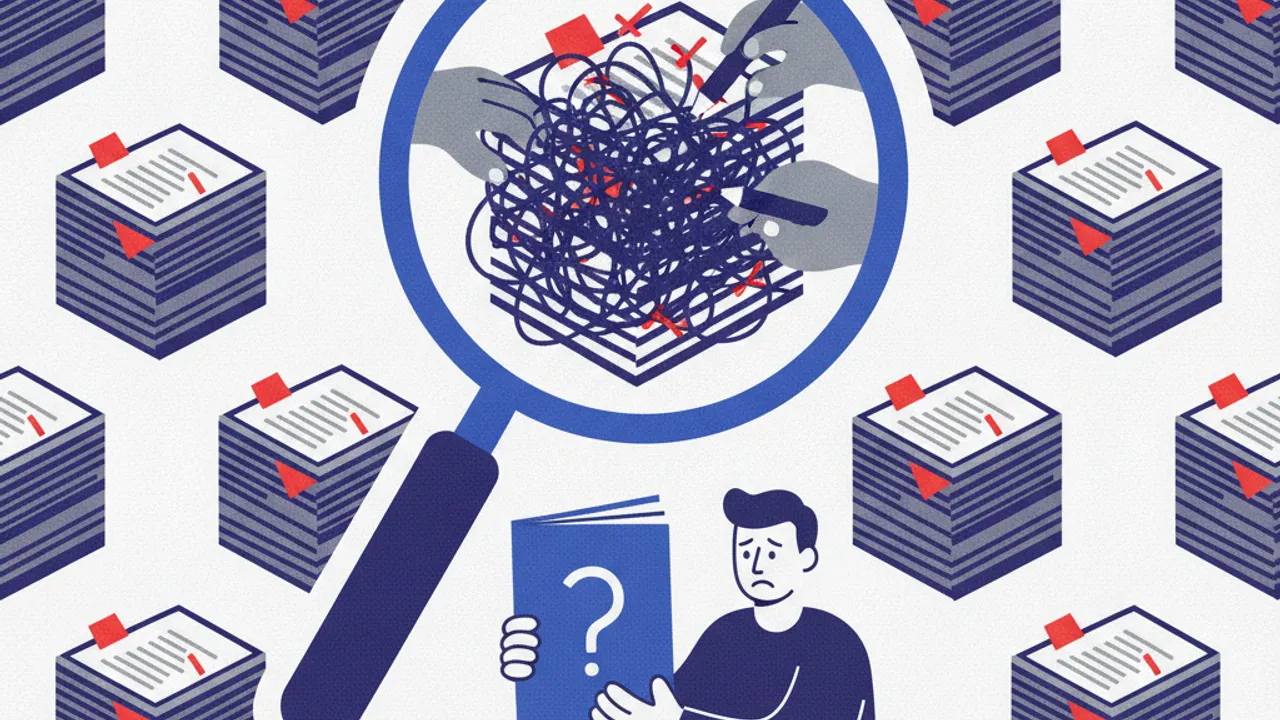
The primary cause of this shortfall is an extensive post-editing bottleneck that emerges immediately after initial text generation. A striking 95 percent of knowledge workers surveyed by Templafy report that they must manually review, adapt, or correct AI outputs before documents can be shared internally or externally. While 60 percent of respondents consider raw drafts usable, turning these outputs into release-ready, context-accurate corporate documents demands significant manual intervention. This persistent gap demonstrates that while generative models produce quick initial templates, their results fail to meet the rigorous standards of professional business communication without thorough human filtering.
The time required for these manual verifications is substantial and directly threatens the core value proposition of the generative AI boom. On average, knowledge workers spend nearly four hours every week solely validating, revising, and correcting machine-generated content, according to Templafy. Consequently, 48 percent of surveyed employees report that this rework largely consumes the initial time saved through automated document generation. Transforming initial drafts into final, compliant business documents has therefore emerged as a primary roadblock preventing enterprises from realizing their anticipated efficiency gains.
The emergence of these productivity drains is closely linked to how organizations introduce AI technologies to their workforce. A study on corporate training gaps published in late September 2026 by the TÜV Association, correlating survey data from German industry body Bitkom, reveals a similar divide between tool adoption and practical workforce enablement. In Germany, 57 percent of companies with 20 or more employees actively deploy artificial intelligence, up sharply from 36 percent in the previous year. While the technology has reached a majority of enterprises within twelve months, structured organizational support has failed to keep pace.
Even though AI tools are spreading rapidly through company offices, only a small fraction of executive leadership invests in systematic workforce training. Just 27 percent of German enterprises offer dedicated training programs to educate their staff on using AI tools, according to the TÜV Association analysis. Management perceptions reveal an even deeper blind spot, with 45 percent of surveyed companies stating that they currently see no need whatsoever for employee training regarding artificial intelligence. This dismissal of training needs leaves workers to navigate generative tools independently, fostering uncoordinated workflows that lack standardized guidance.
Industry experts interpret this collision of high adoption rates and minimal training as an alarming warning sign for operational errors and the spread of shadow IT. When untrained employees write ineffective prompts, output quality plummets, inevitably expanding the manual review bottleneck identified in workplace studies. The combined findings from Templafy, Bitkom, and the TÜV Association underscore that simply providing access to generative tools does not generate measurable business value. Until organizations address systemic qualification deficits and streamline validation workflows, the promise of automated office productivity will remain severely constrained.