
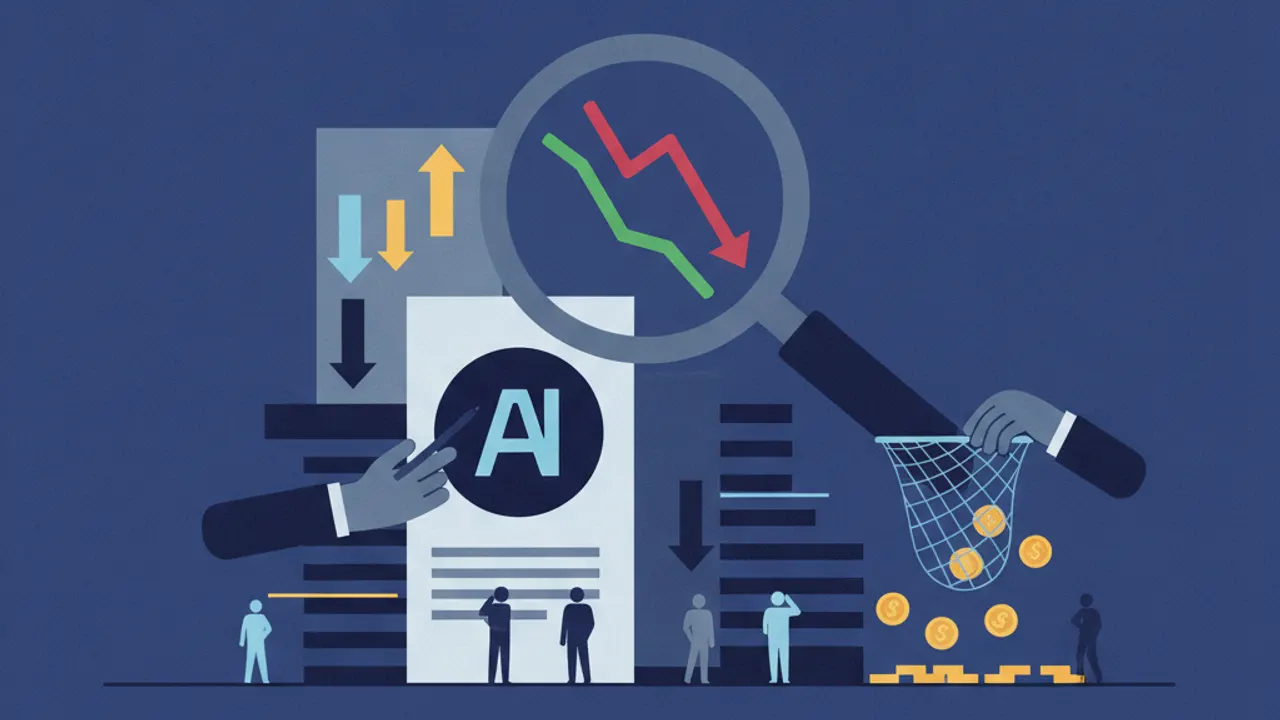
The divide between colossal financial investments in artificial intelligence and the measured daily reality in offices is becoming increasingly apparent. New research from HR software provider BambooHR alongside a macroeconomic study by Sam Gilbert at the University of Cambridge Bennett School of Public Policy highlights a growing productivity paradox. While technology providers promote sweeping gains in workplace efficiency, desk workers spend a significant portion of their screen time rectifying inaccurate automated outputs. At the same time, broader economic data indicates that practical adoption across organizations remains unexpectedly shallow.
The BambooHR report draws on a survey of 1,608 full-time US desk workers, including 520 human resources executives. According to the findings, employees dedicate an average of 87 minutes per workday to generative AI tools, which translates to roughly 47 standard working days over the course of a year. For senior leaders at the C-suite and vice-president level, this figure climbs to an average of 101 minutes per day, compared to 54 minutes for operational staff. Yet the perceived return stands in stark contrast to this time investment, as respondents indicated that only 35 percent of their AI usage is directly productive or value-adding.
Identifying the primary drivers of this lost time, the BambooHR report highlights the persistent operational friction of interacting with probabilistic models. A substantial 42 percent of total AI screen time is consumed by refining prompts and correcting model hallucinations or factual mistakes. Another 23 percent is lost to unstructured exploratory trial and error without concrete deliverables. Crucially, a majority of participants, led surprisingly by junior employees themselves, warned that relying too heavily on automated tools prevents new hires from mastering foundational skills, potentially stalling long-term career progression.
From a macroeconomic perspective, the analysis compiled by Sam Gilbert at the Cambridge Bennett School of Public Policy presents an equally restrained view. Gilbert highlights that major hyperscalers, including Microsoft, Meta, Amazon, and Google, are targeting infrastructure capital expenditures exceeding 600 billion dollars for 2026, pushing global infrastructure spending beyond the one trillion dollar threshold. Despite these massive capital allocations, demonstrable productivity gains across the broader corporate landscape remain scarce. The expected macroeconomic windfall has not materialized because real-world deployment across traditional business processes continues to lag behind market expectations.
Examining complementary data from Gallup and the National Bureau of Economic Research (NBER), the Cambridge study notes that enterprise adoption is currently broad but exceedingly shallow. While Gallup figures show that 52 percent of US employees use AI tools periodically, only 15 percent integrate them into their daily routines. Furthermore, an NBER survey encompassing approximately 6,000 corporate leaders across the United States, the United Kingdom, Germany, and Australia revealed that while most executives experiment with AI, their actual engagement averages a modest 1.5 hours per week. While awareness is widespread, sustained operational reliance remains confined to a narrow segment.
Corporate spending data highlights this pronounced divide even further, according to Ramp transaction records tracking more than 70,000 businesses. While the top one percent of companies spends approximately 7,500 dollars per employee per month on AI software, the median expenditure across all evaluated firms sits at just 12 dollars per employee monthly. This stark divergence confirms that heavy investment is concentrated within a tiny elite of digital frontrunners, while most organizations remain cautious observers. Until generative systems reduce error rates and the need for constant manual oversight, the anticipated workplace revolution will continue to grapple with daily operational friction.