
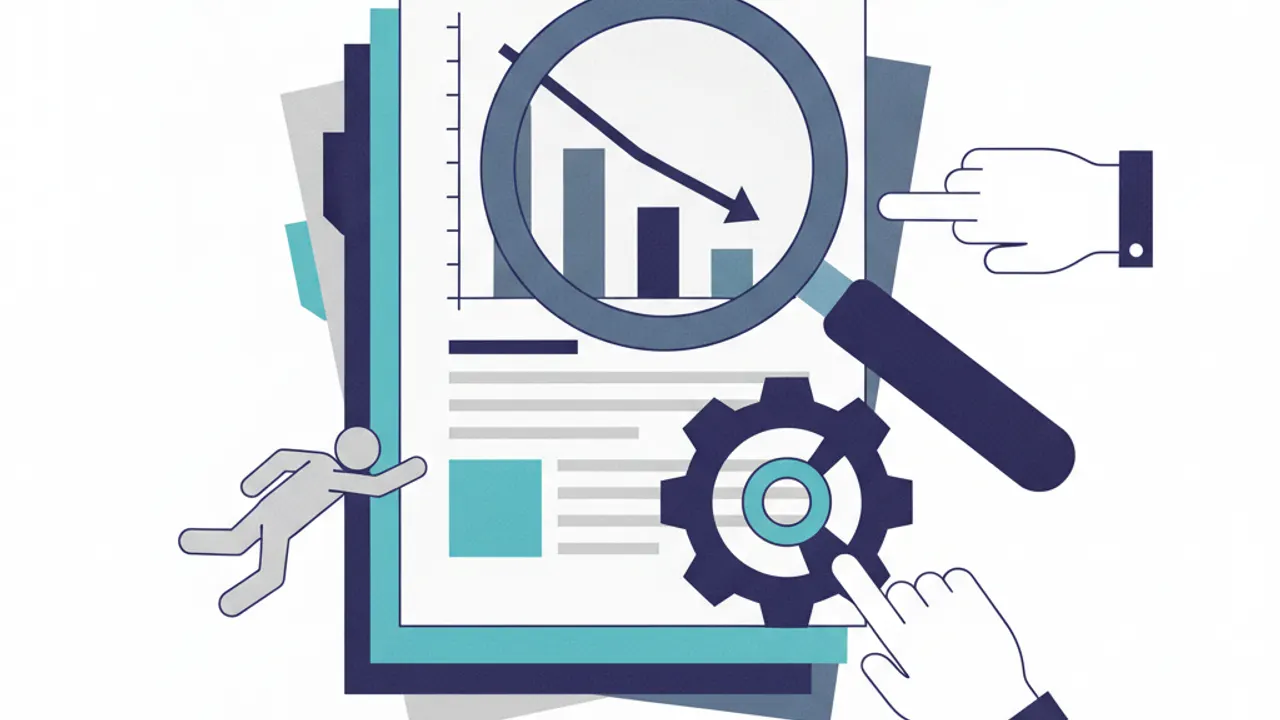
The accelerating integration of generative artificial intelligence across corporate environments is fundamentally restructuring white-collar employment. While aggregate workforce numbers continue to expand, junior professionals are facing distinct headwinds. An empirical study by the Stanford Digital Economy Lab in collaboration with ADP demonstrates that entry-level roles in knowledge-intensive industries are increasingly being supplanted by automated workflows.
Researchers Erik Brynjolfsson, Bharat Chandar, and Ruyu Chen analyzed monthly payroll records representing 3.5 to 5 million workers through summer 2026, combining them with the Anthropic Economic Index. Their findings highlight a widening divergence: while overall economic employment grew by 6 percent, employment among 22- to 25-year-olds in highly AI-exposed professions dropped by 11 percent.
This structural shift has significantly widened the recruitment gap for recent graduates. Over the course of a single year, the entry deficit in AI-heavy professional domains expanded from 15 percent to 19 percent. The primary driver is the automated execution of traditional entry-level tasks, such as foundational research, data synthesis, and routine reporting, which historically served as the primary training ground for young specialists.
Labor economists describe this dynamic as a tragedy of the cognitive commons. When individual enterprises delegate routine tasks to generative models and autonomous agents to secure short-term cost savings, they inadvertently dismantle the traditional learning-by-doing pathway. Without standard analytical casework, junior employees struggle to build deep domain expertise and professional judgment.
In the long run, this dynamic jeopardizes the future supply of senior specialists. Because junior professionals miss the opportunity to organically transition into senior evaluators through hands-on experience, organizations risk eroding the institutional knowledge base required to audit, correct, and steer complex AI outputs.
At the same time, enterprise human resources operations are rapidly adopting these technologies. A survey of more than 600 German companies by industry association Bitkom shows that 14 percent of enterprises already deploy generative AI to generate employment references and guide new hires during onboarding, while more than half are evaluating similar implementations.