
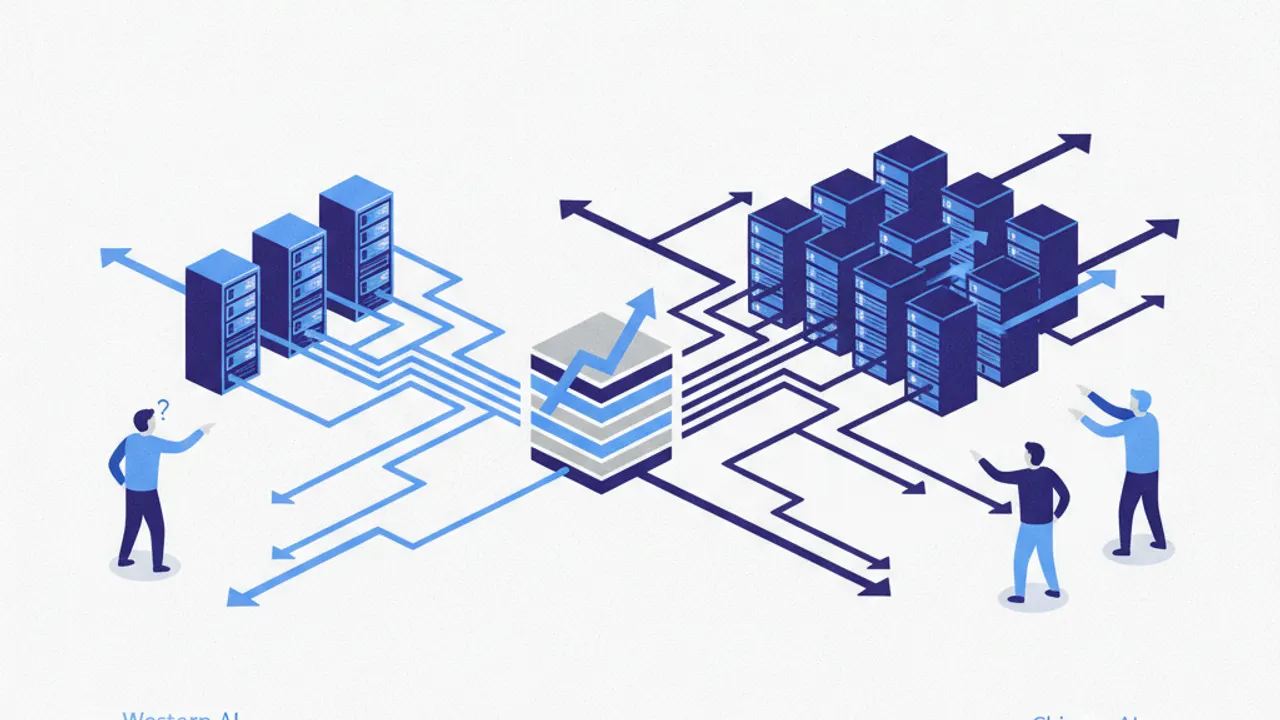
Nathan Benaich and venture firm Air Street Capital have released the ninth edition of the annual State of AI Report. The detailed industry overview evaluates the state of artificial intelligence across research, commercial adoption and geopolitical shifts. The findings present an ecosystem in transition, where conventional performance metrics are rapidly losing their diagnostic value. At the same time, competition between Western frontier labs and international open-weight developers is intensifying substantially.
At the frontier level, the leading trio remains familiar, but the core battlefield has shifted. Anthropic, OpenAI and Google continue to share the top technological tier. However, the report highlights that classic industry benchmarks are saturating, leaving little room to differentiate top models by raw scores alone. Competitive differentiation is moving almost entirely into post-training methodologies, sophisticated data curation and proprietary metrics tracking recursive self-improvement.
A notable milestone highlighted in the publication concerns global research citations. For the first time, Chinese open-weight models, specifically recent releases from the Qwen and DeepSeek families, have surpassed Western counterparts in mentions across international academic papers. This transition underscores the immense leverage of accessible model weights within the broader scientific community. Researchers worldwide increasingly rely on these architectures because they allow deeper inspection and fine-tuning than guarded commercial APIs.
The report also examines the current operational limits and achievements of autonomous software agents. While autonomous agents are not yet capable of designing frontier scientific breakthroughs entirely from scratch, their practical utility inside labs has grown substantially. Autonomous systems now execute the majority of routine experimental software engineering within frontier research organizations. Human scientists increasingly rely on synthetic assistants to write tests, run migrations and maintain codebase velocity.
At the same time, the report sounds clear alarms regarding safety and defensive preparedness. Automated capabilities surrounding vulnerability discovery and cyber attacks are escalating rapidly. As AI agents become more adept at probing systems for flaws, the risk profile for digital infrastructure expands dramatically. The report emphasizes that defensive security protocols and remediation workflows must advance at the same pace to avoid systemic exposure across critical sectors.