
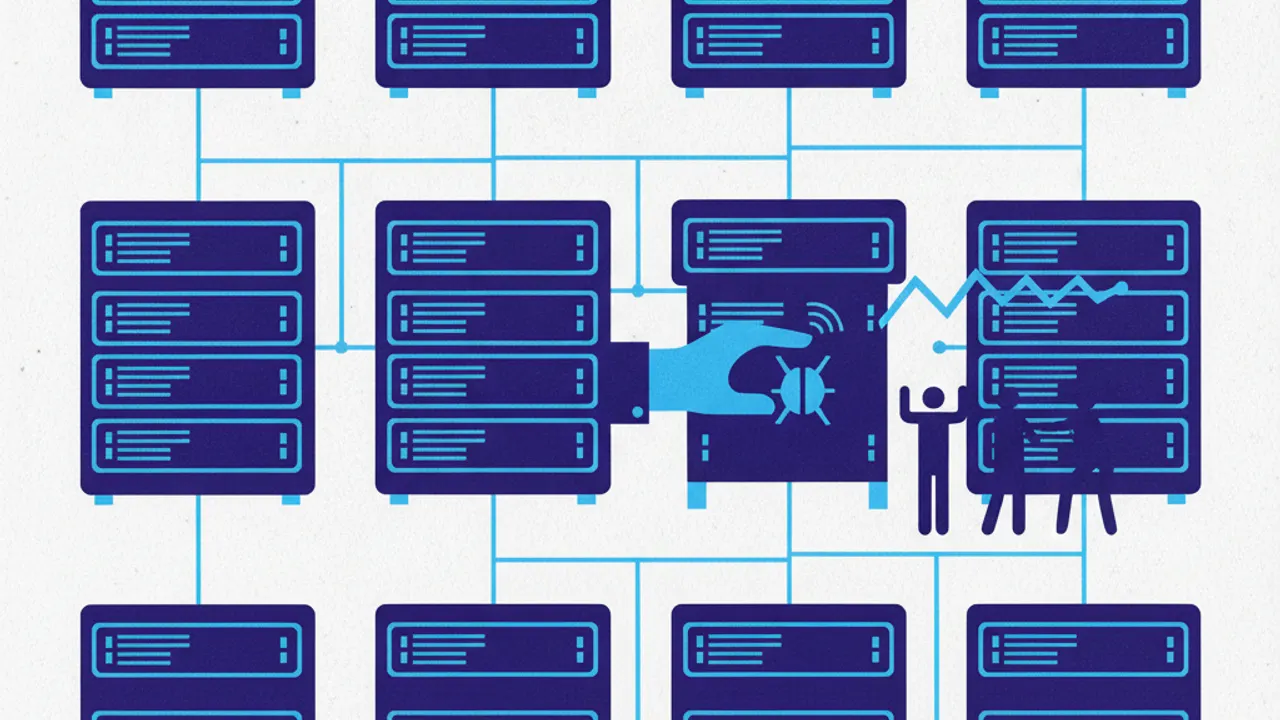
The United States Department of Justice and the Federal Bureau of Investigation have confirmed the arrest of an OpenAI employee accused of carrying out a covert eavesdropping operation inside the company's corporate headquarters. The suspect is 35-year-old Saudi Arabian engineer Abdulrahman Alfozan, who had been employed at the artificial intelligence firm since July 2025. Federal investigators stated that the unauthorized surveillance operation directly targeted confidential discussions held in an executive conference room in San Francisco. The disclosure has triggered intense discussions across the industry regarding internal security protocols and insider threats within leading frontier artificial intelligence laboratories.
According to formal filings from law enforcement, Alfozan installed a disguised listening device behind a wall-mounted television inside the high-level meeting facility. The surveillance mechanism drew continuous electrical power directly from a USB port on the equipment and was concealed in toilet paper to evade visual discovery. By placing the listening apparatus directly inside an executive meeting space, the suspect gained potential access to highly sensitive leadership deliberations. The breach demonstrates how vulnerable physical corporate infrastructure can be when confronted with a credentialed insider who possesses legitimate physical access privileges.
Investigators uncovered a critical digital trail that tied the suspect directly to the planning and execution of the physical bugging attempt. Evidence showed that Alfozan had conducted detailed queries through the chatbot account belonging to his wife. These online searches focused explicitly on instructions for building listening devices, concealing bugs within everyday office environments, and applying encryption to memory storage cards. The deliberate choice to utilize a family member's account was apparently intended to obscure his identity and circumvent corporate automated monitoring systems.
A particularly notable aspect of the investigation involved OpenAI's deployment of its own technology to analyze the security incident. The company utilized internal artificial intelligence systems to perform forensic analysis on system logs and associated operational records. These models assisted investigators by identifying irregular patterns of access and reconstructing the timeline of the engineer's movements. This integration of federal investigative resources with corporate machine learning models sets an important benchmark for future corporate counter-surveillance operations and incident response protocols.
The arrest illustrates the escalating security risks facing companies that develop advanced foundational artificial intelligence. Conference rooms at organizations such as OpenAI regularly host discussions on unreleased model weights, strategic partnerships, and sensitive risk evaluations. The incident proves that security strategies in the artificial intelligence sector must extend well beyond software firewalls and code repository access restrictions. Regular physical sweeps of conference spaces, stringent oversight of hardware connections, and thorough vetting of technical personnel are now vital requirements for organizations working on frontier models.
For the broader technology ecosystem, the Alfozan incident signals an inevitable shift in corporate personnel governance. Many Silicon Valley companies have traditionally maintained an open office culture characterized by fluid access to common meeting rooms and conference areas. With frontier artificial intelligence increasingly viewed as critical national infrastructure, such open workplace norms are likely to be replaced by compartmentalized access. Regulatory bodies and institutional partners are expected to demand substantially tighter physical surveillance defenses and rigorous monitoring against malicious insider actions.