
Skip to content
AI ConnectPowered by VELENTIS
AI-generated1 min

Memory Prices Surge Up to 500 Percent as AI Hardware Boom Squeezes Standard DRAM

A massive shift in manufacturing capacity toward High Bandwidth Memory for AI data centers is driving standard DRAM and DDR5 module costs to historic highs.

This article was AI-generated and published automatically. Context, labelling and all sources at the end of the article.

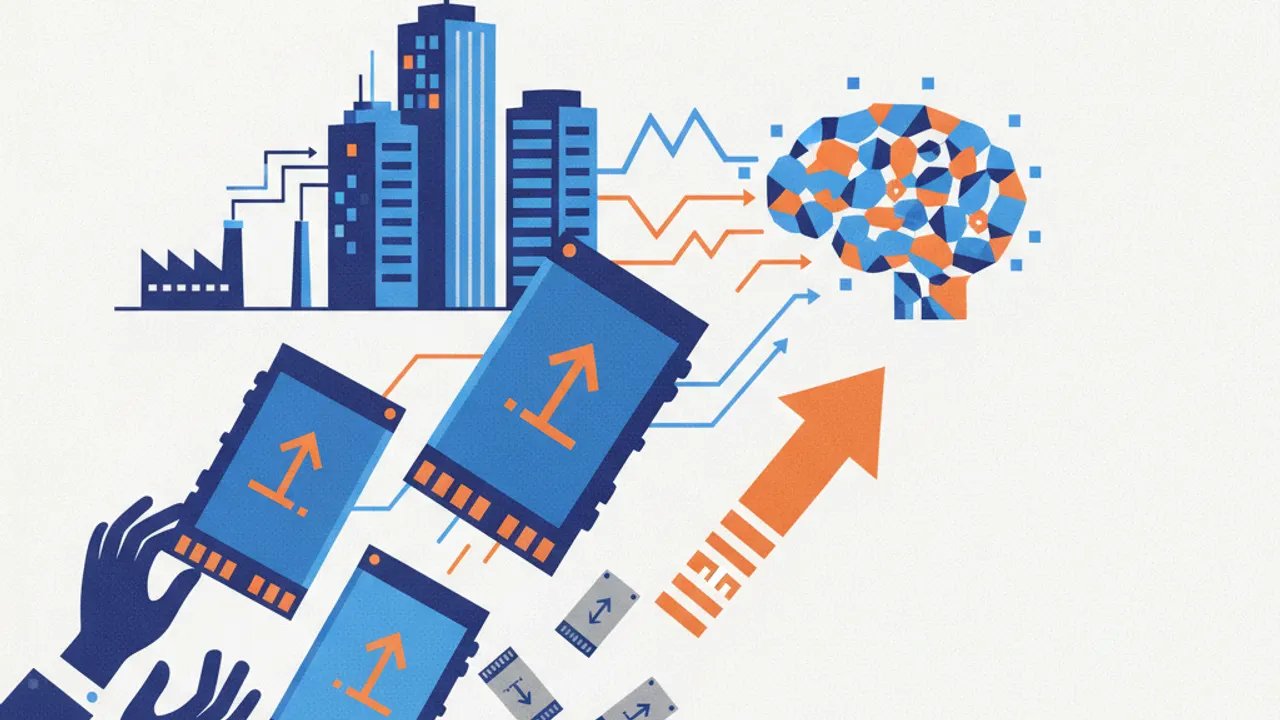
(KI-generiertes Symbolbild: Gemini / AI Connect)

Global memory prices are experiencing an unprecedented surge. Market analyses from Tom's Hardware, PCPartPicker, and European outlets such as ComputerBase confirm that DRAM and DDR5 module prices have climbed between 370 percent and 500 percent over the past twelve months. In the Eurozone, year-over-year price increases have reached approximately 345 percent. This sudden escalation is placing severe strain on corporate procurement and consumer markets alike.

The primary factor behind this supply squeeze is the rapid build-out of artificial intelligence infrastructure. The three dominant memory manufacturers, Samsung, SK Hynix, and Micron, have redirected substantial fabrication capacities away from standard DRAM. Instead, these producers are allocating wafer capacity to high-margin High Bandwidth Memory (HBM), which is indispensable for modern AI accelerators and high-performance compute clusters.

The consequences of this manufacturing pivot will be felt for several quarters. Industry reports indicate that global fabrication lines for HBM and advanced memory stacks through 2027 are already largely booked out. Because constructing and equipping new semiconductor fabrication facilities requires years and tens of billions in capital, conventional DDR5 availability remains tightly constrained without near-term relief.

Enterprise IT operations and local data center managers now face direct cost pressures. Scheduled upgrades for on-premise servers, enterprise storage systems, and technical workstations have become substantially more expensive. Mid-sized companies attempting to deploy local AI inference clusters or developer hardware are forced to revise capital expenditure plans or delay equipment refreshes.

In response to hardware price pressures, engineering teams are increasingly turning to model routing and efficient software architectures. By directing queries to smaller open-weights models and leveraging managed cloud infrastructure, organizations can limit their dependence on expensive on-premise memory configurations, mitigating the immediate financial impact of component shortages.

What this means for you

IT leaders must reassess on-premise capital expenditure in light of memory inflation. Optimizing infrastructure through model routing, smaller specialized models, and selective cloud inference will be critical to keeping operational costs sustainable.

Perspectives

Coverage: 2× Other

One story, several angles: how each source frames the topic, each with a verbatim quote.

  • tomshardware.comOther

    Tom's Hardware emphasizes the massive 500 percent price surge in memory over twelve months.

    Original quote

    128GB of DDR5 now $3,399

    tomshardware.com
  • techpowerup.comOther

    TechPowerUp focuses on the record-breaking price spikes for DDR5 kits and the fully booked production capacities across major memory manufacturers.

    Original quote

    According to earlier reports, the entire memory production capacity for 2027 has been fully booked,

    techpowerup.com

Source classification is maintained editorially (political spectrum only where consensus is broad; vendor communication is PR, not journalism). Unlabelled sources are unclassified: we do not guess.

Evidence

Solidly sourced
54/100
  • Major memory manufacturers Samsung, SK Hynix, and Micron have shifted substantial production capacities from standard DRAM to High Bandwidth Memory for AI accelerators.

    single source
  • Industry-wide manufacturing capacities for specialized HBM memory chips are already largely booked out through 2027.

    single source

The evidence score is computed, not hand-set: from confidence, the number of sources and the share of verified statements.

Source & transparency

As of: August 20, 2026

AI-generatedAI-generated: produced automatically from vetted sources with technical quality checks (source, quote and figure verification); no human sign-off of each item before publication

Sources
2
Verified statements
0 / 2
Evidence score
54Solidly sourced

Want to put this into practice?

We connect you with suitable AI providers from the DACH region, free of charge and without obligation.

What's next?