
Artificial intelligence startup Simile AI has announced the closing of a 200 million dollar Series B financing round. The round was backed by prominent investors including Index Ventures and Greenoaks. The company focuses on the next frontier of generative artificial intelligence: simulating complex human behaviors across interactive multi-agent populations at an industrial scale.
The venture is driven by Joon Sung Park, widely recognized as the lead author of the influential Stanford Smallville research paper on generative agents. While that original study observed twenty-five autonomous agents in a sandbox environment, Simile AI is now engineering an enterprise-grade infrastructure designed to simulate thousands of interacting entities across complex social and economic systems.
Park frames this approach as a new scaling law for the AI industry. Rather than relying solely on larger pretraining datasets or prolonged inference compute, the focus shifts toward the emergent properties of large agent populations. The platform enables thousands of heterogeneous agents, each equipped with dedicated memory modules, preferences, and goals, to interact in simulated environments.
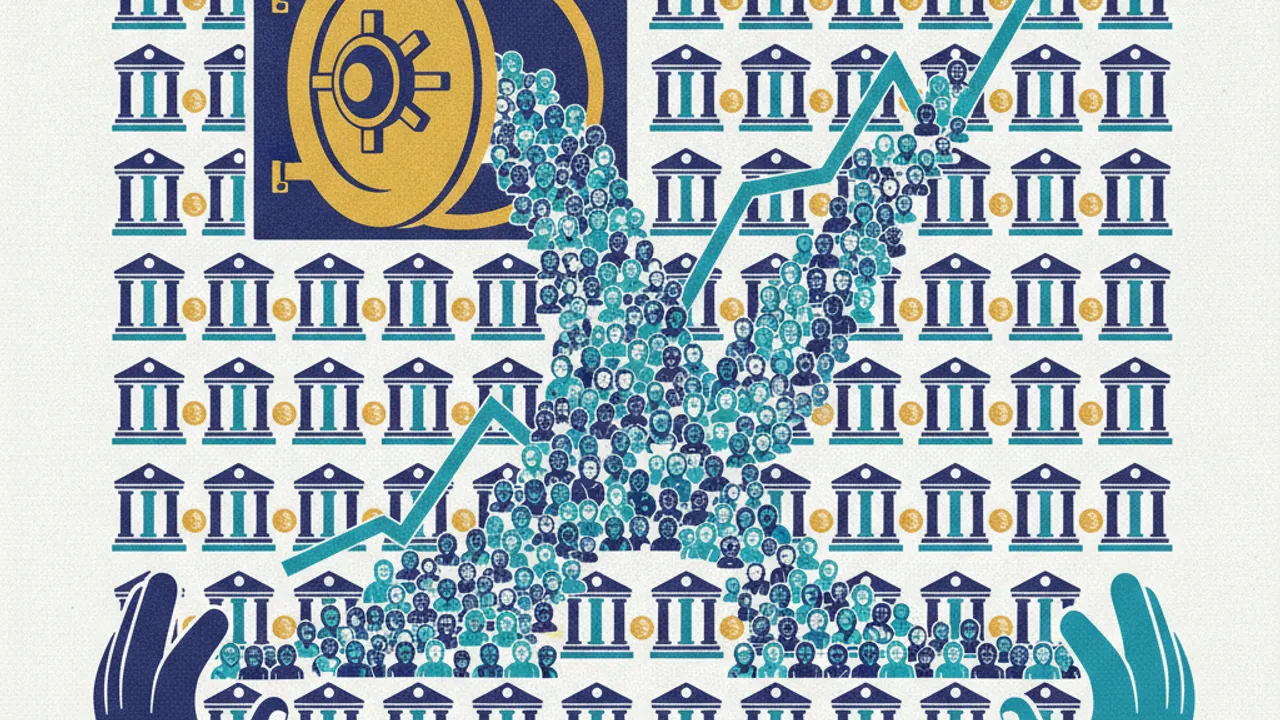
The technology has attracted significant interest from the financial sector. Traditional econometric models often struggle during non-linear market disruptions or rapid behavioral shifts. Using generative agent simulations, institutions and supervisory bodies can run dynamic stress tests, simulate liquidity outflows during potential runs, and evaluate responses to macroeconomic shocks under realistic behavioral assumptions.
The newly raised capital will primarily fund the expansion of compute infrastructure and the refinement of deterministic evaluation frameworks. Simile AI plans to roll out access to selected industry partners, aiming to establish behavioral simulations as a foundational methodology for quantitative risk analysis and policy design.