
The industry research firm SemiAnalysis has released GDPx, a rigorous new benchmark designed to evaluate how frontier artificial intelligence models perform on demanding professional workflows. Authored by analysts Dylan Patel, Max Kan, and Andrew Megalaa, the benchmark subjects systems to 206 complex tasks distributed across 11 critical domains. Unlike conventional evaluations that test conversational fluency or basic multiple-choice reasoning, GDPx focuses on end-to-end task completion in real-world workplace environments. The evaluation framework applies strict binary pass-or-fail criteria, meaning that any calculation error or incorrect step results in total failure for that task.
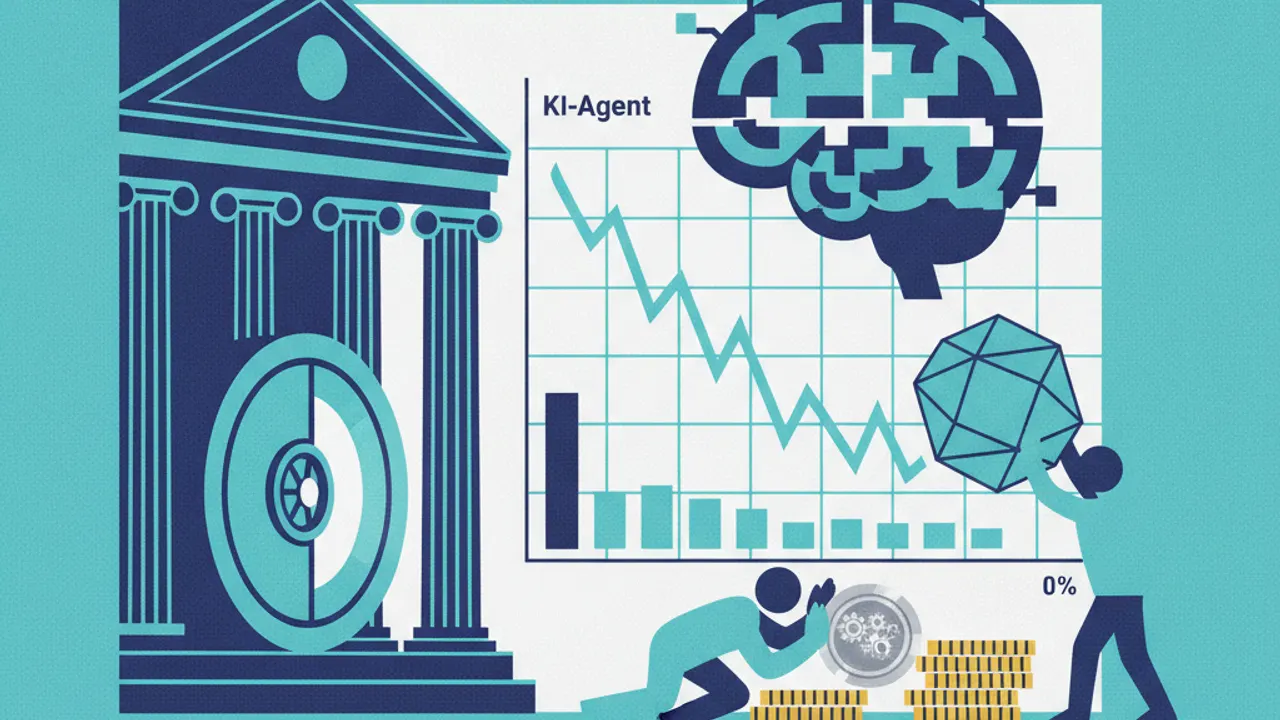
The benchmark results reveal a significant performance deficit among current frontier models when confronted with professional workflows. Claude Opus 5.5 secured the top position across all evaluated domains, yet it completed only 12.0 percent of the assigned tasks successfully. Google's Gemini 4 Carbon achieved the second-highest score with an overall completion rate of 10.9 percent. OpenAI's GPT-6 Astra placed third, solving only 9.6 percent of the test cases under the identical binary grading standard. These figures demonstrate that even the most advanced reasoning architectures remain far from achieving autonomous execution in complex enterprise environments.
A substantial portion of the GDPx benchmark focused directly on the financial sector, where tasks were designed in collaboration with specialized domain practitioners. SemiAnalysis partnered with Living Context to simulate complex deal-room operations typical of mergers, acquisitions, and private equity transactions. For quantitative finance and trading, the analysts collaborated with Third Moment to test automated model generation and algorithmic execution strategies. These scenarios forced the models to interact with intricate datasets, follow regulatory requirements, and maintain rigorous audit trails across extended multi-step workflows.
In the finance and quantitative trading modules, frontier models experienced near-total failure under the binary grading criteria. Multi-step financial valuations, discounted cash flow calculations, and regulatory filings require deterministic accuracy where intermediate errors compound catastrophically. The tested models repeatedly introduced subtle mathematical discrepancies or misinterpreted covenant terms during multi-stage analyses. Because binary evaluation mirrors regulatory and compliance standards where partial accuracy carries zero legal value, these missteps disqualified entire task completions across the partner test suites.
The findings from GDPx provide empirical evidence for the ongoing debate on Wall Street concerning the measurable return on enterprise artificial intelligence investments. While generative models continue to demonstrate utility for unstructured text summarization and email composition, autonomous execution in high-stakes finance remains elusive. Financial institutions have poured billions into automation initiatives, yet the study shows that autonomous portfolio management and algorithmic risk assessment cannot run without human supervision. The gap between conversational fluency and deterministic analytical execution highlights the limitations of current transformer-based architectures in mission-critical banking tasks.
For risk managers and technology executives at Tier-1 institutions, the SemiAnalysis findings underscore the necessity of human-in-the-loop architectures. Deploying unguided agents in core banking, regulatory compliance, or liquidity management presents unacceptable legal and balance-sheet risks. Financial organizations must shift their expectations from full autonomy toward supervised assistive tooling with strict verification boundaries. Until future model generations demonstrate reliable multi-step determinism, autonomous agents will remain restricted to low-risk experimental workflows rather than autonomous capital allocation.