
Skip to content
AI ConnectPowered by VELENTIS
AI-generated2 min

Swiss AI Job Market: Lucerne Study Shows SMEs Fuel Demand While Junior Barriers Mount

According to a Lucerne University report, Swiss SMEs drive surging AI hiring. While senior specialists see massive demand, junior candidates and graduates face severe hurdles.

This article was AI-generated and published automatically. Context, labelling and all sources at the end of the article.

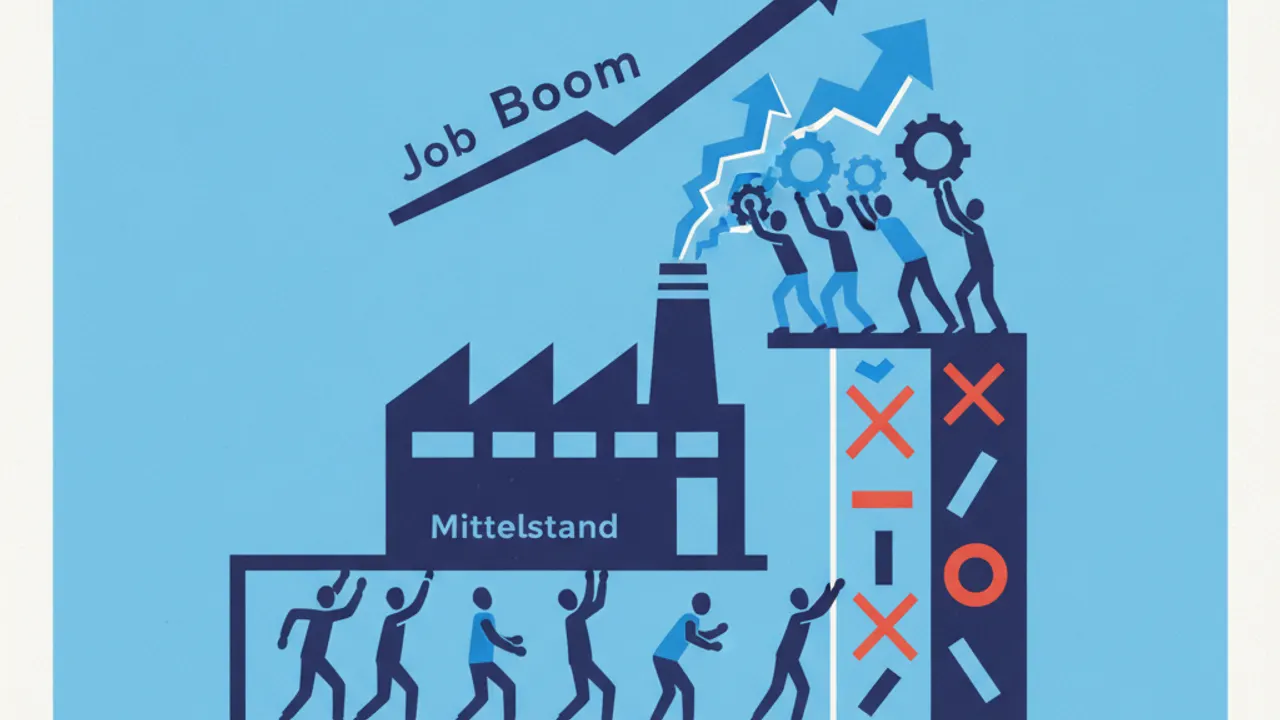
(KI-generiertes Symbolbild: Gemini / AI Connect)

The Swiss labor market for artificial intelligence is undergoing a significant transformation away from exclusive tech industry hubs toward the broader economy. Between July 2025 and June 2026, organizations in Switzerland advertised nearly 5,000 AI-related positions, representing a 32 percent increase compared to the previous year. These findings stem from the latest Swiss AI Jobs Report released by the Lucerne University of Applied Sciences and Arts on October 8, 2026. Behind this steady expansion, however, lies a fundamental shift in both hiring corporate profiles and required skill sets.

Contrary to widespread assumptions that global cloud giants dictate the market for machine learning talent, local small and medium-sized enterprises have become the primary driving force. SMEs accounted for 76 percent of total job growth across the surveyed timeframe and posted 62 percent of all active AI listings. The public sector also experienced notable momentum, posting a 67 percent percentage increase in job openings. Rather than hunting for speculative research talent, businesses are actively searching for specialists capable of integrating machine learning pipelines into operational daily workflows.

At the same time, the HSLU findings illustrate a growing labor market paradox that disproportionately penalizes career starters. Job growth is concentrated almost entirely on candidates with substantial professional track records, with senior roles in data and machine learning engineering climbing by 42 percent. For university graduates and junior applicants, available openings are shrinking noticeably. Organizations increasingly automate repetitive baseline coding, data cleaning, and preliminary document analysis using generative models, reducing their reliance on entry-level human staff.

These observations align with macroeconomic trends highlighted by the KOF Swiss Economic Institute at ETH Zurich in its autumn forecast published on October 1, 2026. The institute recorded that the absolute number of unemployed university graduates in Switzerland has doubled since 2020 despite broad economic stability. Crucially, KOF noted that this spike affects occupations with high exposure to generative AI tools at an above-average rate. Researchers are currently evaluating the degree to which generative systems create structural labor frictions for highly qualified knowledge workers.

The rapid migration from conversational chatbots to deeply embedded enterprise software integration accelerates this structural divide. Medium-sized firms now expect technical staff to connect algorithmic models directly to enterprise resource planning, invoice verification, and supply chain systems. Candidates unable to independently audit and manage complex system architectures face steep barriers to entry. By offloading junior-level tasks to automated pipelines, companies prioritize experienced system reviewers while inadvertently narrowing the traditional pathways for future technical talent.

What this means for you

For professionals and graduates, this shift demonstrates that foundational coding skills and standard analytical tasks no longer guarantee employment. Securing market value now demands demonstrable expertise in architecture oversight, systems integration, and business process automation. At the same time, organizations risk eroding their own future talent pipeline by cutting junior positions in favor of immediate senior hiring.

Perspectives

Coverage: 2× Other

One story, several angles: how each source frames the topic, each with a verbatim quote.

  • schaffhausen24.chOther

    The source highlights the cross-industry growth of AI jobs along with the key role of SMEs and the public sector, while also noting the clear preference for experienced specialists.

    Original quote

    „Besonders stark ist das Wachstum bei KMU und im öffentlichen Sektor.“

    schaffhausen24.ch
  • watson.chOther

    The report focuses on rapid job growth driven by SMEs and notable major corporations, while also highlighting the difficult situation facing career starters.

    Original quote

    „Besonders stark trieben kleinere und mittlere Unternehmen (KMU) den Boom an.“

    watson.ch

Source classification is maintained editorially (political spectrum only where consensus is broad; vendor communication is PR, not journalism). Unlabelled sources are unclassified: we do not guess.

Evidence

Solidly sourced
68/100
  • Small and medium-sized enterprises accounted for 76 percent of total job growth and advertised 62 percent of all AI openings.

    verified
  • Demand for senior roles in data and machine learning engineering rose by 42 percent, whereas junior opportunities dwindled due to task automation.

    verified
  • The KOF autumn forecast from ETH Zurich on October 1, 2026, reported a doubling of registered unemployed university graduates since 2020, particularly in high AI exposure professions.

    single source

The evidence score is computed, not hand-set: from confidence, the number of sources and the share of verified statements.

Source & transparency

As of: October 09, 2026

AI-generatedAI-generated: produced automatically from vetted sources with technical quality checks (source, quote and figure verification); no human sign-off of each item before publication

Sources
2
Verified statements
2 / 3
Evidence score
68Solidly sourced

Want to put this into practice?

We connect you with suitable AI providers from the DACH region, free of charge and without obligation.

What's next?