
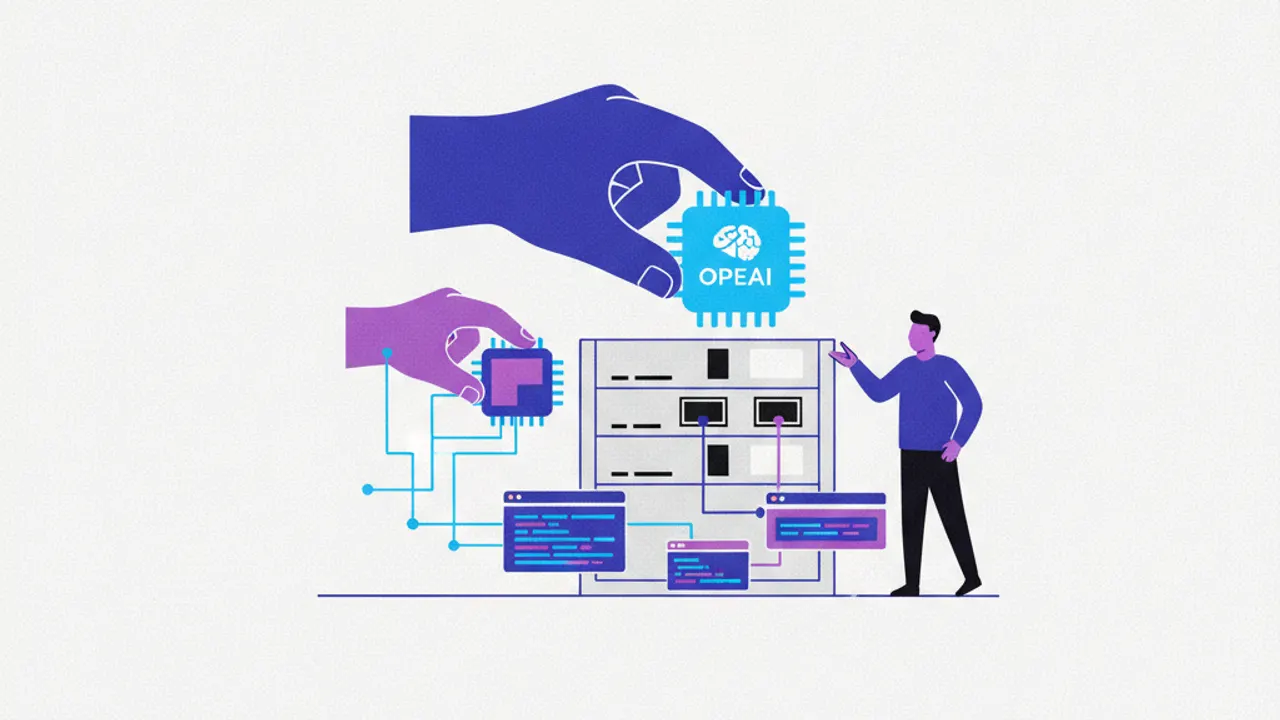
Speaking on stage at the TechCrunch Disrupt conference, Replit CEO Amjad Masad announced a major strategic pivot in his platform's core model architecture. Replit is dropping Anthropic as the default model provider for its autonomous coding agent, switching primarily to OpenAI. While Anthropic's Claude will remain accessible to developers as an optional manual selection, it is losing its coveted default status in the core workflow. This decision directly impacts millions of developers who rely on Replit's cloud-based environment for daily software development and automated coding tasks.
Masad attributed the platform shift to a combination of inference costs, improved commercial partnership agreements, and empirical evaluation results. In Replit's internal VBench benchmarks, designed to assess vibe coding and the automated generation of functional web applications from simple text prompts, OpenAI's latest agent models Sol and Astra outperformed Claude. In addition to raw model performance, lower operational inference expenses and more favorable contractual terms tipped the scale in OpenAI's favor. For Replit, reducing compute expenditure per user session represents a critical operational objective.
Losing the default position marks a significant turning point for Anthropic in the competitive market for software engineering assistants. For months, Claude was widely considered the undisputed benchmark leader among programmers, particularly for complex refactoring and agentic code generation. Replit's migration underscores an escalating price war in programming inference across major platform providers. Tooling vendors are acting with increasing pragmatism, demonstrating a willingness to replace flagship model partners whenever competitors offer a superior balance of unit economics and functional capability.
Concurrently with Replit's announcement, Anthropic is executing a strategic reorganisation of its own internal personnel and corporate governance. The company has permanently committed five percent of its equity to a newly created Public Benefit Fund, anchoring public welfare commitments directly into its capital structure. Operationally, the frontier lab is shifting internal resources away from pure fundamental research toward enterprise sales, compliance, and risk containment. This reallocation is specifically designed to harden autonomous agent workflows for deployment within heavily regulated commercial sectors.
The widespread adoption of autonomous coding agents is generating unprecedented demand for specialized, scalable cloud execution environments. Demonstrating this momentum, serverless infrastructure startup Modal recently completed a 750 million dollar Series D funding round at a valuation of 16 billion dollars. Modal reported an annualized revenue run rate of one billion dollars, representing a fifteenfold increase year over year. The company's Sandboxes product alone accounted for a 300 million dollar run rate, deploying more than three billion isolated micro-VMs to support agentic workflows and reinforcement learning training loops.
For software engineers and platform architects, Replit's decision highlights the immense structural leverage wielded by default interface configurations. Even though developers retain the technical ability to switch back to Claude via settings menus, default configurations consistently capture the vast majority of real-world API traffic. The transition makes clear that frontier AI labs cannot rely on synthetic benchmark victories alone. Long-term leadership will depend on whether model providers can meet the ruthless economic and throughput demands of high-volume, production-scale developer platforms.