
During this year's Venice and Telluride film festivals, director Danny Boyle sparked industry-wide attention by openly discussing the integration of generative artificial intelligence in his upcoming feature. Speaking to trade publications Vanity Fair and IndieWire, Boyle revealed that his Rupert Murdoch drama, 'Ink', incorporates approximately 30 seconds of generative AI footage. The film, scheduled for release on Netflix in December or January, uses synthetic technology as a targeted visual effects solution rather than a wholesale replacement for human performers. Boyle's transparency stands out in an industry where directors have often hesitated to acknowledge using generative tools.
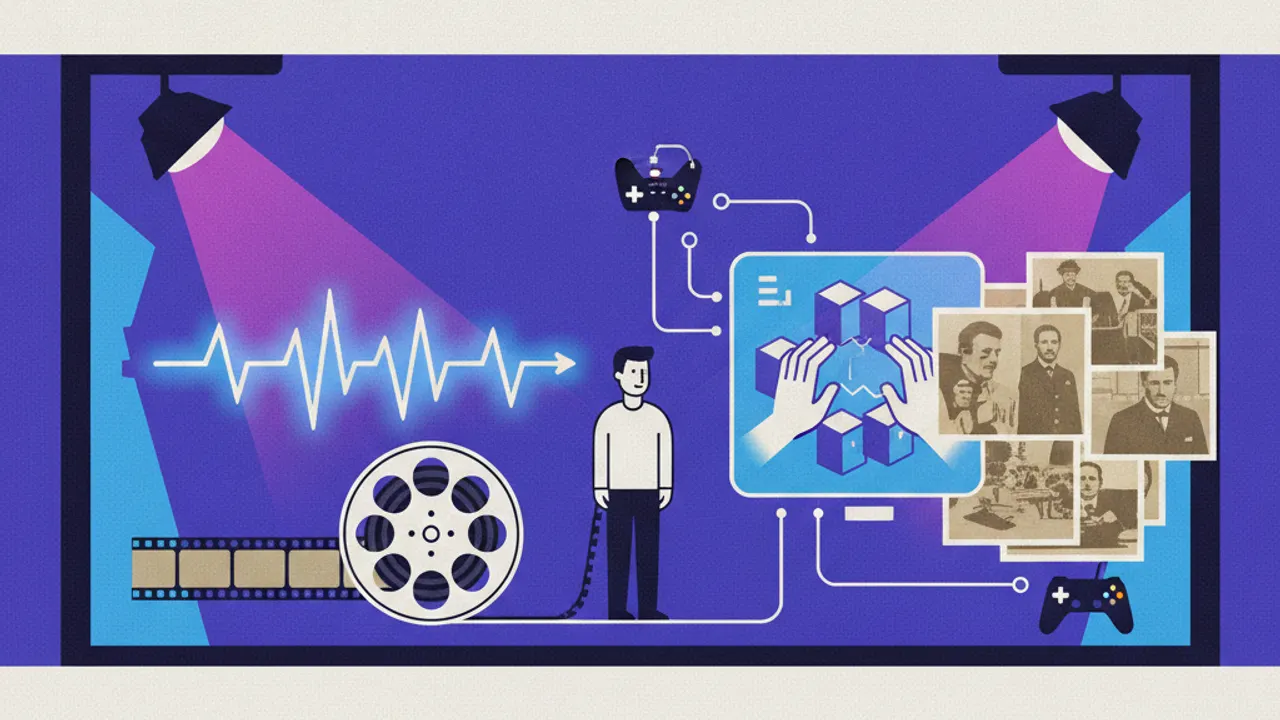
The deployment of generative models in 'Ink' served two distinct production purposes where conventional filmmaking techniques faced practical hurdles. The visual effects team utilized generative systems to photorealistically animate historical archival still photographs of former British Prime Minister Margaret Thatcher and the notorious London gangsters, the Kray twins. Furthermore, the technology generated digital rodents depicted inside the newsrooms of the British tabloid The Sun. Boyle explained that substituting live animals with synthetic mice was a deliberate ethical choice, sparing real animals the stress of a noisy, crowded movie set.
Boyle strongly defended the technical workflow as a necessary and pragmatic visual effects asset for historical scenes. Rebuilding physical sets for period settings such as London's historic Fleet Street would have completely exceeded the film's production budget. According to Boyle, generative tools allow productions with finite resources to render complex historical environments that would otherwise remain financially out of reach. Demonstrating the institutional adoption of the practice, industry database IMDb now officially credits visual effects specialist Dillan Nicholls as Generative AI VFX Supervisor for the film.
While embracing these new visual options, Boyle took a firm stance regarding labor standards and the rights of performers. He emphasized that actors must receive proper compensation whenever digital replicas or synthetic representations of their likeness are deployed. His remarks align with recent union concerns in Hollywood regarding the unauthorized exploitation of performers' digital doubles. Boyle underscored that technological advancement in post-production cannot come at the expense of equitable pay and transparent contractual agreements for creative talent.
Reflecting on the underlying subject matter of 'Ink', Boyle also delivered a pointed warning regarding the broader societal implications of artificial intelligence. He cautioned that automated generative journalism poses severe threats to the future of independent investigative reporting and a free press. The contrast between telling the story of Rupert Murdoch's media empire while utilizing synthetic imagery was not lost on observers. Boyle argued that protecting public truth and journalistic standards remains vital as synthetic media capabilities proliferate.
By openly attributing generative visual effects in the credits, 'Ink' provides an important precedent for future studio projects navigating the generative AI era. Rather than concealing algorithmic tools, Boyle demonstrates how transparent disclosure can coexist with disciplined artistic direction. The conversations in Venice and Telluride indicate that entertainment professionals are beginning to view generative models as standard visual effects utilities, provided ethical protections and artist compensation remain firmly intact.