
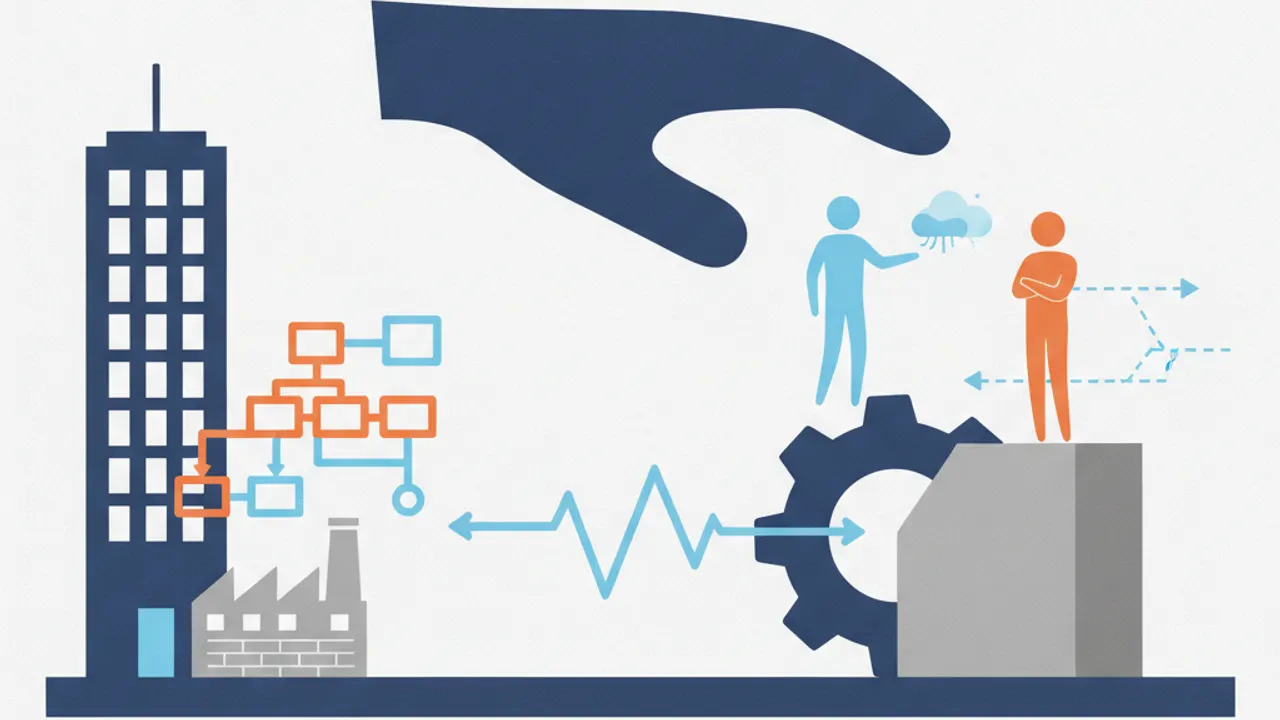
The operational deployment of modern artificial intelligence systems presents unexpected structural hurdles for businesses across the German-speaking region. At the major industry gathering AI Week Frankfurt, held at THE SQUAIRE complex at the end of October 2026, more than 10,000 professional attendees gathered to examine corporate automation. Central to the discussions was an entrenched productivity trap affecting many small and medium-sized enterprises. Although an increasing number of companies experiment with generative tools, broad macroeconomic efficiency gains remain absent in many workplaces. Business executives and analysts took advantage of the Frankfurt forum to deliver a rigorous assessment of current digitalization strategies.
Recent market evaluations and an economic analysis by Deutschlandfunk paint an ambivalent picture of current business reality. Between half and two-thirds of mid-sized firms in the DACH region now deploy generative software tools selectively. However, in day-to-day practice, this usage remains largely confined to isolated pilot projects or informal initiatives by individual employees. Without structured integration into core operational workflows, these efforts stay fragmented and siloed. Consequently, the theoretical efficiency potential of algorithmic assistance dissipates during daily operations rather than delivering measurable cost reductions or accelerated turnaround times.
On stage in Frankfurt, prominent industry figures analyzed the underlying structural drivers behind this ongoing stagnation. Senior representatives from Microsoft Deutschland and the Deutsche Bundesbank agreed that primary bottlenecks stem from organizational friction rather than raw computational constraints. A critical shortcoming remains the absent linkage between generative tools and existing enterprise architectures or mature business processes. Furthermore, speakers pointed to a pervasive lack of transparency regarding actual digital skill levels within corporate workforces. Without an accurate understanding of internal proficiencies, systematic training initiatives and automated workflow pipelines cannot take root.
Pioneering companies that instituted systematic productivity tracking from the outset demonstrate that generative AI can indeed deliver considerable economic benefits. Organizations that establish firm metrics for automated processing steps record significant throughput time reductions in standardized routine duties. Marked operational improvements appear notably in invoice and document capture within finance, as well as during the preparation of complex customer proposals. In these specific workflows, automated text and data processing visibly relieves employees from repetitive manual data handling. For the broader majority of mid-sized companies, however, such performance gains remain elusive without enterprise-wide rollout blueprints.
The findings from the Frankfurt debates signal a pivotal shift in how businesses across the DACH region approach algorithmic assistance. Simply acquiring software licenses or granting access to browser-based conversational interfaces fails to produce lasting competitive advantages. Companies face the pressing requirement to restructure business operations from the foundation upward while clearly establishing interfaces between staff and automated software. As Deutschlandfunk emphasized in its reporting, escaping the productivity trap demands workforce transparency, targeted staff enablement, and strategic workflow management.
For the DACH economic region, moving from spontaneous experimentation to disciplined production represents a decisive test of corporate agility. If leadership teams continue to postpone structural adjustments, businesses risk depreciating their technology investments amid mounting international competitive pressure. Artificial intelligence can only evolve into a genuine productivity engine if companies resolve organizational roadblocks and upskill personnel for daily interaction with automation systems. The extensive discussions at THE SQUAIRE made clear that the genuine work of corporate transformation is only just beginning.